
The Promise and the Pain of 250 Years

This entry is in the series The 250th 4th

Essay 1 of a series examining where we are at 250 years

For many Americans, the Fourth of July is a celebration filled with fireworks, flags, and patriotic pride. But as our nation marks the 250th anniversary of the Declaration of Independence, I find myself looking back to the optimism of the 1976 Bicentennial and wondering what became of the country I believed we were becoming. This is not a rejection of America, but a lament for a promise that feels increasingly out of reach.

The Declaration was never meant to be proof that America had achieved liberty and equality. It was an invitation for every generation to continue the work of building a more perfect Union. As constitutional norms erode and our politics become more divided, I struggle to celebrate, but I also remember John Lewis’ reminder never to surrender to despair. Patriotism, perhaps, is not blind celebration, but the willingness to keep defending the ideals that first gave birth to this nation.

Read more

The Decision Was Mine-The Outcome Was Not

This entry is in the series Journey Through Stoicism

Lately, life has been asking for more decisions than usual. Not small ones, but the kind that seem to carry a future inside them. Work. Money. Health insurance. A parent’s care. A funeral. An estate. What to keep. What to let go. What to protect. What to release. In this season, I have learned that decision-making is not only a matter of logic. It also carries emotional weight, especially when the outcome remains uncertain.

In this essay, I reflect on a difficult job-search decision that still brings occasional regret, and how Stoic philosophy helps me think about it more clearly. The Stoics remind us that we can control the care, judgment, and integrity we bring to a decision. We cannot control the outcome. That distinction does not eliminate uncertainty, but it does offer a kind of mercy. Sometimes the best we can do is choose honestly from the place where we stand, then release what was never fully ours to command.

Read more

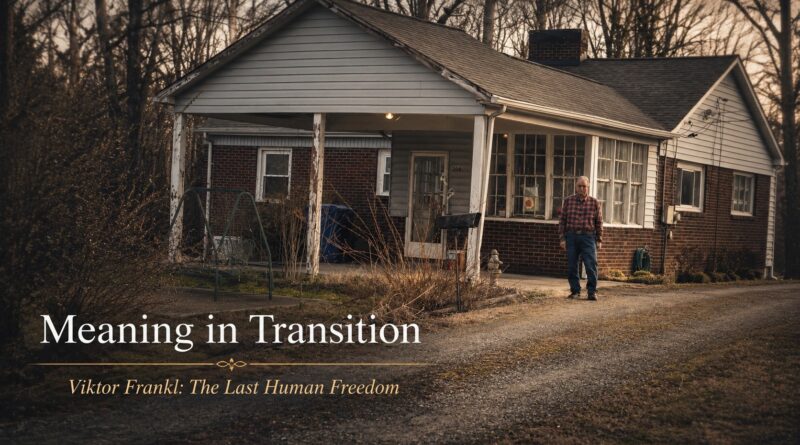
Viktor Frankl: The Last Human Freedom

This entry is in the series The Stoics
This entry is in the series Journey Through Stoicism

There are seasons in life when the question is no longer whether things are difficult. The difficulty is already there. A parent dies. A career changes unexpectedly. A familiar version of life begins slipping away, and suddenly the future feels less certain than it once did. In those moments, we are left asking a quieter and more important question: What now?

In this essay, I reflect on Viktor Frankl, a Holocaust survivor, psychiatrist, and author of Man’s Search for Meaning. Through Frankl’s life and philosophy, and through some deeply personal experiences of grief, transition, and rebuilding, I explore the idea that meaning is not something we discover once and hold forever. It is something we continue choosing, step by step, even when life feels unsettled. Read more.

Read more

Marcus Aurelius: Meditations Was Never Meant for You

This entry is in the series Journey Through Stoicism
This entry is in the series The Stoics

Most of us think philosophy is meant for big moments like crisis, loss, and life-altering decisions. But what if it’s actually meant for something quieter? The ordinary days when nothing falls apart, but something still feels off. The slow drift of attention, the small irritations that take more than they should, the moments where we lose our footing without even realizing it.

Marcus Aurelius never intended his Meditations to be read by anyone. They were private notes. Reminders to himself to stay grounded, to respond better, to return to what he knew mattered. In this essay, I explore how those quiet, personal corrections still speak to us today, and why we don’t need an empire to govern, just a Tuesday to get through. Read more.

Read more

Who Are the Stoics?

This entry is in the series The Stoics
This entry is in the series Journey Through Stoicism

Let’s be honest: when you hear the word Stoic, maybe you picture a distant figure, an old philosopher in flowing robes, sitting far away from the noise and chaos of real life. But the real heart of Stoicism isn’t about detachment or shutting down your feelings. It’s actually a philosophy for living well in a complicated world. That neat, distant image isn’t just outdated—it completely misses the point.

The Stoics weren’t removed from life—they were in the middle of it. They argued in marketplaces, advised emperors, endured exile, and faced the same uncertainty, loss, and frustration we deal with today. And they weren’t all ancient relics either. Stoicism didn’t disappear with Rome; its ideas have carried forward across the centuries and still shape how we think about resilience, purpose, and how to live well.

This new sub-series begins by asking a simple question: Who were these people, really? We start at the beginning—with Zeno—and begin to see the Stoics not as distant figures, but as companions in a conversation that’s still unfolding.
Read more ?

Read more

Justice as a Way of Life

This entry is in the series The Stoic Virtues
This entry is in the series Journey Through Stoicism

Justice is a word we hear all the time, but people often understand it differently. It shows up in courtrooms, sermons, protest signs, and political speeches. Before it became a slogan, justice was seen as a way to live. Not just a stance or an opinion, but a mode of living.

For me, justice starts with faith. The prophet Micah says it simply: Do justice. Love mercy. Walk humbly with God. This command is not abstract. Justice is not something to admire from afar. It is something you do, often quietly, sometimes without certainty, and sometimes at a real cost.

I have seen justice take shape in public gatherings and protest marches, but I have also seen it in smaller, steadier acts. Helping someone get a meal. Standing up for a person who cannot speak for themselves. Showing up again when the work seems slow and unfinished. Justice does not always announce itself. Most often, it looks like ordinary people refusing to look away.

Read more

Thinking Our Way to Character

This entry is in the series Journey Through Stoicism

Our thoughts are not just passing moods or fleeting opinions. They are the architects of our character. They are the hidden builders of who we become. James Allen said it more than a century ago: “A man is literally what he thinks.” The Stoics would have nodded in agreement. The Apostle Paul might have, too. Each taught that transformation begins not with circumstance, but with the mind’s quiet work of shaping how we see, judge, and act.
In Thinking Our Way to Character, I explore how Allen’s moral vision aligns with Stoic and Christian wisdom, and how both still hold up under the weight of modern life. Through philosophy, faith, and a bit of neuroscience, the essay looks at how disciplined thought turns daily struggle into purpose. If you’ve ever wondered whether we can truly think our way toward peace, purpose, and resilience, this one’s worth the read.

Read more

Stoic Practices: Friendship and Mentorship

This entry is in the series Journey Through Stoicism
This entry is in the series Stoicism Practices

Some people quietly shape the way we see the world. Some do it by teaching. Others, simply by being there year after year, when life tests our convictions. The Stoics believed that friendship was a form of moral training and that mentorship was the art of walking beside someone as they learn to live well.

In this essay, I reflect on five people who changed the course of my life. They were friends and mentors whose presence became a daily lesson in philosophy. Their stories align with the wisdom of Seneca, Epictetus, and Marcus Aurelius, as well as with the insights of modern science, proving what the ancients already knew: that deep connection is essential to a good life.

The Stoics called these relationships “friends of virtue.” Today, we call them the people who help us become who we’re meant to be.

Read more

Stoic Practices: Morning Reflection

This entry is in the series Stoicism Practices
This entry is in the series Journey Through Stoicism

The mornings came first as exercise. Two years ago, I started walking for my health, beginning with just a few blocks at a time. I carried extra weight then, 187 pounds of it, to be exact. The plan was simple: move more, eat better, and feel less tired. What I didn’t expect was that those early walks would become something much deeper. They began with music, everything from Sousa marches to soft piano covers. Later, I switched to audiobooks to make the walks more productive. But as my life began to shift in other ways, I started walking in silence. In that quiet, something changed. My thoughts began to stretch out and organize themselves.

It became a kind of morning meditation. And like most good accidents, it only later revealed its purpose. I realized that what I was doing was practicing a Stoic exercise—the morning reflection. The Stoics began each day by preparing the mind for the world ahead, anticipating difficulties, and setting a moral compass. Two thousand years later, science affirms what they knew: that a few deliberate minutes at dawn can redirect an entire day.

Read more