


Latest
Check here for the latest topics not shown in the featured section.
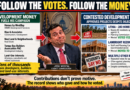
Two Candidates, Two Very Different Ways of Paying In House District 64
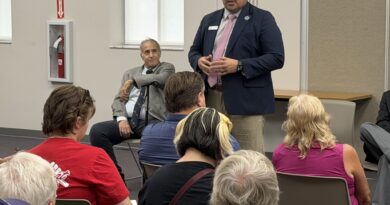
How much does it cost to send someone to Tallahassee? And more importantly, who’s picking up the tab? Campaign finance reports may not be exciting, but the numbers in Florida House District 64 reveal a clear story. One candidate has raised most of his money from individual donors, while the other has received most of his support from political committees and Republican Party groups. The difference is striking.
Democrat Luis Salazar has raised over $64,000 from individuals, with hundreds of small donations. Republican Dan Weldon has raised about $12,000 from individual donors. At the same time, Republican Party organizations have given Weldon about $106,500 in cash and campaign services, such as staff, polling, research, and consulting. That’s about 62% of his total reported campaign resources. It seems Tallahassee provides more than just legislative advice.
It’s no surprise that political parties back their candidates. But how much support they give, compared to money from regular people, is worth a closer look. We’ve reviewed both candidates’ campaign finance reports, including where their money comes from and who pays for professional help. The results raise an important question for voters: Who is paying to put your next state representative in office?



Politics
All the hot-button topics about government, state, local, and federal the courts, and the election.
Kathy Castor Voted Against Hurricane Relief 11 Times? There’s Much More to That Story.
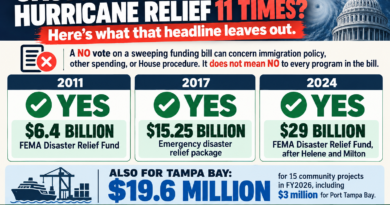
Kathy Castor voted against hurricane relief 11 times, supposedly blocking $151.43 billion in federal disaster assistance. That’s the accusation circulating in an article from West Orlando News, courtesy of the National Republican Congressional Committee. Eleven votes. More than $151 billion. You can almost hear the ominous music playing behind the next Republican campaign commercial.
There’s just one problem. When you examine the actual congressional records, the story begins to fall apart. The article counts votes against massive spending bills covering everything from FEMA to immigration enforcement, along with a procedural vote that had little to do with disaster relief itself. Apparently, voting against a bill containing dozens of provisions means you oppose every dollar in it. Congressional voting records are wonderfully useful things, particularly when you select only the votes that support your accusation.
Here’s what the article conveniently forgot to mention. Castor voted FOR $6.4 billion in FEMA disaster funding in 2011, FOR $15.25 billion in emergency disaster assistance in 2017, and FOR legislation providing $29 billion to FEMA following Hurricanes Helene and Milton in 2024. That last bill passed 366–34. Every single vote against it came from a Republican. Funny how that little detail escaped the article’s attention.
The NRCC is entitled to campaign against Kathy Castor. Voters are entitled to know what Congress actually did. We’ve examined the votes, the bills, and the facts the original article left out. Before accepting the claim that Castor repeatedly voted against hurricane relief, read the full article. The congressional record tells a much different story, and the facts are considerably less flattering to the people spreading this accusation.

Science
This includes discussions on scientific topics that include the environment, weather, medicine, and space.

Society
We lump a lot under this category including crime, corruption, education and hate groups. This category runs the gamut.


Culture
Posts on cultural activities such as theater, art, holidays, and music.

Religion
This is our section for articles related to religion, especially Methodism, and the Evangelical movement.
Ken Gay’s Campaign For Hillsborough School Board Deserves a Much Closer Look
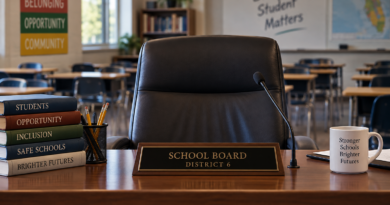
Ken Gay brings nearly four decades of experience in Hillsborough County public schools to the District 6 School Board race. His long career gives voters plenty to respect. But a detailed candidate questionnaire offers a much fuller picture of the political and social views he would bring to the Board.
Gay identifies himself as a conservative Republican and has taken clear positions on school choice, transgender students, sex education, books, guns in schools, religion and the federal role in education. These are not assumptions about his politics. They come from answers Gay submitted himself.
His campaign finances add another layer. The campaign is largely self-funded, while a recently formed company called Faith in Policy has received a substantial share of Gay’s campaign spending. I took a closer look at Gay’s record, his own words and where his campaign money is coming from.

Technology
Discussions on software, hardware, apps, and gadgets.



LGBT Issues
Here we discuss the politics of the LGBT movement, stories of events in the community, and anything else related to the LGBT community.


Fun Stuff
This is a bit of a collection of stories about family, food, friends, and travel.

The Economy
Here are topics on the economy, trade, and business.
Cool Classrooms and Common Sense: Why Hillsborough Must Renew the Half-Penny Promise
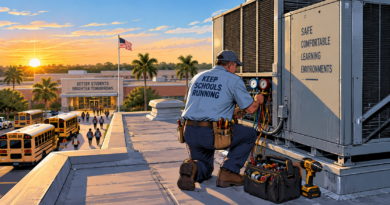
Florida summer heat is not theoretical. It is a relentless physical reality. Anyone who expects children to concentrate on algebra or reading in an eighty-eight-degree classroom with a dead air conditioner and water dripping into plastic buckets has never spent an afternoon inside an aging Florida school building. You cannot build academic excellence when students and teachers are simply trying to survive the humidity.
Hillsborough Referendum 3 asks voters to renew the half-cent sales tax for another ten years to pay for air conditioning, roof repairs, and security at schools. Opponents talk about tax fatigue, but this is not a new tax. It keeps the same rate as in 2018. If it ends, your grocery bill will not go down, but school maintenance will lose $120 million a year.
The results speak for themselves. Since 2018, the Half-Penny Promise has funded over 750 projects, including air conditioning upgrades at 177 schools, all overseen by an independent Citizen Oversight Committee. Tourists pay about a quarter of the cost, and over $716 million has gone to local contractors and workers in Hillsborough County.
While the state Capitol stays busy manufacturing political culture wars and diverting public funds into private vouchers, local communities must take care of their own. Read the complete breakdown on why renewing this capital surtax is an investment in our kids, our local workforce, and our neighborhood schools.
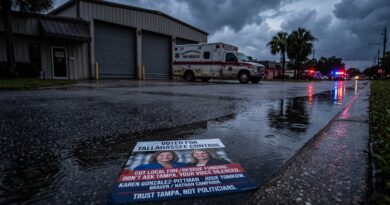
The Free Lunch Mirage: How Florida Amendment 3 Squeezes Renters and Municipalities
Every politician knows that promising a giant tax cut is an easy way to win an applause line. Florida Amendment 3 dangles that exact bait, promising homeowners an expanded homestead exemption and tighter assessment caps. It sounds like an effortless win until you calculate what actually pays for the fire rescue station down the street.
State analysts project this measure will strip over $8 billion from local budgets across Florida in a single year. That is not trimming bureaucratic fat; it is a fiscal sledgehammer aimed directly at 911 dispatchers, sheriff’s deputies, paramedics, and neighborhood road repairs. When both the Florida Sheriffs Association and statewide firefighter unions sound the alarm, voters need to look past the political marketing.
Because essential emergency services cannot simply be shut down, local communities will be forced to raise utility fees and regressive sales taxes to survive. That leaves working families, retirees on fixed incomes, and renters footing the bill for a tax break they will never see. Read the full analysis on why defunding your local first responders is too high a price to pay for a campaign slogan.
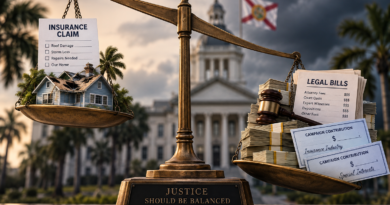
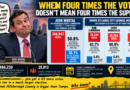
Josie Tomkow, Insurance Reform, and a Trail Worth Following
Florida homeowners have heard “insurance reform” so often that the phrase almost deserves its own ZIP code. But behind that label were years of very real changes to what happens when an insurance company denies or underpays a claim and a homeowner has to fight back.
Josie Tomkow voted yes, again and again, as Florida changed the rules around lawsuits, attorney fees, assignment-of-benefits claims, and insurer liability. Those laws may sound technical, but their effect can be painfully simple: even when policyholders have a valid dispute, taking an insurer to court can now carry more financial risk.
Then there is the campaign money. Tomkow’s contribution records show recurring support from insurers, insurance-industry organizations, civil-justice reform groups, and people tied directly to Florida’s insurance-policy world, including former Insurance Commissioner David Altmaier. This cycle alone, at least $2,500 has come from three interests closely connected to this issue.
No, campaign contributions do not come with thank-you notes for specific votes. But voters are entitled to look at the money, look at the voting record, and decide for themselves whether the two tell a story worth following.
MoviesView All
Articles related to places important to me or the places we visit.







Media
Covers things like the web, blogging, Radio and television, and print media.



Places
Here we talk about topics specific to Tampa, Kings Mountain, and other places I've lived or visited.