The Tuition of Regret

This entry is in the series Journey Through Stoicism

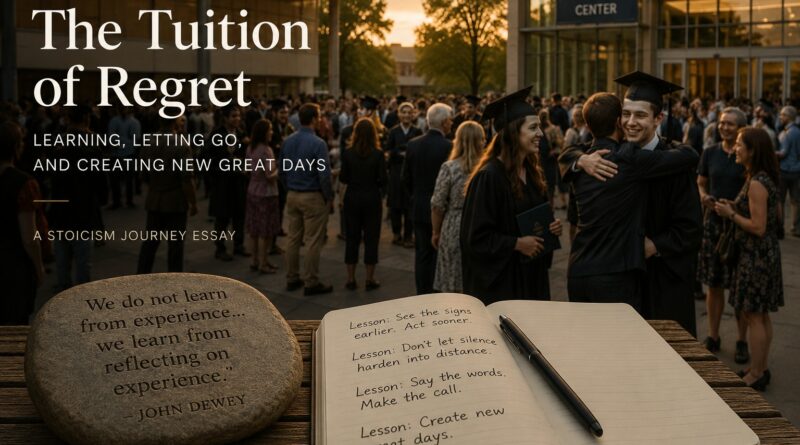
Most of us have regrets, whether we admit them or not. A word spoken too sharply. A kindness withheld. A friendship allowed to drift. A warning sign ignored until it was too late. We may like the idea of living with “no regrets,” but that has always struck me as too clean. If we have lived fully, loved deeply, failed honestly, or hurt someone along the way, regret eventually finds us.

In this essay, I explore regret through the lens of Stoicism, Daniel Pink’s work on The Power of Regret, and my own recent life. I have come to think of regret as life’s tuition. Nobody wants to pay it. Sometimes it is painfully expensive. But if we refuse to learn the lesson, we pay the tuition and never receive the education.

The Stoics did not ask us to deny regret or drown in it. They asked us to examine it, learn from it, make amends where we can, and then lay it down. Regret is not meant to become a permanent home. It is a classroom. The lesson may be to call the friend, offer the apology, act sooner, speak more gently, or create new great days while we still can.

Read more

Viktor Frankl: The Last Human Freedom

This entry is in the series The Stoics
This entry is in the series Journey Through Stoicism

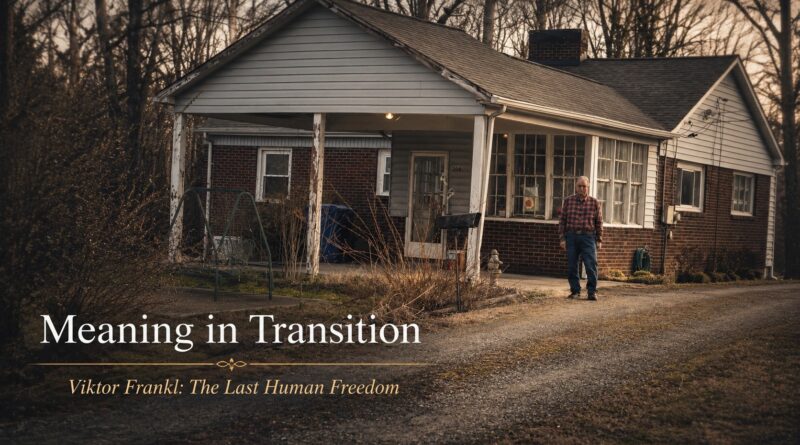
There are seasons in life when the question is no longer whether things are difficult. The difficulty is already there. A parent dies. A career changes unexpectedly. A familiar version of life begins slipping away, and suddenly the future feels less certain than it once did. In those moments, we are left asking a quieter and more important question: What now?

In this essay, I reflect on Viktor Frankl, a Holocaust survivor, psychiatrist, and author of Man’s Search for Meaning. Through Frankl’s life and philosophy, and through some deeply personal experiences of grief, transition, and rebuilding, I explore the idea that meaning is not something we discover once and hold forever. It is something we continue choosing, step by step, even when life feels unsettled. Read more.

Read more

Wisdom: The Organizing Virtue

This entry is in the series The Stoic Virtues
This entry is in the series Journey Through Stoicism

What happens when leadership confuses force with wisdom?

Learn a 3-step pause to outthink panic and regain control over decision-making. We are living in a moment when reactivity often masquerades as strength. Foreign policy escalates without proportion. Economic decisions shift with the winds of applause. Dissent is treated as disloyalty. But courage without wisdom becomes recklessness. Justice without wisdom becomes punishment. Temperance without wisdom becomes denial. Something essential is missing when judgment fails at scale.

In this new essay, I reflect on what Stoic wisdom actually looks like — not as abstraction, but as disciplined judgment under pressure. From sleepless nights of personal uncertainty to watching national decisions unfold, I explore why wisdom is the organizing virtue that keeps both a life and a nation from unraveling.

Read more in Wisdom: The Organizing Virtue.

Read more

Stoic Practices: Negative Visualization

This entry is in the series Stoicism Practices
This entry is in the series Journey Through Stoicism

What if imagining loss could make life feel fuller, not darker? The Stoics called it premeditatio malorum—the quiet practice of picturing what could go wrong, not to suffer in advance, but to steady the heart for when it does.

In this new essay, I write about sitting beside my mother near the end of her life, and later facing my own health scare. Both moments taught me that rehearsing misfortune isn’t about fear. It’s about gratitude. The kind that comes from realizing how much you already have.

Read more

Living the Last Best Moment

This entry is in the series Journey Through Stoicism

Greta Gerwig once said, “You don’t know when the last time of something happening is. You don’t know what the last great day you’ll spend with your best friend is. You’ll just know when you’ve never had that day again.” That line has echoed in me ever since I first heard it. It captures both the sweetness and fragility of the present moment.
The Stoics knew this well. Marcus Aurelius warned against drifting into tomorrow, reminding himself that life is lived only in the day at hand. Seneca told us that we waste time as if it were endless. For them, attention to the present was not a poetic thought. It was survival. It was also the way to live a life worth remembering.
I think of an afternoon long ago with my friend Jim, shooting pool at his parents’ house. Or a fall day on a golf course with my friend Mike, pausing to look over Moss Lake together. Neither seemed extraordinary at the time. Yet they have stayed with me as “last great days.” The lesson is clear: if I want to live fully, I must live here, in this moment, as if it could be the last best one.

Read more

The View from Above

This entry is in the series Stoicism Practices
This entry is in the series Journey Through Stoicism

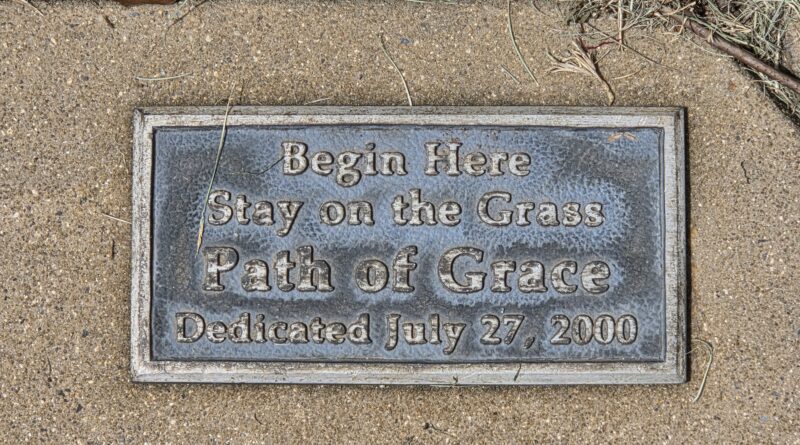
I walked the hospital garden and followed the path of grace. At the end a bronze plaque carried lines from Psalms nine and ten. Refuge for the oppressed. God hears the afflicted. The metal was warm under my hand. Nothing was fixed. Yet something in me settled enough to breathe.

The Stoics call it the View from Above. Rise in your mind. See the room, the floor, the building, the town, the small blue world. The pain stays real, but it finds its size. From there the next right act appears. Ask a clear question. Hold a hand. Eat. Pray. Sleep if you can. The practice pairs with the dichotomy of control and with evening reflection. It opens the frame, then helps you learn from the day.

Tomorrow I head to Boone while my sister and a caregiver sit with Mom. Those mountains have taught me to climb, look, and return. The Wesleyan way names that rhythm as grace. Action without contemplation is unrooted. Contemplation without action is inconsequential. In a brittle season for our republic, this practice steadies my voice and keeps my heart useful.

Read more

A Flicker Toward Life

This entry is in the series Journey Through Stoicism

It was one of those days that left me both drained and restless. The kind of day that yanks you in every direction and leaves you replaying every moment in your head. By the time I sat down to journal, the day already felt like a blur—frustration, hard choices, and a fragile spark of hope all tangled together. Writing helped me find its shape. The Stoics would call it evening reflection. Wesleyans might call it examen or discernment. Either way, it’s how I pulled a heavy, scattered day into some kind of order.
That night, I saw a flicker of determination in my mom’s words. She had been saying for weeks, “I’m tired, I’m ready to go.” But this time she spoke of rehab, of getting better. It wasn’t conviction, but it mattered. Seneca once said, “Sometimes even when the body is weak, the mind can still rally.” I saw that rally in her, small though it was.
And along the way, there was gratitude—even humor. A friend had kept me talking for nearly ninety minutes on the road, filling the time with what he called his “landscaping philosophy.” Later, when I thanked him for knowing I needed company, he laughed. “You’re giving me too much credit. I just found someone willing to listen to me drone on about mulch and hedges.” That laughter mattered. Gratitude mattered. In days like this, even the smallest things carry weight.

Read more

Embracing the Unforeseen

This entry is in the series Journey Through Stoicism

So I’ll drive north. I’ll carry with me a fortune cookie scrap of paper that turned out wiser than I expected. And I’ll try to remember that philosophy is not about lofty words on a page. It’s about how you hold yourself when the phone rings at 3 a.m., how you respond when plans dissolve, how you see both the bitter and the sweet.

Marcus and Seneca remind us: surprises are not intruders. They are part of the order of things. To embrace them is to live in step with nature itself.

And maybe that is the real fortune. Not that life will protect us from pain, but that it will give us endless chances to practice courage, patience, and love.

Read more

First Snows

The Western North Carolina Mountains had their first snow day today. Watching the webcams from time to time during the day brought back many great memories. There’s a magic to the first snow that roots itself deep in memory, stretching across years and places. In Kings Mountain, NC, where the winters were mild and snow was a gift rather than a certainty, the first flakes meant the world was about to change. As a kid, waking up to a white-coated street was like waking up on Christmas morning. School would call it a day, and we’d pile out of the house, sleds in hand, to the steep street just beyond our driveway.

Read more

Resuming Rants

There was a brief restaurant review posted earlier this year. The last post before that was a movie review (The Whale). A lot has transpired in my world over the past few months, and I think I am ready to get back to trying to post more or less regularly. The highlight reel looks a bit like this:

Read more