
When “Waste” Becomes a Political Word Instead of a Financial One
 This is the sixth in a series taking a deeper dive into the Hillsborough County DOGE Report.
“Waste” should be a financial finding.
It should mean the county paid too much, bought something it did not need, failed to use what it purchased, duplicated a service, or spent money without getting the promised result.
That is not always how the word works in politics.
The Hillsborough County DOGE report shows both kinds of claims. Its findings cover a range of issues, from specific concerns about financial waste in contracting and procurement to broader critiques of social programs and community initiatives.
Some recommendations raise clear financial questions. Unused software licenses, weak contract controls, vague procurement categories, and low-use purchase orders deserve review. Those concerns can be tested with invoices, usage data, bids, contracts, and performance records.
Other recommendations move quickly from policy disagreement to the language of waste.
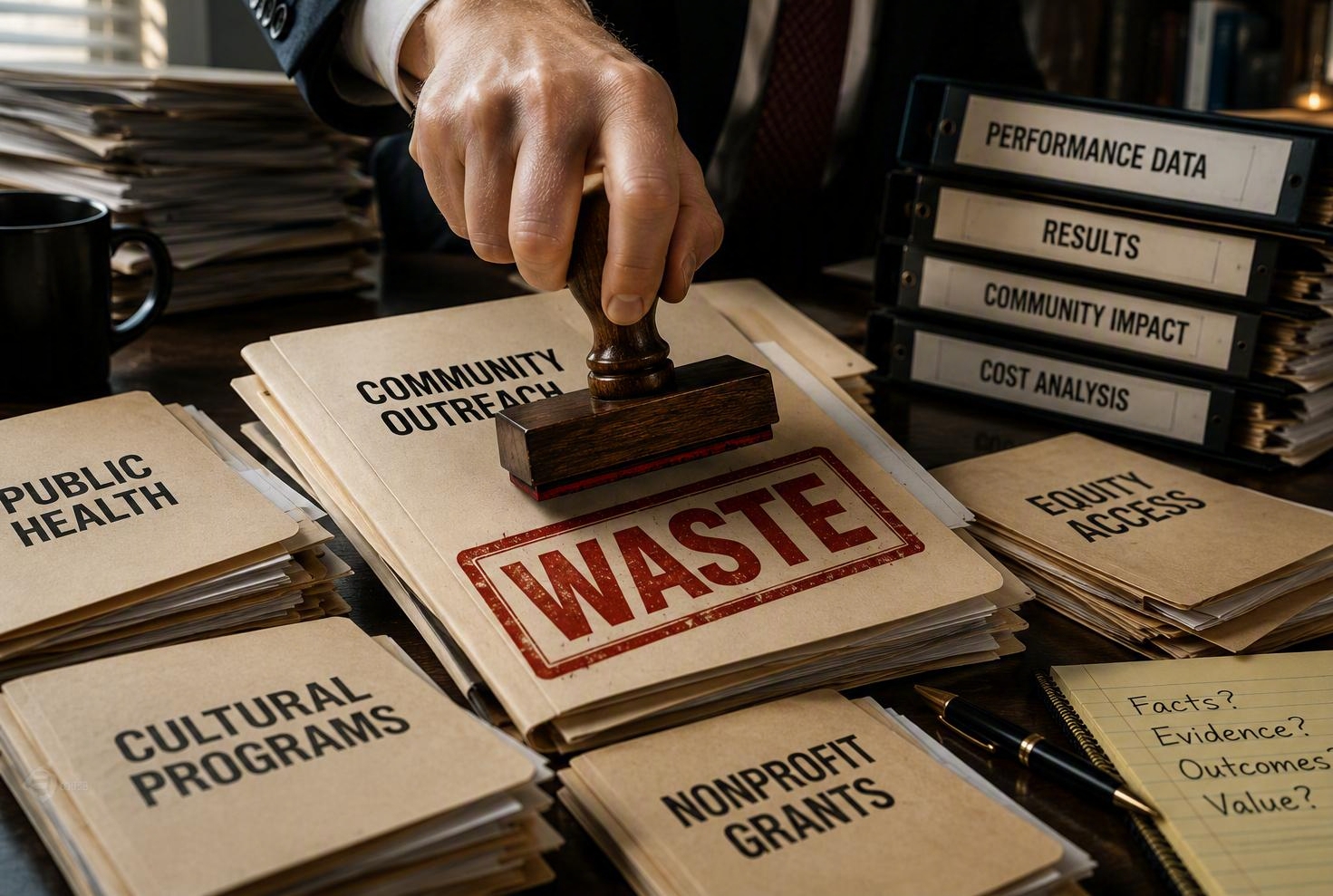 The report targets nonprofit grants, community liaison positions, equity initiatives, cultural spending, and the Film Commission. Some programs may be poorly managed or may not deliver sufficient public value, but this must be demonstrated.
A grant is not waste because its recipient serves Black residents, Latino residents, young people, artists, immigrants, or LGBTQ people. A community liaison is not waste because a committee member believes county departments should communicate with residents in some other way. A film subsidy is not waste because the subject matter makes someone uncomfortable.
These are political objections, which are valid. However, presenting them as financial findings without first demonstrating poor results, excess costs, duplication, or weak controls is not appropriate.
The term “waste” is powerful because it frames opposition as objective. It allows someone to say, “I am not against this community or this goal. I am simply protecting taxpayers.” Sometimes this is accurate. Other times, it is a more acceptable way to express, “I do not think government should support this.”
That distinction matters because the remedy is different.
If software licenses are unused, cancel them. If a contract was awarded without proper competition, rebid it. If a nonprofit did not meet its terms, discontinue funding. However, if the real issue is whether county government should support community outreach, cultural programs, equity work, or assistance for low-income residents, elected officials should address that debate openly.
What service does the program provide? Who uses it? What does it cost? What happens if it ends? Is there a better way to achieve the same goal?
Those are honest questions.
Labeling something as waste before addressing these questions is not analysis; it is framing. Framing is effective. Once a service is labeled wasteful, its supporters must justify its existence, shifting the burden before evidence is evaluated.
That is how a political word can do financial damage.
Hillsborough County should eliminate genuine waste wherever it is found, as taxpayers deserve that. However, the county should also require clear evidence before allowing “waste” to become a substitute for “people and programs we do not value.” To ensure accountability and fairness, any claim of waste should be supported by concrete standards. These may include documented financial records, performance data, independent audits, clear comparison to similar services, and a demonstration of excess cost, duplication, or failure to deliver agreed outcomes. By applying these evidence standards consistently, the county can distinguish genuine waste from policy disagreement and uphold trust in the review process.
A budget review should tell us what failed. It should not merely tell us what five appointees dislike.
