
The Work That Begins After Election Day
 I have been thinking again about those election nights when I was a boy in Shelby, North Carolina.
Sometimes my father took me downtown, where people gathered under a big chalkboard on the side of the Shelby Daily Star building. Men climbed ladders to write down precinct results as they came in from the courthouse. Candidates and their supporters waited with neighbors who just wanted to see how the election turned out.
Sometimes the counting continued until two or three in the morning.
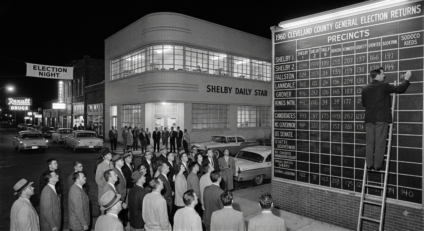 I wrote about those memories recently in Chalkboard Democracy. What I remember most is the sense that we were all part of something shared. In the end, the winners celebrated, the losers went home disappointed, and everyone got back to living together.
Now I think there was another lesson in those evenings, one I was too young to notice at the time. Election night was an important part of democracy, but what happened afterward mattered just as much.
I recently read two commentaries that looked at our democratic responsibilities in different ways. Together, they brought up a concern I’ve thought about for a long time. When a nation has suffered serious abuses of power, is returning to normal enough? History shows we need to be careful about what we mean by normal.
After the Civil War, Reconstruction offered the possibility of a nation more faithful to its founding promise. Constitutional amendments abolished slavery, established equal protection, and protected voting rights against racial discrimination. For a brief period, millions of formerly enslaved Americans exercised freedoms long denied to them.
But the nation’s commitment weakened. Political deals, white supremacist violence, and the withdrawal of federal protection helped undo much of that progress. Generations suffered because America tried to move on without making sure justice was done.
A century later, Watergate exposed serious abuses of presidential power. Richard Nixon resigned, and Congress passed reforms. Yet Gerald Ford’s pardon of Nixon raised an uncomfortable question: had the desire to move beyond a national scandal come at the expense of accountability?
These events remind us that removing someone from office might not fix the deeper problems. That distinction matters today.
Restoration means going back to familiar institutions and practices. Reconstruction asks us to look at where those institutions failed, hold officials accountable through lawful processes, and strengthen the safeguards that protect the public.
We should expect our elected leaders to do that work, no matter which party they belong to. But holding politicians accountable is only part of what we must do.
Thomas Paine wrote, “We have it in our power to begin the world over again.” Those words carry an extraordinary understanding of citizenship. The future of a republic is still within reach for ordinary people.
That promise is harder to keep when wealth and political influence concentrate power in the hands of a few. Campaign money is able to open doors that are usually closed to most people. Powerful interests gain access to officials whose choices affect us all.
I wrote about some of these concerns in Before We Choose Together. The idea of one person, one vote is still basic, but real democratic participation means people need chances to be heard both before and after ballots are cast.
We shouldn’t settle for a government that listens mainly to people who can pay for its attention.
Nor should we mistake patriotism for unquestioning loyalty to those who govern.
I grew up loving this country, and I still do, even when I’m worried about where it’s headed. Our history has things to be proud of and mistakes we need to face honestly. We honor those who came before us by carrying on their best hopes and learning from what they got wrong.
The Stoics knew that justice means taking action. Marcus Aurelius saw that virtue depends on what we do. Caring about the common good only matters if it shapes how we live.
Being a citizen means paying attention, speaking up, organizing, and questioning those in power. Sometimes it means challenging people we voted for. It also means caring about the rights and dignity of neighbors whose lives are very different from ours.
And it takes persistence when things get tough.
In The Unfinished Work, I wrote about the generations who made America better through abolition, suffrage, labor reform, and the fight for civil rights. They were given an imperfect country and worked to make it more just.
We’ve inherited what they achieved, and also the responsibilities they didn’t finish.
I still treasure the memory of standing with my father under that chalkboard in Shelby. There was something almost sacred about neighbors coming together to watch their community exercise its democratic power.
But those people had responsibilities waiting for them the next morning.
So do we.
Our vote gives someone the authority to govern. What we do afterward helps determine whether they remain worthy of the trust we placed in them.
