
The Election Is Over. Now Show Us What You Can Do.
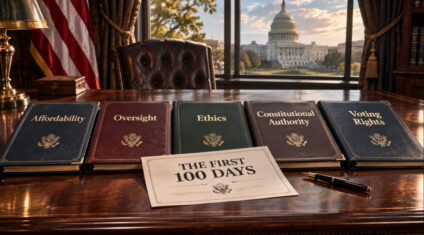
 Five Priorities for the New Congress
The 2026 Election, Part Four
Over the past few days, I’ve looked at what Americans said in the 2026 election. Polls showed people are worried about the cost of living, the power of the president, and have different views on how to protect democracy.
Democrats now hold large majorities in both houses of Congress. Voters have given them the chance—and the responsibility—to govern. Now I’d like to see what they do with it.
Speaking as a progressive Democrat, I believe Congress should start with five main priorities. None of these will be easy. Some will need Republican cooperation, which could prove especially entertaining now that Jim Jordan has been elected House minority leader.
But governing isn’t meant to be easy. It’s meant to get things done.
1. Make Affordability More Than a Campaign Promise
 Americans have made it clear they’re worried about household costs. Congress should pass laws that actually make a difference people can see.
Let’s start with health care. Democrats want to bring back the Affordable Care Act premium tax credits that ended in 2025 and undo Medicaid cuts. Both directly affect the financial security of millions of families. Prescription drug prices also need attention, as do housing costs and how tariffs affect the price of everyday goods.
These problems need clear proposals, honest cost estimates, and public votes. If Republicans don’t agree with the ideas, they should explain what they would do instead. Americans are tired of speeches about affordability. At the end of the day, grocery stores are still accepting money, rather than congressional promises, as payment.
2. Put Congressional Oversight to Work
With their new majorities, Democrats have real power to investigate the executive branch. They should use that power. Congress should look into claims of corruption, conflicts of interest, shady government contracts, and possible misuse of taxpayer money. Committees need to ask for documents, question witnesses, and enforce subpoenas when needed.
Investigations should follow the facts, and officials should be treated fairly. The results need to separate political arguments from real wrongdoing or crimes. But oversight takes persistence. If the administration won’t cooperate, Congress can use legal tools, including going to court, to enforce its authority.
The goal is to find out what happened, who was responsible, and if any laws were broken. When the evidence supports it, there must be accountability.
We’ve seen enough hearings that generate television clips and little else.
3. Fix the Safeguards That Failed
Investigating misconduct tells us what happened. Congress also needs to figure out how it happened and why it was allowed to go on. This means checking the protections for inspectors general, whistleblowers, independent law enforcement, and government records. It also means making financial disclosure rules stronger and stopping conflicts of interest.
One place to start is banning members of Congress from trading individual stocks while they’re in office. Congress considered such legislation this year, but a Republican-backed proposal failed in the Senate after Democrats objected to its limited restrictions and an unrelated voter identification provision.
Both parties want tougher rules. Lawmakers should be able to write a simple ethics bill without adding unrelated items. The public has a reasonable expectation that elected officials will spend their time protecting taxpayers’ interests rather than tending their investment portfolios.
4. Reclaim Congress’s Constitutional Authority
Over time, Congress has surrendered considerable authority to presidents, especially when it comes to military action and trade policy. The war with Iran makes this issue urgent. Earlier this year, Congress approved a measure directing an end to unauthorized military operations against Iran. Several Republicans joined Democrats in challenging the administration’s authority. Yet the dispute over the war continues.
Congress should look at the war’s legal basis, costs, goals, and consequences. It also needs to decide if ongoing military action is allowed.
Tariffs need the same careful review. Congress has constitutional authority over foreign trade, but it has given a lot of that power to presidents. Lawmakers should look at these powers, see how tariffs impact household costs, and set clearer limits on what the president can do.
These are questions about Congress’s constitutional responsibility. They deserve real public debate and votes on the record.
5. Protect Voting Rights and Restore Public Trust
In my last essay, I talked about a troubling fact: Most Americans support fair elections, but Democrats and Republicans often disagree about what puts them at risk. Yet large majorities in both parties believe eligible citizens should be able to vote and ineligible people should be prevented from doing so. Congress should use that common ground.
Congress should protect access to registration and voting, improve election security, support reliable audits, and make sure election officials can do their jobs without interference. Claims of election fraud should be looked into carefully, with findings based on real evidence. People’s trust depends on accurate information and fair administration.
And the rules should be the same for everyone, no matter which party wins.
That last point shouldn’t be controversial. Still, after what we’ve seen lately, maybe I’m being too hopeful.
The First 100 Days Will Tell Us Something
Democrats will run the House and Senate, but most contested legislation still faces the Senate’s 60-vote threshold. President Trump can still use his veto. So, cooperation will be needed to get much of this done. Lawmakers should also be ready to explain where talks broke down and why. Jim Jordan has said he’ll strongly challenge Democratic investigations. Republicans also have chances to back laws that address issues their own voters care about.
Democrats, for their part, need to prove their new majorities can do more than just launch investigations or pass bills that get vetoed. I want Congress to set a clear agenda for its first 100 days, set measurable goals, and report back on what it gets done. Let Americans know which proposals passed, which didn’t, and who voted for what.
We should judge our elected officials by what they actually do. I’ve written three essays about what voters want, what Congress is up against, and why Americans disagree about democracy. This last question is the most practical one.
Will the people we’ve elected do the work we’ve asked them to do?
