
Gus Bilirakis: Who Benefits from His Votes?

This entry is in the series 2026 Elections

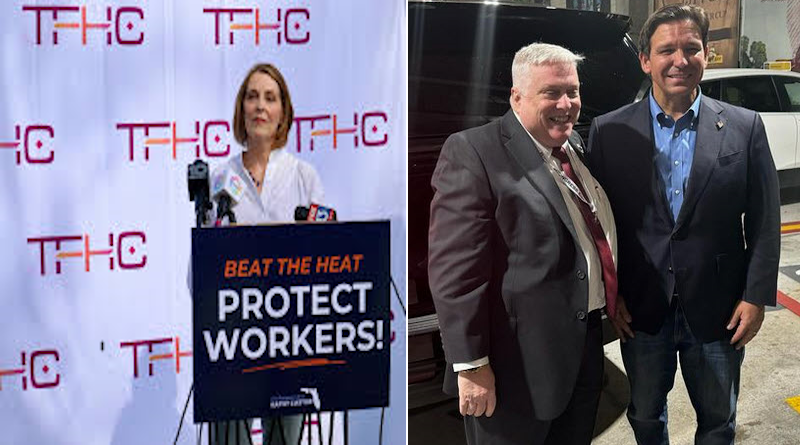
After nearly 20 years in Congress, Gus Bilirakis has had plenty of opportunities to demonstrate whose interests he represents. Now, with Florida’s newly drawn Congressional District 12 stretching across parts of Hillsborough and Pasco counties, it’s worth looking at his record. For residents worried about health care, household expenses, and the rising cost of living, some of his votes raise uncomfortable questions.

Bilirakis supported legislation that the Congressional Budget Office projects will leave millions more Americans uninsured and reduce federal food assistance. He opposed bipartisan infrastructure funding and pandemic relief that provided direct help to families and communities. Apparently, there’s plenty of room in Washington to cut taxes, but far less enthusiasm for helping people pay their medical bills.

Then there’s the campaign money. Nearly 56% of Bilirakis’s direct campaign contributions come from political committees, including PACs associated with pharmaceutical manufacturers, health insurers, utilities, and telecommunications companies. Many of those industries have business before the congressional committee on which he serves. Campaign contributions don’t prove influence, of course. But after two decades in Washington, voters have every reason to ask a simple question: Who is Gus Bilirakis working for?

Read more
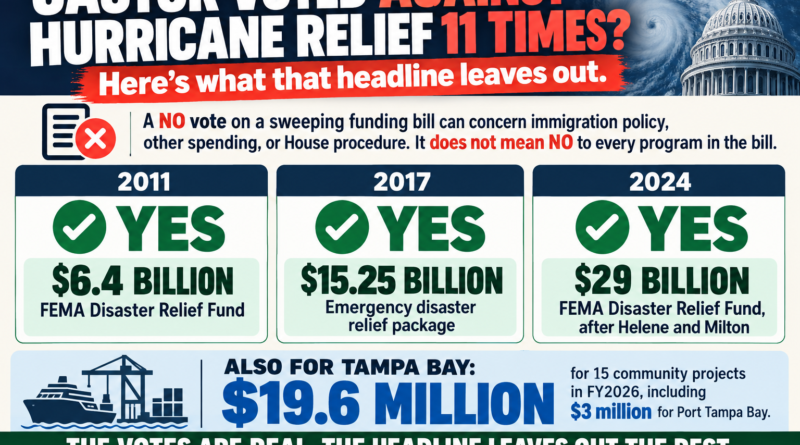

Kathy Castor Voted Against Hurricane Relief 11 Times? There’s Much More to That Story.

This entry is in the series 2026 Elections

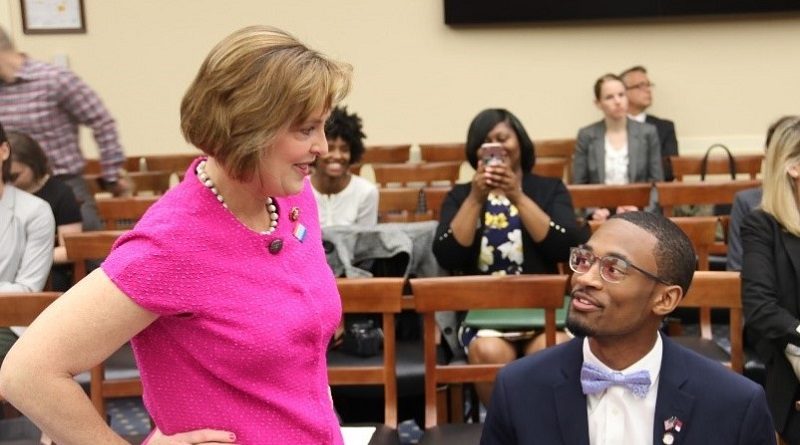
Kathy Castor voted against hurricane relief 11 times, supposedly blocking $151.43 billion in federal disaster assistance. That’s the accusation circulating in an article from West Orlando News, courtesy of the National Republican Congressional Committee. Eleven votes. More than $151 billion. You can almost hear the ominous music playing behind the next Republican campaign commercial.

There’s just one problem. When you examine the actual congressional records, the story begins to fall apart. The article counts votes against massive spending bills covering everything from FEMA to immigration enforcement, along with a procedural vote that had little to do with disaster relief itself. Apparently, voting against a bill containing dozens of provisions means you oppose every dollar in it. Congressional voting records are wonderfully useful things, particularly when you select only the votes that support your accusation.

Here’s what the article conveniently forgot to mention. Castor voted FOR $6.4 billion in FEMA disaster funding in 2011, FOR $15.25 billion in emergency disaster assistance in 2017, and FOR legislation providing $29 billion to FEMA following Hurricanes Helene and Milton in 2024. That last bill passed 366–34. Every single vote against it came from a Republican. Funny how that little detail escaped the article’s attention.

The NRCC is entitled to campaign against Kathy Castor. Voters are entitled to know what Congress actually did. We’ve examined the votes, the bills, and the facts the original article left out. Before accepting the claim that Castor repeatedly voted against hurricane relief, read the full article. The congressional record tells a much different story, and the facts are considerably less flattering to the people spreading this accusation.

Read more

Trump Wants the Midterms to Be About Trump

This entry is in the series 2026 Elections

Donald Trump has looked at a 34 percent approval rating and reached a comforting conclusion: Americans have not seen enough Donald Trump. His super PAC is preparing midterm ads built around his record, his speeches, and clips of Trump praising Trump. Apparently, the nation has suffered from a shortage.

The ads will tout stock-market highs, factory output, falling overdose deaths, and other signs of the “Golden Age.” Families will still see grocery bills that keep climbing, gasoline near $4.09 a gallon, and a job market that lost ground in July. The Dow Jones Industrial Average has yet to buy anyone’s groceries.

Trump wants voters to treat the midterms as though his name appears on every ballot. They should accept the invitation. Then they should ask every Republican incumbent whether Trump’s record belongs to them too, which votes lowered costs back home, and why the greatest economy in history remains so difficult for most people to find.

Read more

From Suppression to Sellout: The Laurel Lee Playbook

This entry is in the series 2026 Elections

A recent critique of Laurel Lee’s time as Florida Secretary of State shows her history of voter suppression, but her actions in Congress are an even bigger betrayal. She has voted against jobs and insulin price caps, and taken large corporate donations while her district faces high housing costs. Lee has shown she works for special interests, not FL-15 families.

Read more

This Is What You Bought With Your Vote

Millions of Americans voted for Donald Trump in 2024, believing he would deliver for farmers, the working class, retirees, and the forgotten small towns. But as his administration’s policies take shape, those same groups are paying the price. Hospitals are closing across rural America. Farmers are watching debts rise as export markets disappear. Working-class families face climbing health costs. Retirees are seeing threats to the Social Security and Medicare benefits they worked their lives to earn.

This essay traces the immediate fallout of those choices, showing how the policies now harming these voters were exactly what Trump promised to do. It’s not betrayal. It’s follow-through. The question is whether Americans are ready to face the consequences of what their ballots actually bought.

Read more

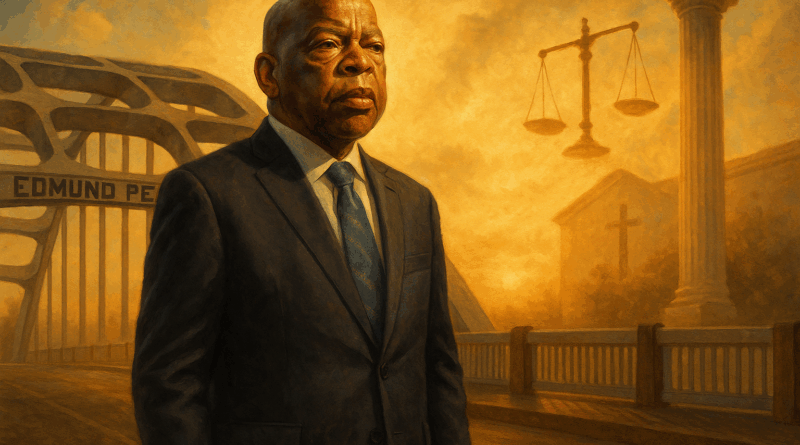
A Way Out of No Way: John Lewis and the Moral Will

This entry is in the series Journey Through Stoicism

“Lewis did not need a theory of justice. He lived one.”
Five years after the death of Congressman John Lewis, his words and witness still call us to the hard, necessary work of moral courage. Drawing from Christian theology, the Black church, and the discipline of nonviolence, Lewis embodied a philosophy of action that mirrors the core of Stoic thought—and resonates just as deeply with the teachings of Judaism, Islam, and Buddhism. He did not merely protest injustice. He met it with clarity, hope, and a soul unshaken by cruelty. His legacy extends beyond American history. It is human wisdom.

Read more

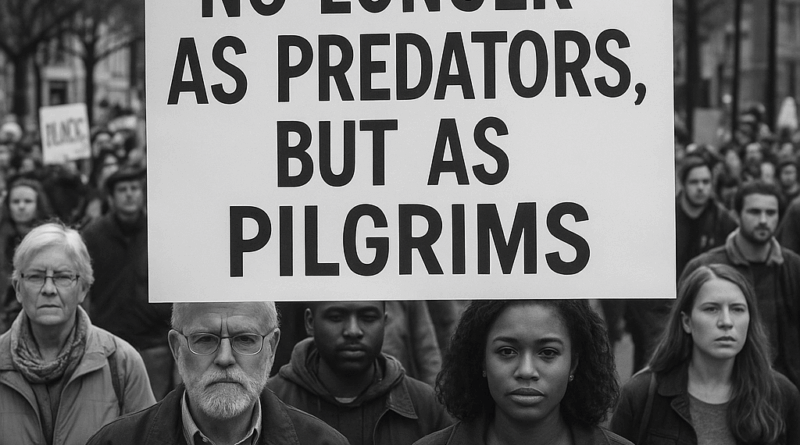
No Longer as Predators, But as Pilgrims

In the wake of a cruel and deeply unjust budget bill passed by the U.S. Congress, I feel compelled to speak out—not just as a citizen, but as a Christian, a United Methodist, and someone at retirement age who will soon depend on the very programs now under attack. This essay is a moral response to a political failure. It is a call to conscience. We are not meant to live as predators. We are meant to walk together, as pilgrims.

Read more

The Call to Justice is Urgent

Progressives stand at a critical juncture where the call for justice is louder and more urgent than ever. My faith compels me to see the injustices that surround us and act against them with conviction, guided by Christ’s example of righteous defiance in the face of oppression. While persistence is essential, there are moments when persistence alone is not enough; sometimes, our witness demands a more forceful resistance, a willingness to dismantle the systems that perpetuate inequality and cause harm actively.

Read more

Castor-Rochford U.S. House District 14

Deep recommends Cathy Castor for U.S. House District 14. Rocky Rochford’s campaign warns against socialism, but many of his policies ironically lead to the kind of oligarchic control that limits freedom for most Americans while benefiting the wealthy. Democratic policies, led by Cathy Castor, seek to build a fair society where people have access to healthcare, education, and economic opportunity without being subjected to corporate overreach or authoritarian control. Rather than pushing toward socialism, these policies aim to protect the middle class and uphold democratic values against the real threats of corporate dominance and rising inequality.

Read more

2020 Votes – Florida Congressional District 14

This entry is in the series 2020 Election

Florida Congressional District 14 is between Democratic incumbent Kathy Castor and Republican Christine Quinn. I am not a huge fan of Kathy Castor. Not that I have opposed much of what she pushes, just that she doesn’t seem to push much, nor very hard. Quinn, on the other hand, has no grasp of major issues. Time and again, in interviews, she demurs and claims to not know much on the topics.  “When asked about immigration, Quinn says she’s not equipped to give a short, succinct answer. But when asked if she supports the wall Donald Trump has proposed along the U.S. Southern border, she backs that idea with enthusiasm, adding her fear is that the undocumented could be bringing over diseases that could compromise our health system.” She reminds me a bit of Louie Gohmert of Texas.

Read more