The Ballot-Box Bureaucrat: Why Electing Hillsborough’s Superintendent Is Bad for Business and Worse for Classrooms

This entry is in the series Education
This entry is in the series Florida Amendments and Referenda-2026
This entry is in the series 2026 Elections

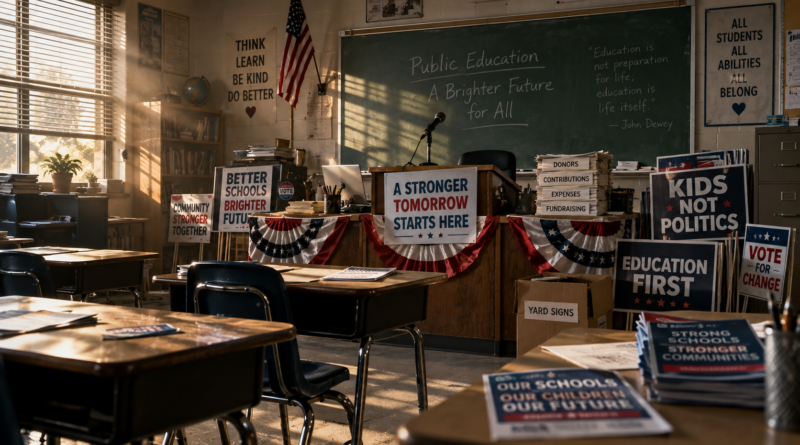
Imagine Tampa General Hospital announcing that it will now select its President and CEO through a countywide partisan primary. Picture candidates debating surgical protocols on debate stages, taking a full year off to solicit campaign checks from medical supply reps, and catering to partisan party bosses instead of patient care. No board of trustees would tolerate it, and no major health system would survive it. Yet that is the exact circus Tallahassee politicians want to bring to Hillsborough County Public Schools, the single largest employer in our community.

Proponents dress up the proposal in the language of parental rights and democratic empowerment. But under the current model, the superintendent answers to an elected, seven-member School Board every single day. If the superintendent mishandles district finances, botches bus routes, or mismanages schools, the board can act immediately. Under an elected system, that daily accountability vanishes. The School Board loses its supervisory power, leaving a single partisan politician in charge of a $4 billion budget and 220,000 students, answerable to voters only once every four years.

An even bigger problem is the smaller pool of candidates. Instead of searching the country for experienced school leaders, we would be limited to local registered voters. The best-performing states treat school administration as a professional job, while the only two states that still elect superintendents are not among the top performers.

Injecting culture-war primaries and campaign fundraising into our school system’s executive suite is a disaster waiting to happen. Read the full analysis on why turning school administration into a political prize hurts our students, undermines teachers, and destabilizes our local schools.

Read more

Let’s Run A Real Education Experiment

This entry is in the series Education

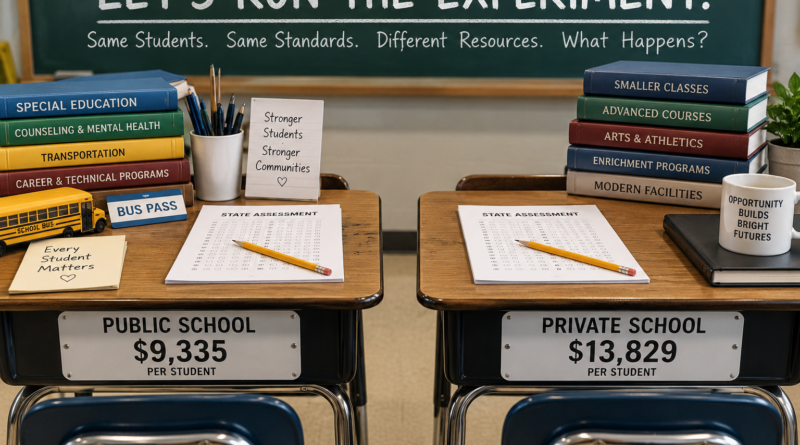
Florida spends about $9,335 per public-school student through its main funding formula. Average private-school tuition is about $13,800. So before we decide private schools produce better results, there is a question worth testing: what would happen if public schools had comparable resources?

The comparison gets more complicated because public and private schools often operate under different rules. Public schools serve students with widely different needs, provide transportation and specialized services, and operate under statewide testing and accountability requirements. Private schools receiving voucher money have different admissions, staffing, testing, and service obligations.

Research does not provide a simple answer that one system always produces better outcomes. Some private-school and voucher programs show gains, others show little difference, and some have produced worse academic results. Once researchers account for differences in family income, parental education, previous achievement, and other factors, much of the apparent private-school advantage can shrink.

So the essay proposes a thought experiment: fund public schools at something close to average private-school tuition while keeping their public obligations intact, or run the test in reverse by asking voucher schools to educate students for the voucher amount under comparable standards. Maybe the real difference is not public versus private education. Maybe it is what happens when one kind of school is simply better funded.

Read more

Some Things Should Not Be Run for Profit

This entry is in the series Education

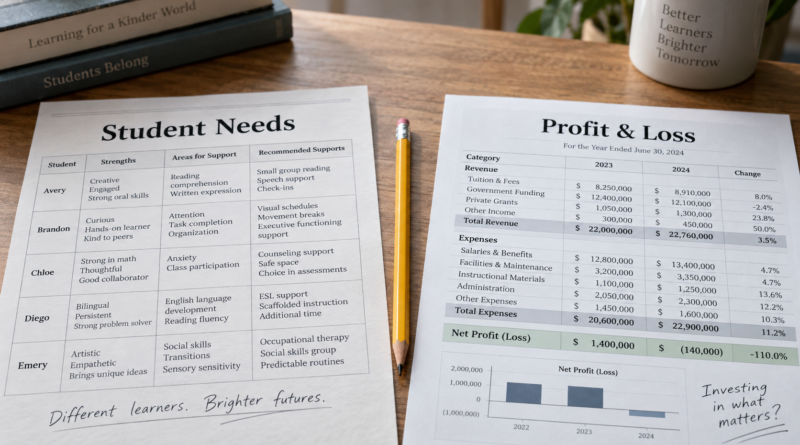
What if the biggest mistake in Florida’s education debate is assuming schools should work like ordinary businesses?

Markets reward efficiency, control costs, and give consumers choices. Public education has a different job. It has to serve every child, including the student who needs far more support, the student who needs advanced opportunities, and the student whose family could never afford to buy those services on its own.

That is why I think the debate over vouchers and school choice has to go deeper than whether competition can improve some outcomes. The real question is whether K-12 education should be organized around market incentives at all.

In this essay, I look at what happens when we confuse efficiency with public duty, and why some things may work better when the goal is not profit, but making sure everyone is served.

Read more

When “School Choice” Stops Meaning Public Education

This entry is in the series Education

Florida’s new Education Commissioner has said the state does not need to run schools at all. That raises a question that goes well beyond vouchers: what happens when “school choice” starts replacing the idea of public education itself?

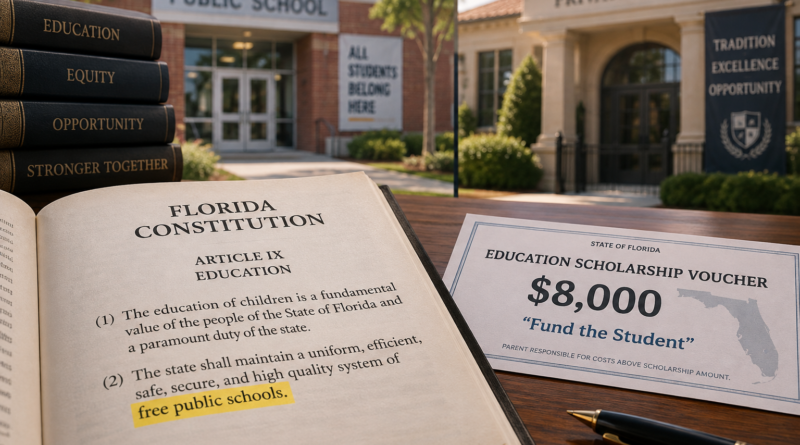
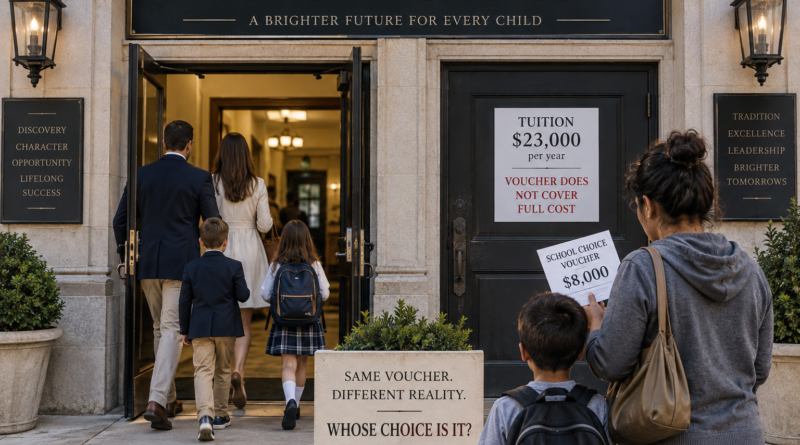
Florida’s Constitution requires a system of free public schools. Yet an $8,000 voucher does not guarantee admission, does not guarantee a free education, and means something very different to a family that can add another $30,000 than it does to one that cannot. That is why the slogan “fund the student” leaves out so much.

At our Voices of Justice: Speak Up for Students program earlier this year, USF education policy professor Dr. Bill Black asked a simple question: “What is public in public education?” With Florida moving further toward publicly funded private education, that question deserves a much closer look.

Read more

Whose Choice Is It?

This entry is in the series Education

Florida calls it school choice. But choice for whom?

An $8,000 voucher may open doors for a family that can add another $10,000 or $15,000. For a family that cannot, the same voucher may leave those doors closed. And even when the money is there, private schools still decide whom they admit. That raises a harder question than the slogan suggests: whose choice is it?

In this essay, I look at what public education was created to do, what Florida is changing, and why the stakes go far beyond schools. Drawing on our March Voices of Justice: Speak Up for Students program at Hyde Park United Methodist Church, including insights from USF education policy professor Dr. Bill Black, I argue that public education is one of the few institutions designed to give every child a claim on shared public wealth. Weakening that promise risks hardening the very class divisions public schools were built to overcome.

Read more

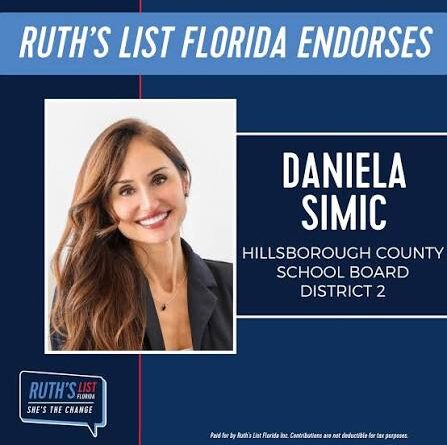
Daniela Simic Has Been Preparing for This Job for Years

This entry is in the series 2026 Elections

Daniela Simic’s campaign is built around something school board races could use more of: deep experience with schools themselves. She has spent about 25 years in education, from the classroom to district leadership, with years of PTA and community work layered on top of it.

Her fundraising tells its own story. Simic and Brittany Lyssy have raised roughly the same amount from outside donors, but Simic reached that total through far more contribution transactions, a lower median donation, and broader support from individuals, educators, labor groups, and community organizations.

The race gives District 2 voters a clear factual comparison in background, donor base, and connection to Hillsborough’s schools. The full piece looks at Simic’s record, the people backing her, and the experience she brings to one of the largest school systems in the country.

Read more

Ambition, Attendance, and the Race for HCSB District 2

This entry is in the series 2026 Elections

When someone wants to lead a multi-billion-dollar school district, authenticity comes first. Brittany Lyssy’s campaign for Hillsborough School Board District 2 asks voters to believe that a family of five lives in a 680-square-foot, one-bedroom condo while also keeping a homesteaded home in Manatee County. From barely attending advisory board meetings to repeating national talking points, District 2 voters deserve real community representation, not a staged political act.

Read more

The Price of Political Playacting: Michael Owen’s Assault on Hillsborough Schools

This entry is in the series 2026 Elections
This entry is in the series Education

Hillsborough County Public Schools, the seventh-largest district in the nation, is facing a top-down assault disguised as “local accountability.” State Representative Michael Owen’s House Bill 4027 calls for a referendum to eliminate our professionally appointed superintendent in favor of a partisan elected office. The schools are already governed by an elected board of education. This change is not about transparency; it is a calculated effort to force a toxic culture-war agenda into our local classrooms and strip our school system of seasoned, professional leadership.

The structural fallout of this power grab is devastatingly clear. Instead of an experienced educational administrator focused on student performance, our district risks being handed over to a political partisan. Under an elected model, policy decisions on curriculum, budgeting, and student safety will inevitably bow to the need for campaign survival, turning every fourth year into a multi-million-dollar reelection spectacle. This essay shows how Owen’s legislative overreach, paired with his habit of distorting local facts for political points, threatens the shared institutions our children rely on.

Read more

Hillsborough School Board District 2: The Choice Between Proven Dedication and Outside Ambition

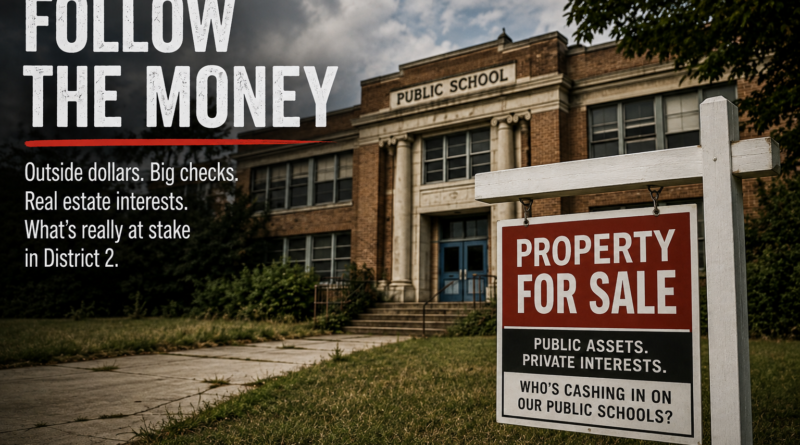
Is a seat on our local school board up for grabs by the highest out-of-county bidder? For months, the District 2 race was a focused contest between candidates with deep, functional ties to our classroom, including professionals like veteran educator Chris Taylor, who has spent years in the trenches of our district. Chris understands student achievement because he has managed it from the front lines, and his commitment is rooted in the actual lives of the students he has taught and the teachers he has led. His vision is focused on stability, inclusivity, and the professional integrity our schools need to thrive.

In sharp contrast, the late entry of attorney Brittany Lyssy introduces a jarring shift toward outside influence and corporate-backed interests. While Chris Taylor’s support is local and organic, an analysis of Lyssy’s campaign finance reports reveals that nearly 45% of her total donations—excluding personal loans—flow from outside Hillsborough County. Backed by Tallahassee-based PACs and out-of-county law firms, her candidacy suggests an agenda more beholden to a state-level political machine than to our community. Hillsborough deserves a board member whose only “client” is the child in the classroom, not a strategist using our schools as a policy laboratory.

Read more

Why Josie Tomkow is Wrong for Tampa

This entry is in the series Florida Legislature
This entry is in the series 2026 Elections

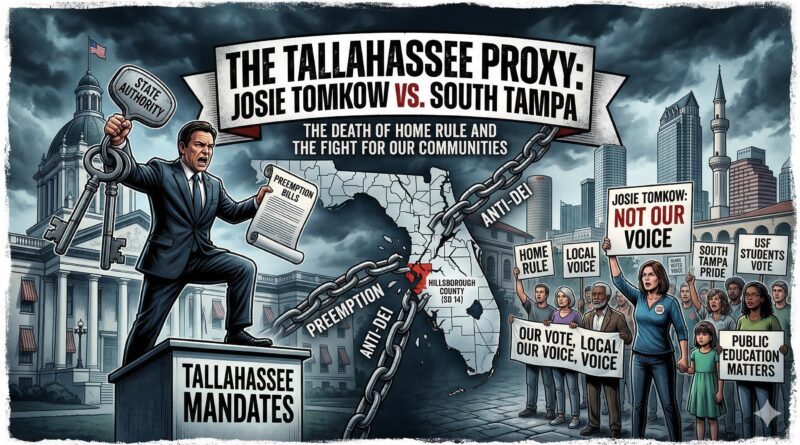
For decades, the “Home Rule” philosophy was the bedrock of Florida governance—the common-sense idea that the people who live in South Tampa and Northwest Hillsborough are better equipped to run their communities than a bureaucrat in a distant capital. But after the 2026 Legislative session, that principle isn’t just under attack; it’s being systematically dismantled. At the center of this power grab is Representative Josie Tomkow, a Polk County resident now seeking to represent Senate District 14. While her campaign paints a picture of “common sense” leadership, her voting record tells a different story: one of a reliable “yes-man” for a Tallahassee establishment that views your local autonomy as an obstacle to be cleared.

From voting to strip your city council of the power to host local cultural festivals to supporting state-level takeovers of local zoning boards, Tomkow has consistently prioritized state authority over your backyard reality. Whether it’s placing barriers at the ballot box for USF students or diverting your tax dollars away from public classrooms, her record is a blueprint for centralization. Senate District 14 doesn’t need a proxy for the Governor’s office; it needs a champion for its own streets. We’re taking a deep dive into the specific “preemption” bills Tomkow supported and why her vision for Florida is a direct threat to the independence of the Tampa Bay area.

[Read the full analysis here: The Death of Home Rule and the Rise of the Polk County Proxy]

Read more