
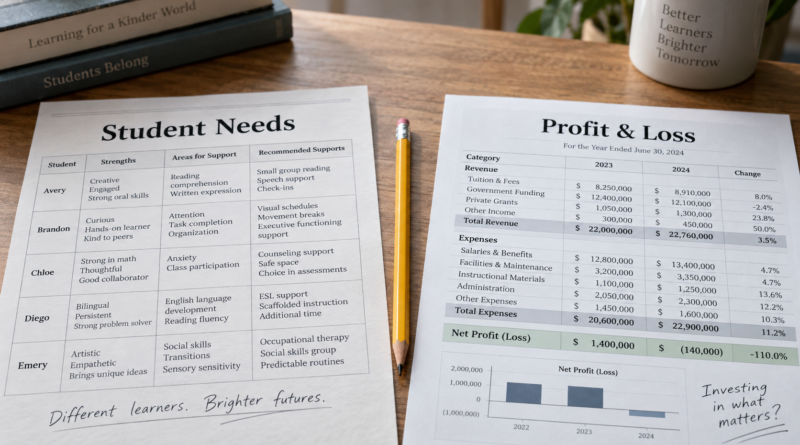
Some Things Should Not Be Run for Profit

This entry is in the series Education

What if the biggest mistake in Florida’s education debate is assuming schools should work like ordinary businesses?

Markets reward efficiency, control costs, and give consumers choices. Public education has a different job. It has to serve every child, including the student who needs far more support, the student who needs advanced opportunities, and the student whose family could never afford to buy those services on its own.

That is why I think the debate over vouchers and school choice has to go deeper than whether competition can improve some outcomes. The real question is whether K-12 education should be organized around market incentives at all.

In this essay, I look at what happens when we confuse efficiency with public duty, and why some things may work better when the goal is not profit, but making sure everyone is served.

Read more

What Is the Money For?

This entry is in the series The Stoics

A single mother stops at a traffic light and hands five dollars to a homeless person. Jeff Bezos pledges $10 billion to fight climate change. Bezos will accomplish far more with his gift. Yet the mother may have given up something she needed.

That distinction sits at the heart of my latest essay. The world’s richest people possess more money than they could spend across several lifetimes. Their fortunes keep growing while the planet warms, public institutions weaken, and millions struggle to survive. Their philanthropy does useful work, though it rarely costs them any comfort or power.

So what is all the remaining money for? The answer takes us through the Gilded Age, the widow’s offering, other religious traditions, private bunkers, life extension, and the strange belief that enough wealth can free someone from the fate shared by every human being.

Read more