
Some Things Should Not Be Run for Profit

This entry is in the series Education

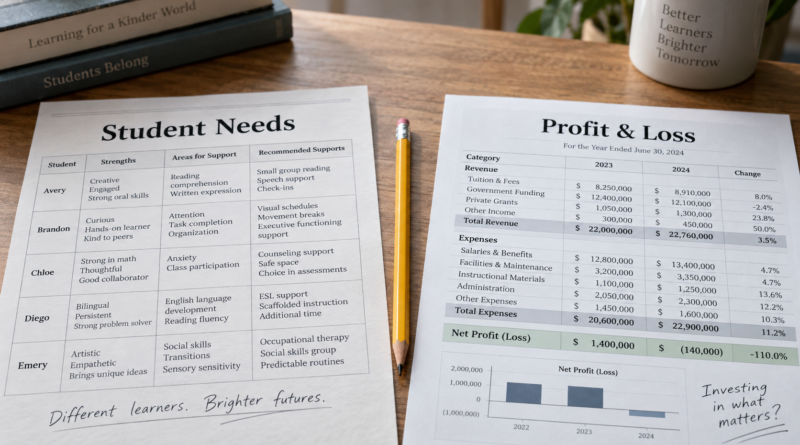
What if the biggest mistake in Florida’s education debate is assuming schools should work like ordinary businesses?

Markets reward efficiency, control costs, and give consumers choices. Public education has a different job. It has to serve every child, including the student who needs far more support, the student who needs advanced opportunities, and the student whose family could never afford to buy those services on its own.

That is why I think the debate over vouchers and school choice has to go deeper than whether competition can improve some outcomes. The real question is whether K-12 education should be organized around market incentives at all.

In this essay, I look at what happens when we confuse efficiency with public duty, and why some things may work better when the goal is not profit, but making sure everyone is served.

Read more
When “School Choice” Stops Meaning Public Education

This entry is in the series Education

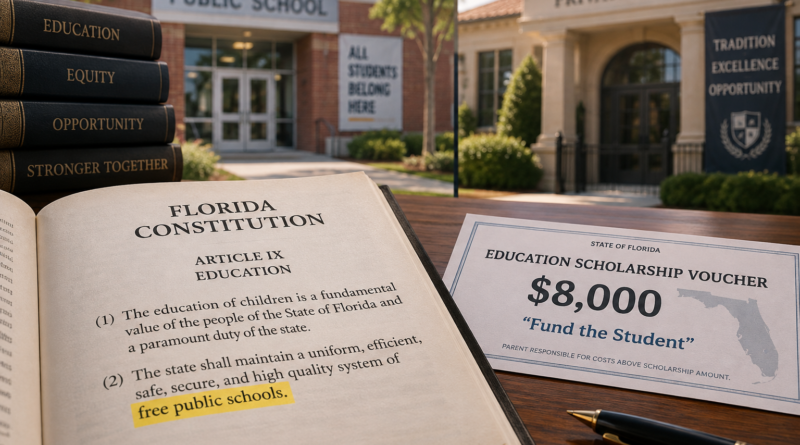
Florida’s new Education Commissioner has said the state does not need to run schools at all. That raises a question that goes well beyond vouchers: what happens when “school choice” starts replacing the idea of public education itself?

Florida’s Constitution requires a system of free public schools. Yet an $8,000 voucher does not guarantee admission, does not guarantee a free education, and means something very different to a family that can add another $30,000 than it does to one that cannot. That is why the slogan “fund the student” leaves out so much.

At our Voices of Justice: Speak Up for Students program earlier this year, USF education policy professor Dr. Bill Black asked a simple question: “What is public in public education?” With Florida moving further toward publicly funded private education, that question deserves a much closer look.

Read more

Whose Choice Is It?

This entry is in the series Education

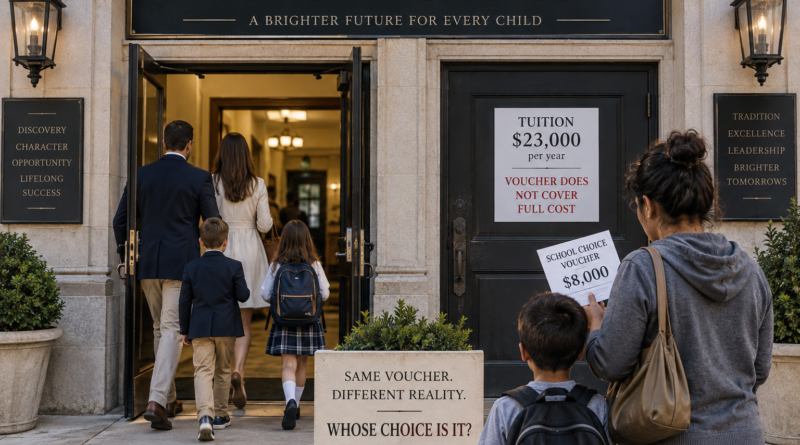
Florida calls it school choice. But choice for whom?

An $8,000 voucher may open doors for a family that can add another $10,000 or $15,000. For a family that cannot, the same voucher may leave those doors closed. And even when the money is there, private schools still decide whom they admit. That raises a harder question than the slogan suggests: whose choice is it?

In this essay, I look at what public education was created to do, what Florida is changing, and why the stakes go far beyond schools. Drawing on our March Voices of Justice: Speak Up for Students program at Hyde Park United Methodist Church, including insights from USF education policy professor Dr. Bill Black, I argue that public education is one of the few institutions designed to give every child a claim on shared public wealth. Weakening that promise risks hardening the very class divisions public schools were built to overcome.

Read more