
Chalkboard Democracy

This entry is in the series 2026 Elections

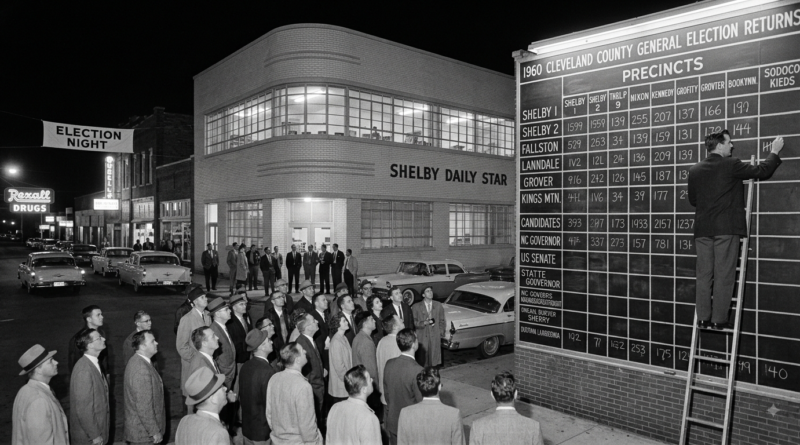
Today is Election Day, and I found myself thinking about election nights as a kid. In the 1960s and 70s, election night in Cleveland County, North Carolina, meant going downtown to Shelby.

The Shelby Daily Star had a huge chalkboard on the side of its building. Across the top were the precincts. Down the side were the candidates, grouped by office. A couple of men stood on ladders with chalk in their hands, waiting for numbers. No instant returns scrolled across a television screen. No website refreshing every few seconds. No phone buzzing with alerts.

There was something valuable about standing in a crowd with your neighbors and watching democracy happen one precinct at a time. Something worth remembering about seeing the people who disagreed with you standing only a few feet away, waiting for the same piece of chalk to move across the same board.

Maybe the chalkboard was primitive, but the gathering was citizenship.

Read more

Viktor Frankl: The Last Human Freedom

This entry is in the series The Stoics
This entry is in the series Journey Through Stoicism

There are seasons in life when the question is no longer whether things are difficult. The difficulty is already there. A parent dies. A career changes unexpectedly. A familiar version of life begins slipping away, and suddenly the future feels less certain than it once did. In those moments, we are left asking a quieter and more important question: What now?

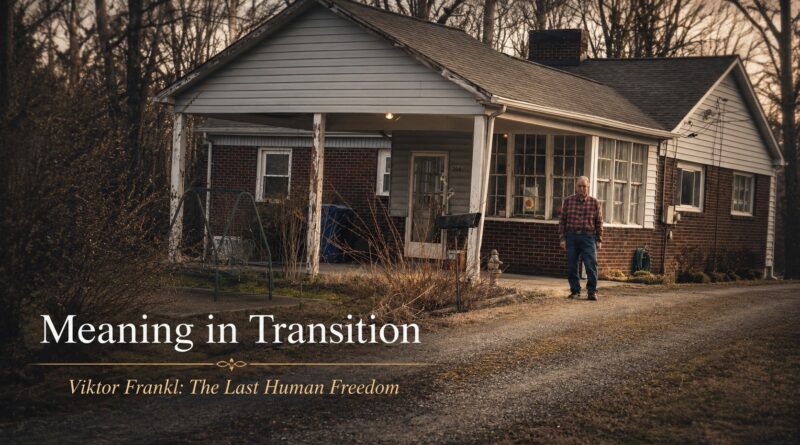
In this essay, I reflect on Viktor Frankl, a Holocaust survivor, psychiatrist, and author of Man’s Search for Meaning. Through Frankl’s life and philosophy, and through some deeply personal experiences of grief, transition, and rebuilding, I explore the idea that meaning is not something we discover once and hold forever. It is something we continue choosing, step by step, even when life feels unsettled. Read more.

Read more

Stoic Practices: Negative Visualization

This entry is in the series Journey Through Stoicism
This entry is in the series Stoicism Practices

What if imagining loss could make life feel fuller, not darker? The Stoics called it premeditatio malorum—the quiet practice of picturing what could go wrong, not to suffer in advance, but to steady the heart for when it does.

In this new essay, I write about sitting beside my mother near the end of her life, and later facing my own health scare. Both moments taught me that rehearsing misfortune isn’t about fear. It’s about gratitude. The kind that comes from realizing how much you already have.

Read more

Boone, Facebook, and Marcus Aurelius…Oh My

This entry is in the series Journey Through Stoicism

I came across a meme that read, “There are two places you need to go often: The place that heals you. The place that inspires you.” It struck me deeply, because for me, one of those places is Boone, North Carolina, where I went to college. But as I reflected on that idea through the lens of Stoic philosophy, I realized the Stoics might offer a very different kind of guidance: to go inward. This essay explores the contrast, and surprising harmony, between modern healing and ancient inner retreat.

Read more