
A Softer Kind of Courage

This entry is in the series Journey Through Stoicism

What if strength does not always look like pushing harder?

In this new essay, I reflect on the habit of staying busy when financial pressure, uncertainty, and professional pride start to feel heavy. Being active can help us move forward, but it can also keep us from facing what’s already there. A surprising lesson from the human lungs opened another way of thinking about courage, one built around softness, space, and the wisdom to release what we can’t control.

The Stoics never asked us to become rigid. They asked us to see clearly, act where we can, and stop exhausting ourselves against what will not move. A Softer Kind of Courage is about learning when effort serves us, when it becomes avoidance, and why sometimes the bravest thing we can do is pause long enough to breathe.

Read more

The Decision Was Mine-The Outcome Was Not

This entry is in the series Journey Through Stoicism

Lately, life has been asking for more decisions than usual. Not small ones, but the kind that seem to carry a future inside them. Work. Money. Health insurance. A parent’s care. A funeral. An estate. What to keep. What to let go. What to protect. What to release. In this season, I have learned that decision-making is not only a matter of logic. It also carries emotional weight, especially when the outcome remains uncertain.

In this essay, I reflect on a difficult job-search decision that still brings occasional regret, and how Stoic philosophy helps me think about it more clearly. The Stoics remind us that we can control the care, judgment, and integrity we bring to a decision. We cannot control the outcome. That distinction does not eliminate uncertainty, but it does offer a kind of mercy. Sometimes the best we can do is choose honestly from the place where we stand, then release what was never fully ours to command.

Read more

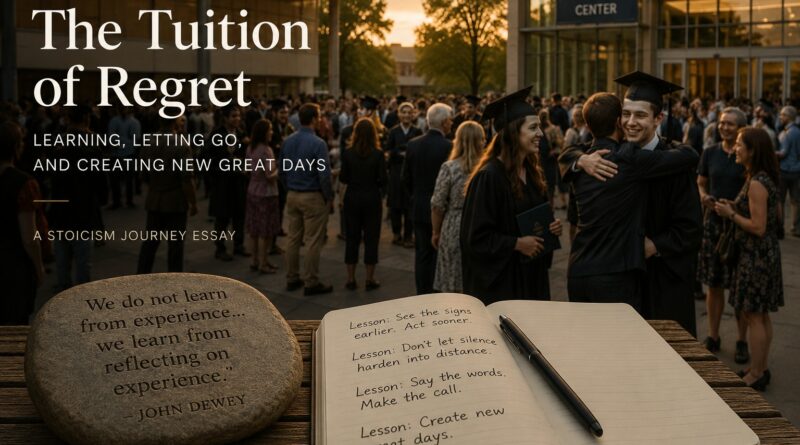
The Tuition of Regret

This entry is in the series Journey Through Stoicism

Most of us have regrets, whether we admit them or not. A word spoken too sharply. A kindness withheld. A friendship allowed to drift. A warning sign ignored until it was too late. We may like the idea of living with “no regrets,” but that has always struck me as too clean. If we have lived fully, loved deeply, failed honestly, or hurt someone along the way, regret eventually finds us.

In this essay, I explore regret through the lens of Stoicism, Daniel Pink’s work on The Power of Regret, and my own recent life. I have come to think of regret as life’s tuition. Nobody wants to pay it. Sometimes it is painfully expensive. But if we refuse to learn the lesson, we pay the tuition and never receive the education.

The Stoics did not ask us to deny regret or drown in it. They asked us to examine it, learn from it, make amends where we can, and then lay it down. Regret is not meant to become a permanent home. It is a classroom. The lesson may be to call the friend, offer the apology, act sooner, speak more gently, or create new great days while we still can.

Read more

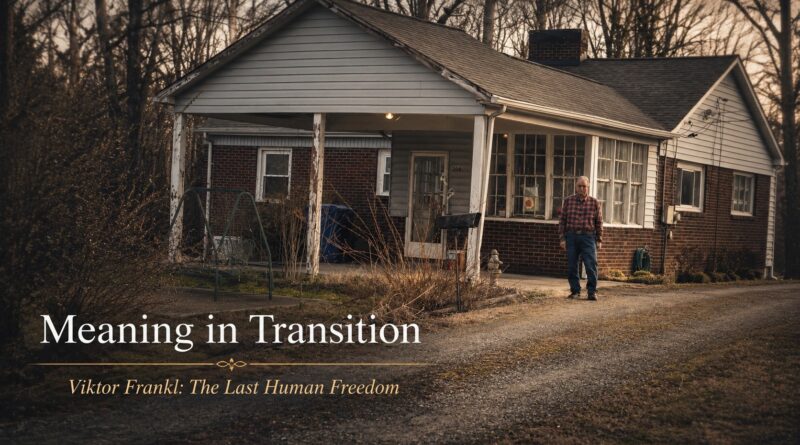
Viktor Frankl: The Last Human Freedom

This entry is in the series Journey Through Stoicism
This entry is in the series The Stoics

There are seasons in life when the question is no longer whether things are difficult. The difficulty is already there. A parent dies. A career changes unexpectedly. A familiar version of life begins slipping away, and suddenly the future feels less certain than it once did. In those moments, we are left asking a quieter and more important question: What now?

In this essay, I reflect on Viktor Frankl, a Holocaust survivor, psychiatrist, and author of Man’s Search for Meaning. Through Frankl’s life and philosophy, and through some deeply personal experiences of grief, transition, and rebuilding, I explore the idea that meaning is not something we discover once and hold forever. It is something we continue choosing, step by step, even when life feels unsettled. Read more.

Read more

Musonius Rufus: The Stoic Who Made It Practical

This entry is in the series The Stoics
This entry is in the series Journey Through Stoicism

It is easy to agree with good ideas. It is much harder to live them. Most of us know what matters. We know how to respond, what to prioritize, and what kind of discipline leads to a better life. The challenge is not understanding. It is carrying that understanding into the ordinary moments where it is easiest to let it slip.

In this essay, I explore the Stoic philosopher Musonius Rufus, who believed philosophy should be visible in how we live, not just in what we think. Through his practical approach and my own experience with long-term health and discipline, this piece looks at what it means to stay aligned with what we believe, especially when it would be easier not to. Read more.

Read more

Seneca Would Feel Right at Home Today

This entry is in the series The Stoics
This entry is in the series Journey Through Stoicism

Some frustration doesn’t come from a single moment, but builds up slowly. You see decisions that don’t make sense and hear confident words that don’t match reality. Over time, it’s less about disagreement and more about a quiet, steady exhaustion that stays with you.

Seneca lived in a world like this. He didn’t write from a safe distance, but from inside a system full of power, instability, and contradiction. He didn’t ignore the chaos or pretend it didn’t matter. Instead, he asked a tougher question: What part of this is really mine to carry? And what if I let go of the rest?

Read more

The Shipwreck That Built a Philosopher

This entry is in the series Journey Through Stoicism
This entry is in the series The Stoics

Zeno of Citium did not set out to build a philosophy. He lost everything in a shipwreck and found himself standing in the space that follows when a life no longer makes sense. What came next was not a sudden breakthrough, but a slow rebuilding. One question, one step, one adjustment at a time.

As you read, pause and consider: When has your own life been disrupted? Was there a time when the loss of certainty or a sudden change became the ground for something new to grow? Reflect on what you discovered or how you changed in that space between what was lost and what came next.

This essay explores how that kind of disruption reshapes a life, and how Zeno’s response still speaks to us. When plans fall apart and the story changes without warning, the Stoic path is not about control. It is about learning where to stand when nothing else feels stable.

Read more

Who Are the Stoics?

This entry is in the series Journey Through Stoicism
This entry is in the series The Stoics

Let’s be honest: when you hear the word Stoic, maybe you picture a distant figure, an old philosopher in flowing robes, sitting far away from the noise and chaos of real life. But the real heart of Stoicism isn’t about detachment or shutting down your feelings. It’s actually a philosophy for living well in a complicated world. That neat, distant image isn’t just outdated—it completely misses the point.

The Stoics weren’t removed from life—they were in the middle of it. They argued in marketplaces, advised emperors, endured exile, and faced the same uncertainty, loss, and frustration we deal with today. And they weren’t all ancient relics either. Stoicism didn’t disappear with Rome; its ideas have carried forward across the centuries and still shape how we think about resilience, purpose, and how to live well.

This new sub-series begins by asking a simple question: Who were these people, really? We start at the beginning—with Zeno—and begin to see the Stoics not as distant figures, but as companions in a conversation that’s still unfolding.
Read more ?

Read more

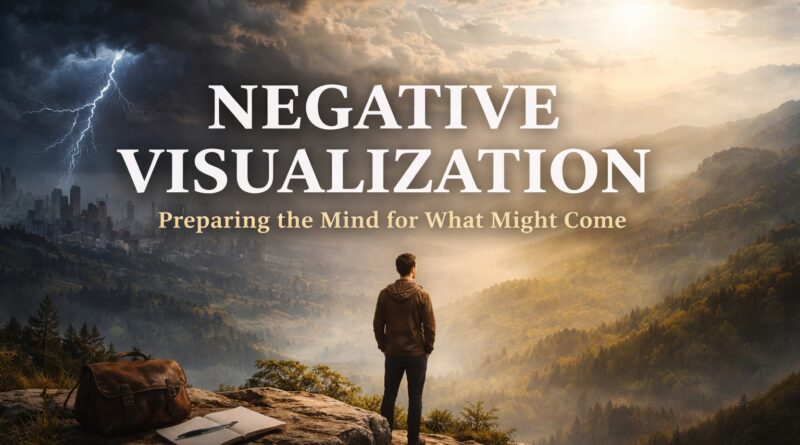
Negative Visualization

This entry is in the series Journey Through Stoicism
This entry is in the series Stoicism Practices

Most people deal with uncertainty in one of two ways. They either worry endlessly about everything that might go wrong… or they assume nothing will. Neither approach prepares us very well for real life.

The Stoics practiced something different. They called it premeditatio malorum — the premeditation of difficulties. Instead of imagining every possible disaster, they briefly considered the challenges that might realistically arise and thought about how they would respond.

This simple mental exercise doesn’t increase anxiety. It reduces it. By removing surprise, it helps us meet life’s difficulties with steadiness rather than panic.

Read more

Virtues: Acceptance

This entry is in the series The Stoic Virtues
This entry is in the series Journey Through Stoicism

Acceptance is not resignation. It is the moment when the mind stops fighting reality and starts working with it. I learned that watching a man who rides a three-wheeled electric bike around Tampa with a smile that seems to rise from the inside out.

The Stoics taught that acceptance begins when we stop struggling against what we cannot change. I have been learning this the slow way, through grief, uncertainty, and the small moments that reveal what the heart is holding.

Read more