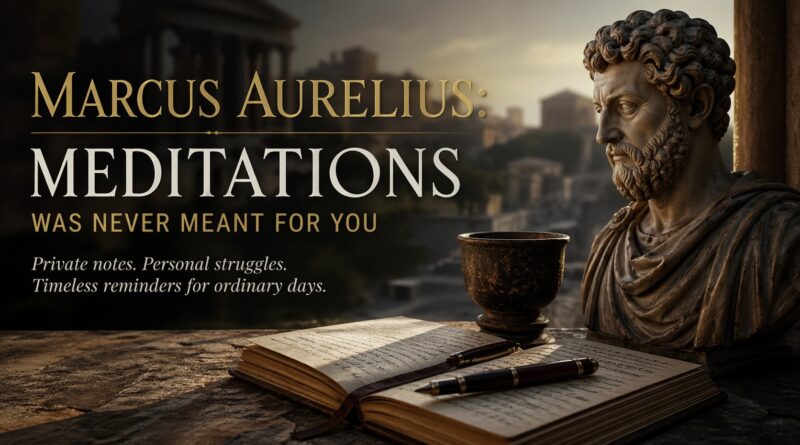

Marcus Aurelius: Meditations Was Never Meant for You

This entry is in the series The Stoics
This entry is in the series Journey Through Stoicism

Most of us think philosophy is meant for big moments like crisis, loss, and life-altering decisions. But what if it’s actually meant for something quieter? The ordinary days when nothing falls apart, but something still feels off. The slow drift of attention, the small irritations that take more than they should, the moments where we lose our footing without even realizing it.

Marcus Aurelius never intended his Meditations to be read by anyone. They were private notes. Reminders to himself to stay grounded, to respond better, to return to what he knew mattered. In this essay, I explore how those quiet, personal corrections still speak to us today, and why we don’t need an empire to govern, just a Tuesday to get through. Read more.

Read more

A Philosophy for Ordinary Days

This entry is in the series The Stoics
This entry is in the series Journey Through Stoicism

Most days don’t fall apart at once. They wear you down slowly. A delayed response. A shifting plan. A handful of small irritations that, by themselves, don’t seem worth mentioning. But by the end of the day, something feels off. Not broken, just diminished.

We think Stoicism is for big moments: war, loss, crisis. But what if it’s really for ordinary days? This essay explores how Massimo Pigliucci brings Stoicism out of ancient Rome and into the daily friction where character is tested.

Read more

Seneca Would Feel Right at Home Today

This entry is in the series Journey Through Stoicism
This entry is in the series The Stoics

Some frustration doesn’t come from a single moment, but builds up slowly. You see decisions that don’t make sense and hear confident words that don’t match reality. Over time, it’s less about disagreement and more about a quiet, steady exhaustion that stays with you.

Seneca lived in a world like this. He didn’t write from a safe distance, but from inside a system full of power, instability, and contradiction. He didn’t ignore the chaos or pretend it didn’t matter. Instead, he asked a tougher question: What part of this is really mine to carry? And what if I let go of the rest?

Read more

The View from Above

This entry is in the series Stoicism Practices
This entry is in the series Journey Through Stoicism

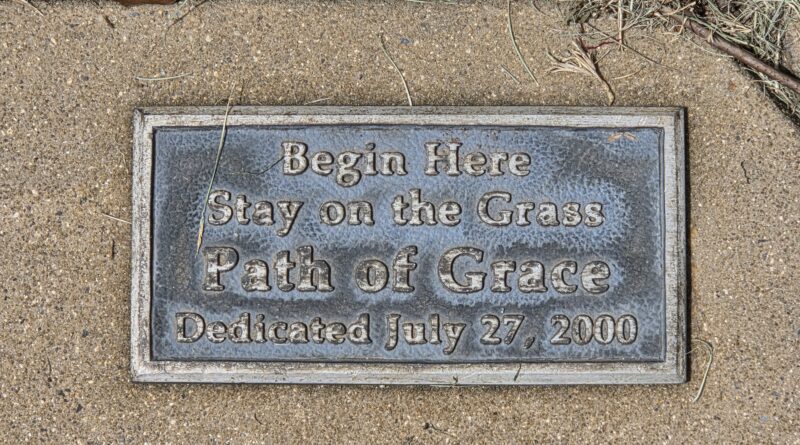
I walked the hospital garden and followed the path of grace. At the end a bronze plaque carried lines from Psalms nine and ten. Refuge for the oppressed. God hears the afflicted. The metal was warm under my hand. Nothing was fixed. Yet something in me settled enough to breathe.

The Stoics call it the View from Above. Rise in your mind. See the room, the floor, the building, the town, the small blue world. The pain stays real, but it finds its size. From there the next right act appears. Ask a clear question. Hold a hand. Eat. Pray. Sleep if you can. The practice pairs with the dichotomy of control and with evening reflection. It opens the frame, then helps you learn from the day.

Tomorrow I head to Boone while my sister and a caregiver sit with Mom. Those mountains have taught me to climb, look, and return. The Wesleyan way names that rhythm as grace. Action without contemplation is unrooted. Contemplation without action is inconsequential. In a brittle season for our republic, this practice steadies my voice and keeps my heart useful.

Read more

Expecting Trouble-Premeditatio Malorum

This entry is in the series Journey Through Stoicism

Trouble will come. That is not a threat. It is the world as it is. Premeditatio malorum is simple training for a steady heart. Picture what could go wrong. Picture your first response. Keep it short. Keep it concrete. You cannot script life. You can be ready to meet it. Then even hard days make room for small good things. A call from a friend. Light on the trees at dusk. Thanks for what remains.

Read more

Embracing the Unforeseen

This entry is in the series Journey Through Stoicism

So I’ll drive north. I’ll carry with me a fortune cookie scrap of paper that turned out wiser than I expected. And I’ll try to remember that philosophy is not about lofty words on a page. It’s about how you hold yourself when the phone rings at 3 a.m., how you respond when plans dissolve, how you see both the bitter and the sweet.

Marcus and Seneca remind us: surprises are not intruders. They are part of the order of things. To embrace them is to live in step with nature itself.

And maybe that is the real fortune. Not that life will protect us from pain, but that it will give us endless chances to practice courage, patience, and love.

Read more

Stoic Practices: The Dichotomy of Control

This entry is in the series Stoicism Practices
This entry is in the series Journey Through Stoicism

The Dichotomy of Control teaches that some things are up to us and some are not. My own health journey and a job loss taught me that lesson in very different ways. Both proved the same point: act fully where you can, and accept what you cannot change.

Read more