
Marcus Aurelius: Meditations Was Never Meant for You

Most of us think philosophy is meant for big moments like crisis, loss, and life-altering decisions. But what if it’s actually meant for something quieter? The ordinary days when nothing falls apart, but something still feels off. The slow drift of attention, the small irritations that take more than they should, the moments where we lose our footing without even realizing it.

Marcus Aurelius never intended his Meditations to be read by anyone. They were private notes. Reminders to himself to stay grounded, to respond better, to return to what he knew mattered. In this essay, I explore how those quiet, personal corrections still speak to us today, and why we don’t need an empire to govern, just a Tuesday to get through. Read more.

Read more

A Philosophy for Ordinary Days

Most days don’t fall apart at once. They wear you down slowly. A delayed response. A shifting plan. A handful of small irritations that, by themselves, don’t seem worth mentioning. But by the end of the day, something feels off. Not broken, just diminished.

We think Stoicism is for big moments: war, loss, crisis. But what if it’s really for ordinary days? This essay explores how Massimo Pigliucci brings Stoicism out of ancient Rome and into the daily friction where character is tested.

Read more

Seneca Would Feel Right at Home Today

Some frustration doesn’t come from a single moment, but builds up slowly. You see decisions that don’t make sense and hear confident words that don’t match reality. Over time, it’s less about disagreement and more about a quiet, steady exhaustion that stays with you.

Seneca lived in a world like this. He didn’t write from a safe distance, but from inside a system full of power, instability, and contradiction. He didn’t ignore the chaos or pretend it didn’t matter. Instead, he asked a tougher question: What part of this is really mine to carry? And what if I let go of the rest?

Read more

The Line You Carry Into the Fire

You don’t usually meet a man like Epictetus directly. Sometimes you meet him through someone else’s breaking point. For James Stockdale, it was the moment he realized he was about to spend years in a prison camp. His response wasn’t panic or denial. It was a quiet shift. “I’m leaving the world of technology and entering the world of Epictetus.” That line points to something most of us don’t think about until we have to. What do you carry with you when everything else is stripped away?

Epictetus developed his philosophy in conditions most of us will never face, yet its core principles apply to everyday life. The difference between what you can control and what you can’t sounds simple, but it changes everything once you start living it. If you’ve ever felt pulled in every direction by things outside your control, this perspective is worth sitting with. Read more to see how one quiet idea can change the way you meet your life.

Read more

The Shipwreck That Built a Philosopher

Zeno of Citium did not set out to build a philosophy. He lost everything in a shipwreck and found himself standing in the space that follows when a life no longer makes sense. What came next was not a sudden breakthrough, but a slow rebuilding. One question, one step, one adjustment at a time.

As you read, pause and consider: When has your own life been disrupted? Was there a time when the loss of certainty or a sudden change became the ground for something new to grow? Reflect on what you discovered or how you changed in that space between what was lost and what came next.

This essay explores how that kind of disruption reshapes a life, and how Zeno’s response still speaks to us. When plans fall apart and the story changes without warning, the Stoic path is not about control. It is about learning where to stand when nothing else feels stable.

Read more

Who Are the Stoics?

Let’s be honest: when you hear the word Stoic, maybe you picture a distant figure, an old philosopher in flowing robes, sitting far away from the noise and chaos of real life. But the real heart of Stoicism isn’t about detachment or shutting down your feelings. It’s actually a philosophy for living well in a complicated world. That neat, distant image isn’t just outdated—it completely misses the point.

The Stoics weren’t removed from life—they were in the middle of it. They argued in marketplaces, advised emperors, endured exile, and faced the same uncertainty, loss, and frustration we deal with today. And they weren’t all ancient relics either. Stoicism didn’t disappear with Rome; its ideas have carried forward across the centuries and still shape how we think about resilience, purpose, and how to live well.

This new sub-series begins by asking a simple question: Who were these people, really? We start at the beginning—with Zeno—and begin to see the Stoics not as distant figures, but as companions in a conversation that’s still unfolding.
Read more ?

Read more

The Fortune Cookie Was Half Right

I cracked open a fortune cookie expecting the usual vague wisdom and got this instead: “Your next Chinese meal will bring you more cookies.” Not exactly life-changing. I laughed, told my husband I’d been handed a prank fortune, and almost tossed it aside. But then I flipped it over.

“A fresh perspective on life is near.” That one stuck. Because lately, something has been shifting. Not loud. Not dramatic. Just a quiet realization that time isn’t as endless as it once felt, and that maybe the hardest lesson isn’t holding on tighter, but learning when to let go. Read the full piece>>

Read more

Why Josie Tomkow is Wrong for Tampa

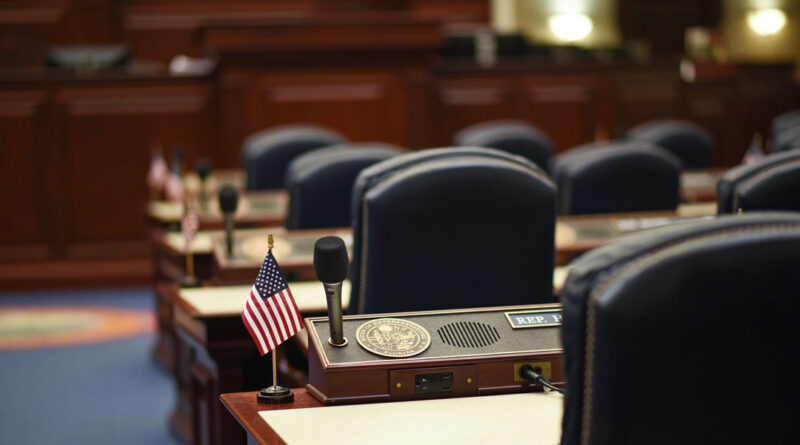
For decades, the “Home Rule” philosophy was the bedrock of Florida governance—the common-sense idea that the people who live in South Tampa and Northwest Hillsborough are better equipped to run their communities than a bureaucrat in a distant capital. But after the 2026 Legislative session, that principle isn’t just under attack; it’s being systematically dismantled. At the center of this power grab is Representative Josie Tomkow, a Polk County resident now seeking to represent Senate District 14. While her campaign paints a picture of “common sense” leadership, her voting record tells a different story: one of a reliable “yes-man” for a Tallahassee establishment that views your local autonomy as an obstacle to be cleared.

From voting to strip your city council of the power to host local cultural festivals to supporting state-level takeovers of local zoning boards, Tomkow has consistently prioritized state authority over your backyard reality. Whether it’s placing barriers at the ballot box for USF students or diverting your tax dollars away from public classrooms, her record is a blueprint for centralization. Senate District 14 doesn’t need a proxy for the Governor’s office; it needs a champion for its own streets. We’re taking a deep dive into the specific “preemption” bills Tomkow supported and why her vision for Florida is a direct threat to the independence of the Tampa Bay area.

[Read the full analysis here: The Death of Home Rule and the Rise of the Polk County Proxy]

Read more

Negative Visualization

Most people deal with uncertainty in one of two ways. They either worry endlessly about everything that might go wrong… or they assume nothing will. Neither approach prepares us very well for real life.

The Stoics practiced something different. They called it premeditatio malorum — the premeditation of difficulties. Instead of imagining every possible disaster, they briefly considered the challenges that might realistically arise and thought about how they would respond.

This simple mental exercise doesn’t increase anxiety. It reduces it. By removing surprise, it helps us meet life’s difficulties with steadiness rather than panic.

Read more

McCarthy in the Mangroves: Florida’s High-Tech Return to the Red Scare

A Flagpole, a Principal, and the New “Thought Police”
If you’ve been following the news in Hillsborough County, you’re likely familiar with the recent “scandal” at Lennard High School—or rather, the scandal that wasn’t. We watched in real-time as Representative Danny Alvarez took to social media to demand a principal’s head over a student walkout that, upon even the slightest investigation, proved to be a non-event handled with textbook safety protocols. It was a classic “Red Scare” tactic: loud, factually hollow, and designed to intimidate. But while the principal’s career was thankfully spared, the mindset behind the attack has just been codified into a terrifying piece of legislation.

HB 945 is currently moving through the Florida legislature, and it should have every citizen—regardless of party—checking their digital locks. The bill seeks to create a new counterintelligence unit with the power to monitor our “patterns of life” and target anyone whose “views or opinions” are deemed “inimical” to the state. In a “Free State” that increasingly feels like a digital panopticon, we are being asked to trust our private data to an administration that can’t even get the facts straight about a local high school gathering.

When “inimical” effectively translates to “unfavorable to the Governor,” we have moved past the era of public safety and into the era of the Thought Police. Backed by a growing, personal “State Guard” militia, this isn’t just a policy shift; it’s a constitutional five-alarm fire. I’ve written a full breakdown of why this return to McCarthyism is a danger to the very fabric of our Republic.
Click here to read “McCarthy in the Mangroves” and see why Florida’s newest law is a direct assault on the First Amendment.

Read more

Apatheia: The Strength of a Steady Mind

The Stoics used the word apatheia to describe a state of emotional balance. While to modern readers it may sound like apathy or indifference, this is a common misconception. Apatheia is not the absence of emotion; rather, it is freedom from destructive emotions that can overwhelm judgment and cloud perception. The key distinction is that apatheia promotes a healthy relationship with emotions, not their elimination.

Epictetus famously taught that people are not disturbed by events themselves, but by the views they take of those events. A delayed response, a harsh comment, or an unexpected setback becomes emotionally painful only after the mind interprets it as something threatening or catastrophic. In that moment, the reaction begins.

The Stoics believed that learning to question those first interpretations is one of the most powerful disciplines a person can develop. When the mind becomes steadier, the emotional storms that once dominated our lives begin to lose their power.

Read more