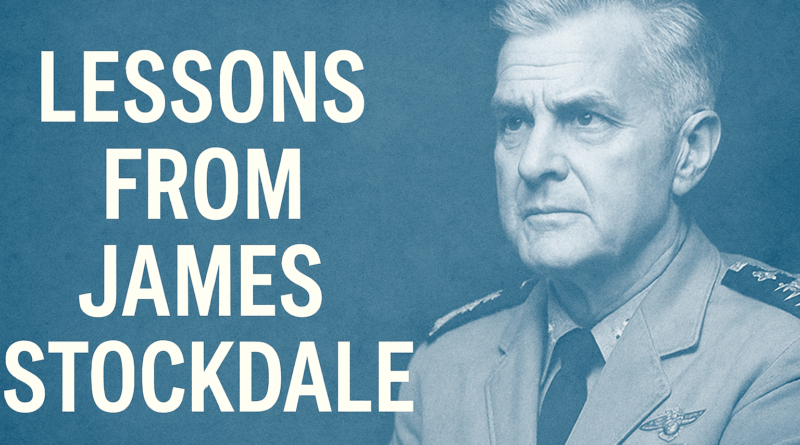

The Line You Carry Into the Fire

You don’t usually meet a man like Epictetus directly. Sometimes you meet him through someone else’s breaking point. For James Stockdale, it was the moment he realized he was about to spend years in a prison camp. His response wasn’t panic or denial. It was a quiet shift. “I’m leaving the world of technology and entering the world of Epictetus.” That line points to something most of us don’t think about until we have to. What do you carry with you when everything else is stripped away?

Epictetus developed his philosophy in conditions most of us will never face, yet its core principles apply to everyday life. The difference between what you can control and what you can’t sounds simple, but it changes everything once you start living it. If you’ve ever felt pulled in every direction by things outside your control, this perspective is worth sitting with. Read more to see how one quiet idea can change the way you meet your life.

Read more


A Flicker Toward Life

It was one of those days that left me both drained and restless. The kind of day that yanks you in every direction and leaves you replaying every moment in your head. By the time I sat down to journal, the day already felt like a blur—frustration, hard choices, and a fragile spark of hope all tangled together. Writing helped me find its shape. The Stoics would call it evening reflection. Wesleyans might call it examen or discernment. Either way, it’s how I pulled a heavy, scattered day into some kind of order.
That night, I saw a flicker of determination in my mom’s words. She had been saying for weeks, “I’m tired, I’m ready to go.” But this time she spoke of rehab, of getting better. It wasn’t conviction, but it mattered. Seneca once said, “Sometimes even when the body is weak, the mind can still rally.” I saw that rally in her, small though it was.
And along the way, there was gratitude—even humor. A friend had kept me talking for nearly ninety minutes on the road, filling the time with what he called his “landscaping philosophy.” Later, when I thanked him for knowing I needed company, he laughed. “You’re giving me too much credit. I just found someone willing to listen to me drone on about mulch and hedges.” That laughter mattered. Gratitude mattered. In days like this, even the smallest things carry weight.

Read more

The Stoic Path I Didn’t Mean to Take

I didn’t go looking for Stoicism. It showed up in fortune cookies, old sermons, Facebook posts, and a quiet reply from my pastor. This essay reflects on the strange, almost fated path that led me to Stoic thought, even before I had a name for it. From “My Creed” to Admiral Stockdale to John Lewis, these moments formed a pattern I couldn’t ignore. Maybe it’s true what Public TV personality Bob Ross said about “happy little accidents.” This was one of them.

Read more

James Stockdale: Resilience, Reality, and the Courage to Endure

This past Saturday, June 21, I attended a live performance of Hidden Brain, hosted by Shankar Vedantam. The theme of the show was how perception shapes our choices. It offered seven short insights, each compelling in its own way. But for me, the most powerful came right at the beginning. Vedantam opened with the story of Admiral James Stockdale. Most people remember him as Ross Perot’s running mate in 1992. In the vice-presidential debate, he opened awkwardly with, “Who am I? Why am I here?” That moment became a punchline, though I’m sure he was being his naturally insightful self. What didn’t make the headlines was the life he had already lived. That life included years of study, intense personal discipline, and an unmatched example of inner strength.

Read more