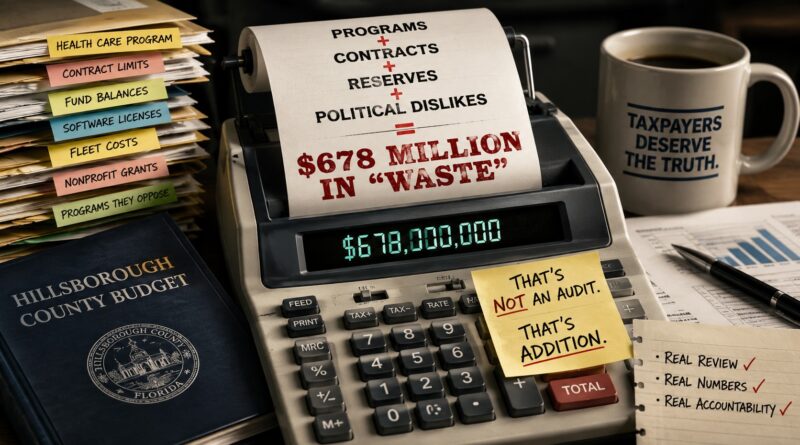
They Did Not Find $678 Million in Waste

This entry is in the series Hillsborough DOGE Report Analysis

The Hillsborough County DOGE committee says it found roughly $678 million in potential savings. That sounds impressive, until you look at what the number actually includes: entire public programs, contract limits, fund balances, possible management changes, and spending choices committee members simply do not support.

In my latest essay, I take a closer look at the report and the difference between finding real waste and labeling any disliked program as waste. The committee may have raised some fair questions about fleet use, software licenses, contracts, and oversight. But cutting a service is not the same as making government more efficient, and a large number is not proof.

Read more
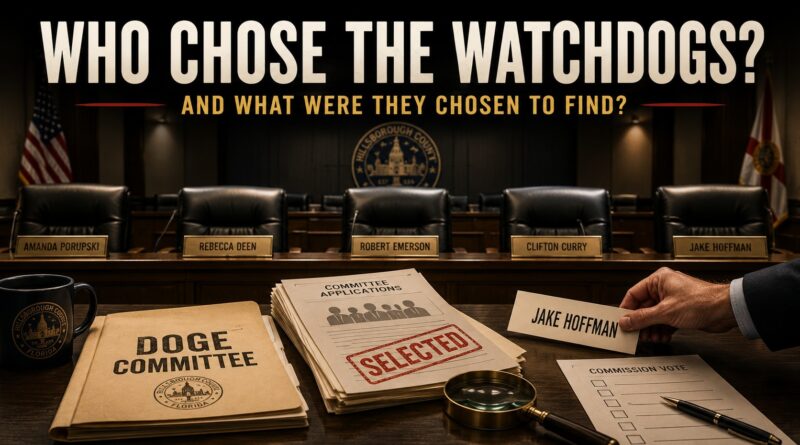
Who Chose the Watchdogs?

This entry is in the series Hillsborough DOGE Report Analysis

Before accepting the Hillsborough County DOGE committee’s findings as a neutral review of county spending, it is worth asking who selected the people doing the reviewing.

The five-member panel included several people with solid professional backgrounds, but only one had clear forensic accounting credentials. At least three had strong Republican Party ties, including committee chair Jake Hoffman, a former Republican candidate and Young Republican leader.

This essay looks at how the committee was formed, how its members were chosen, and why a politically tilted advisory panel should not be treated like an independent audit team.

Read more

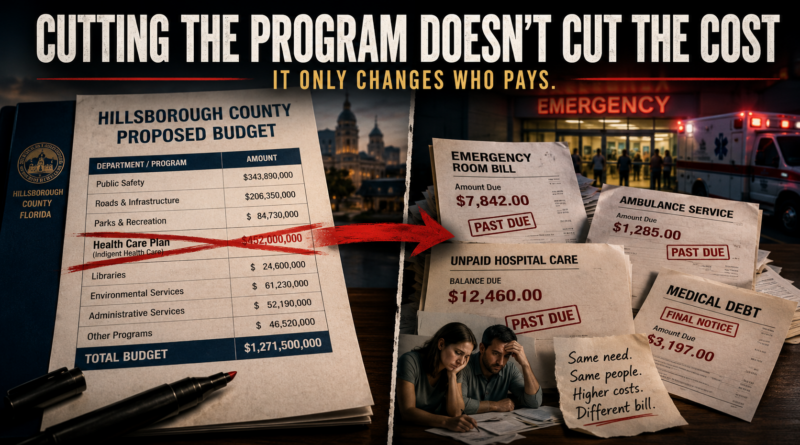
Cutting a Program Is Not the Same as Making Government Efficient

This entry is in the series Hillsborough DOGE Report Analysis

The Hillsborough County DOGE committee calls the county health care plan a source of major savings. But ending care for more than 22,000 low-income residents is not the same as making government more efficient.

This essay looks at what the program actually does, why voters approved the tax that funds it, and what happens when needed care disappears from one budget line only to reappear in emergency rooms, hospitals, charities, and family finances.

Cutting a program may make a spreadsheet look better. The harder question is whether the community pays more when the service is gone.

Read more

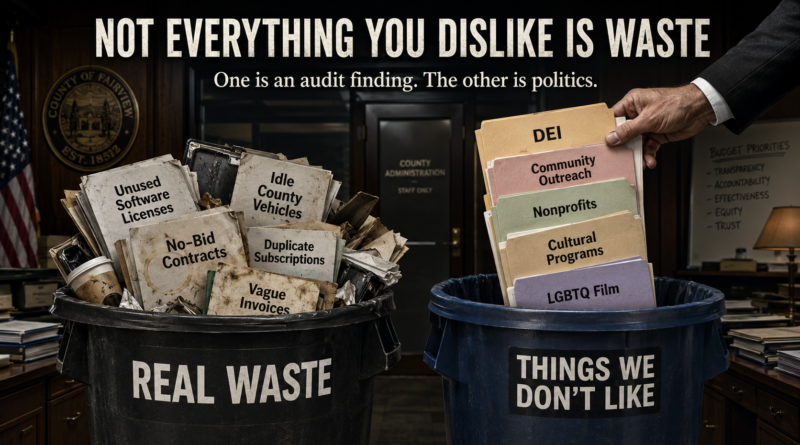
Real Waste, Fake Waste, and Things Republicans Just Don’t Like

This entry is in the series Hillsborough DOGE Report Analysis

Not every proposed cut is the same. Unused software licenses, underused vehicles, vague contracts, and weak bidding rules are real places to look for waste.

But the Hillsborough County DOGE report also targets nonprofits, equity work, community outreach, and cultural programs. In this essay, I separate genuine control problems from programs that appear to have been labeled “waste” because committee members do not like their purpose.

Political opposition is fair. Calling it financial analysis is not.

Read more

The DOGE Method: Lots of Documents, Limited Testing, Very Big Numbers

This entry is in the series Hillsborough DOGE Report Analysis

The Hillsborough County DOGE committee reviewed a large volume of records and announced more than $678 million in possible savings. But its own report also admits that the work involved limited due diligence, no transaction-level testing, and no independent verification.

That does not make the report useless. It does mean the public should treat it as a list of leads, questions, and proposed cuts, not as proof that hundreds of millions of dollars were wasted. A lot of documents can produce a big number. They do not automatically produce an audit.

Read more

When “Waste” Becomes a Political Word Instead of a Financial One

This entry is in the series Hillsborough DOGE Report Analysis

“Waste” should describe money spent badly. Too often, it becomes a political label applied before anyone proves that a program failed, cost too much, or duplicated another service.

This essay looks at how that label can be used to weaken support for public programs before the facts are settled. Real waste should be cut. Political dislike should be debated honestly. Those are not the same thing.

Read more

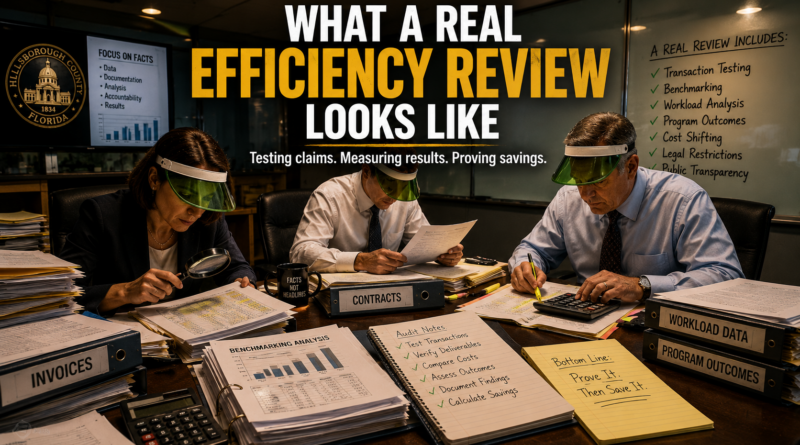
What a Real Hillsborough County Efficiency Review Would Look Like

This entry is in the series Hillsborough DOGE Report Analysis

The Hillsborough County DOGE report raised important questions. However, a true efficiency review must go beyond highlighting large figures. It should test transactions, compare costs, assess workloads, evaluate results, and consider the impact of service reductions.

This final essay outlines the essential elements of a comprehensive review and emphasizes that public trust relies on evidence, not headlines. The objective should be a clear, substantiated case for how each dollar will be saved, rather than the largest possible savings claim.

Read more