
Before We Choose Together
 Not long ago, I wrote about the choices we make as a community. The idea is pretty straightforward. Many of the things that make a place good to live in come from decisions we make through government and civic life. We decide if children have good schools, if our streets and parks are cared for, if people can get help when they need it, and if public institutions treat everyone with dignity. Democracy lets us make these choices together.
But a young man, wise beyond his years, challenged me when he and others from a student a student group came to my church to talk about working together on some programs. He asked me about “power.” This didn’t change my view that government is what we choose together, but it made me think more deeply about my answer. My thoughts are also shaped by some detailed campaign finance research I’ve been doing.
Before we make decisions together, who actually gets to help shape those choices?
On paper, American democracy gives every voter the same political power on Election Day. I get one vote. You get one vote. The wealthy developer gets one. So do the teacher, the retiree, the restaurant worker, and the college student voting for the first time.
But political influence starts much earlier.
Candidates need money. They need introductions, volunteers, and endorsements. They need people who will invite them into the rooms where relationships are built. They also need organizations that take them seriously. Long before most voters start paying attention, a network of donors, party officials, business interests, unions, advocacy groups, neighborhood leaders, nonprofits, and other well-connected people has already begun shaping the race. There is nothing inherently wrong with that. Democracy depends upon relationships.
Someone who has spent years working in a community should have built relationships there. People know their character. They’ve seen how that person handles disagreements. They know if calls get returned after the election.
I’ve seen this firsthand in Tampa. City Councilman Bill Carlson has always been easy to reach. I’ve known him through community work, and I’ve never needed a lobbyist or a special invitation to talk to him. You can bring up an issue with him, even disagree, and he’ll listen and respond.
I’ve had a similar experience with State Senator Brian Nathan. Even with the demands of a Senate campaign and now public office, he’s stayed easy to reach. I’ve been able to talk with him about public policy, politics, and community concerns, even on topics where it would be easy for an official to just give a polite answer and move on.
That kind of access matters.
These examples don’t mean an elected official has to agree with every constituent. That’s impossible, and it would make representative government pretty odd. Access means the conversation stays open. An official hears from people affected by decisions, even those without money, status, or an organization to speak for them.
This is where money and political networks become more important.
Someone who can write a big campaign check has one kind of power. A trade association that can gather contributions has another. Developers, corporations, unions, political committees, advocacy groups, and wealthy individuals can build relationships with candidates over many years. These relationships may be completely legal and genuinely sincere.
But they still matter.
Money pays for communication. It covers mailers, ads, polling, staff, consultants, signs, events, and everything needed to reach thousands of voters. Connections also bring credibility. Support from one influential person leads to an introduction to another. An endorsement opens new doors. A successful fundraiser shows that a candidate should be taken seriously.
Eventually, voters see a candidate who seems to be everywhere. But it’s worth asking what happened before that. Who had the candidate’s ear? Who made the introductions? Which interests provided the money? Which communities had easy access, and which struggled to be heard? Which concerns became part of the campaign, and which ones never got enough attention to become political issues?
Campaign contributions alone don’t answer many of these questions. A donation doesn’t prove someone bought a vote. But it does give us a reason to look more closely at the relationships around political power. We can look at who funds a candidate, what interests those donors represent, what issues matter to them, and how the official acts when those issues come up in government. Then citizens can decide what they think all this means.
There’s another side to political power that matters just as much.
Ordinary people can create that power too.
A neighborhood association can organize.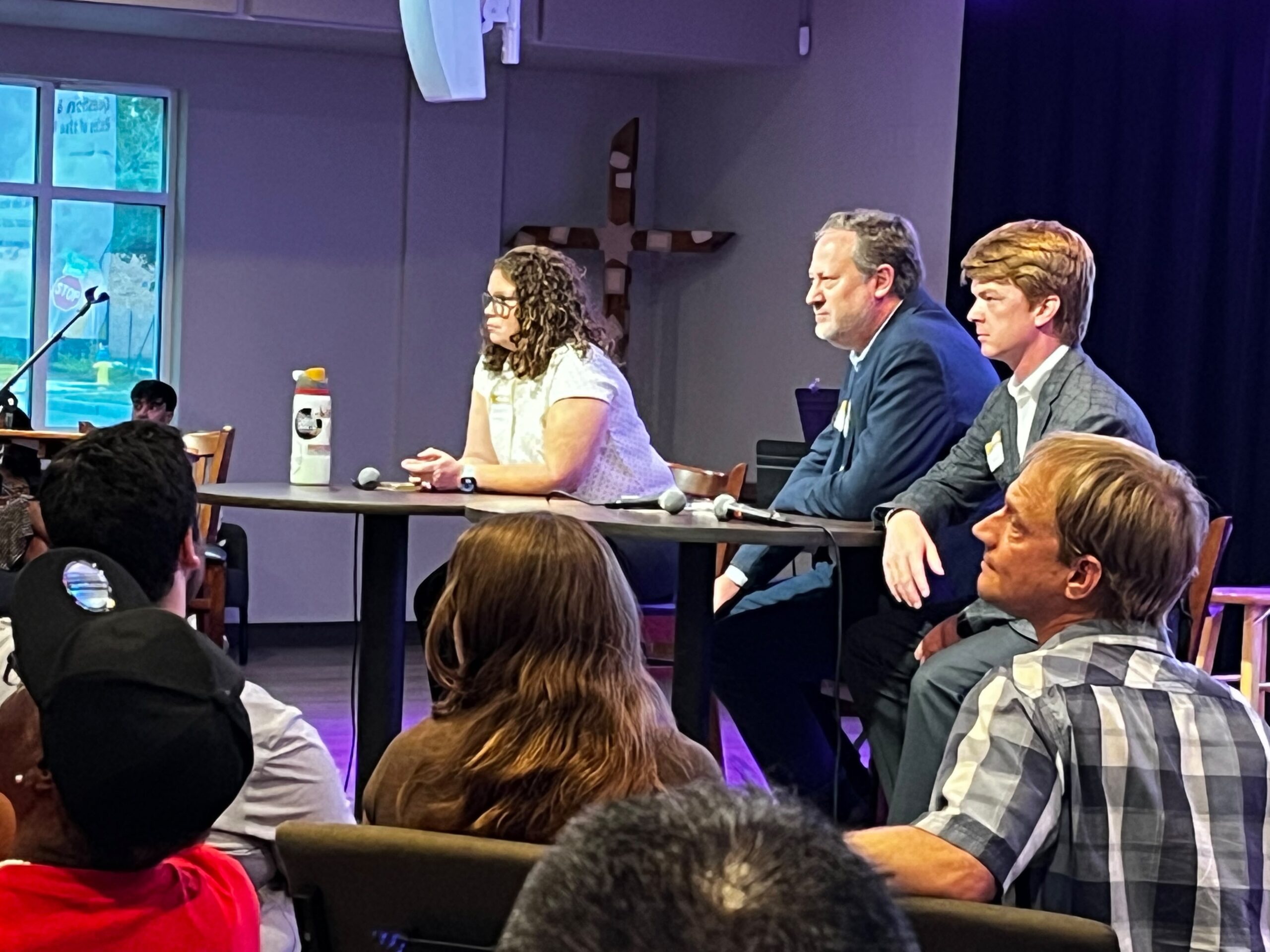 Parents can fill a school board meeting. Church members can work on housing or poverty. Workers can join forces. Young people can register voters. Citizens can learn about campaign finance, follow legislation, attend public meetings, call their representatives, write about what they find, and invite others to join the conversation.
None of this requires a big campaign fund. It just takes institutions that are willing to listen and public officials who remember who they work for.
That might be one of the most important tests of representative government. Can an ordinary citizen get in the door? Will someone answer the phone? Can a constituent ask a tough question without having to prove they belong to the right group or know the right people?
Election Day is hugely important. But democracy is alive on all the days between elections too.
The vote is the final step in a long democratic process.
The health of our democracy may depend just as much on what happens before we choose together.
