
Trump Wants the Midterms to Be About Trump
Donald Trump has found a way to spend part of a $400 million political war chest on the midterms: remind America about Donald Trump. I’m guessing that’s a great idea that Republican candidates can’t wait for.
The Atlantic reports that Trump ordered his super PAC, MAGA Inc., to prepare a series of ads built around his record and his television clips. His advisers apparently told him that voters have failed to appreciate his accomplishments. Trump accepted the explanation and reached a familiar conclusion. America needs more Trump.
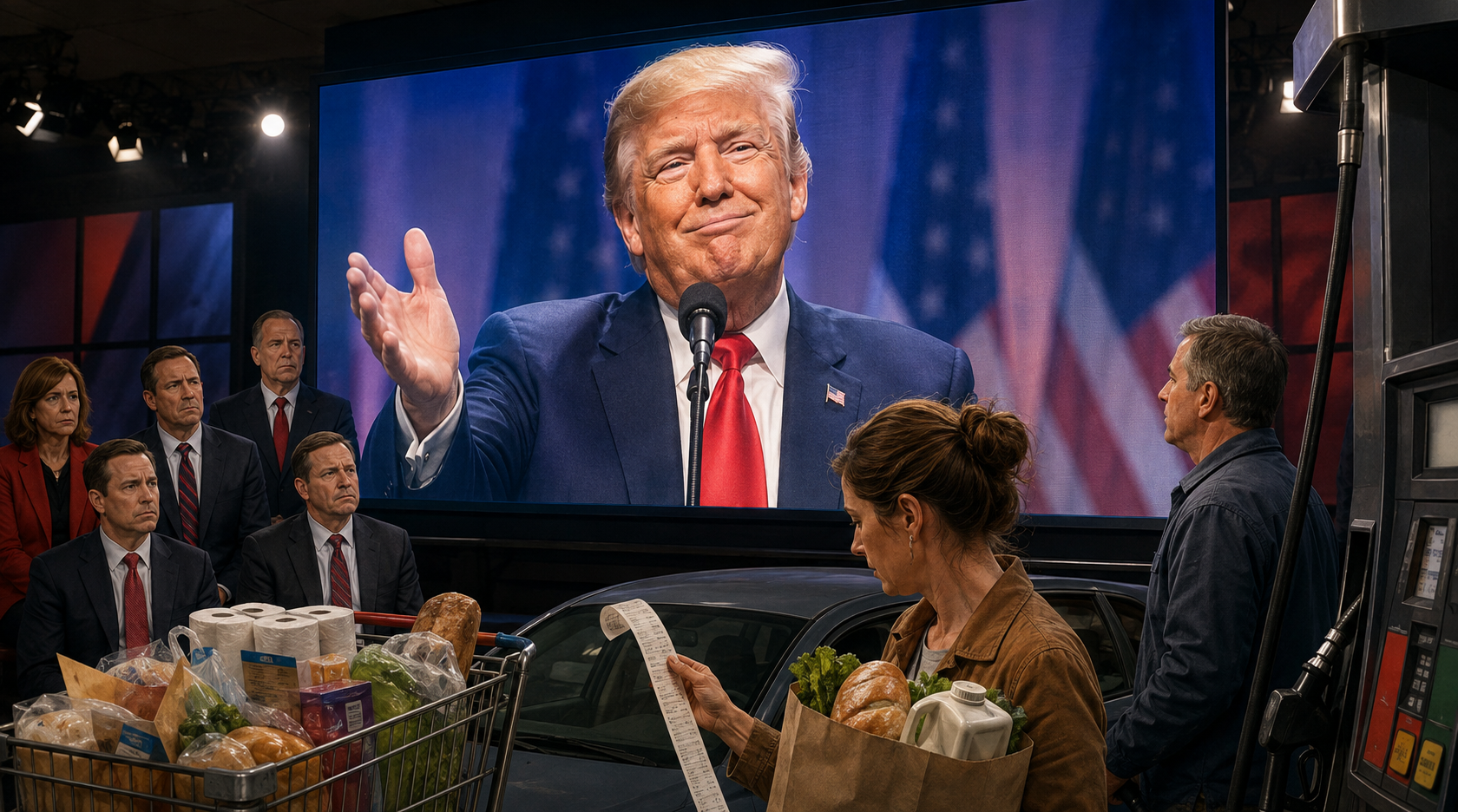 Apparently, the nation has suffered from a shortage of Donald Trump talking about Donald Trump.
That answer must have been comforting. It places the fault on voters who have somehow missed the “Golden Age” happening around them. It also saves Trump from facing a harsher answer: Americans know what he has done, and many of them do not like the results.
His approval rating stood at 34 percent in mid-July, according to the Pew Research Center. That was six points below his rating at the same point in his first term. Democrats held a six-point lead among registered voters in Pew’s July congressional polling. Only 22 percent of Americans described the economy as good, including 3 percent who called it excellent.
These numbers show why Republican strategists want campaigns to focus on local candidates and issues. In safe districts, Republicans can support Trump without much worry. But in swing suburbs, candidates face a tougher challenge. They need support from people who dislike Democrats, are concerned about prices, feel unsure about Trump, and may have voted for him before. Making every race about Trump takes away their chance to present their own message.
Trump still wants them to make the race about him. Somewhere, a Republican candidate in a swing district just developed a nervous twitch.
Trump has told his supporters to behave as if he’s actually on the ballot. He’s planning a two-day rally in Dallas for the midterms. His super PAC wants to run ads about stock market highs, border security, more factory production, tax cuts, and fewer fentanyl deaths.
Some of these claims are based on real improvements. Drug overdose deaths have gone down, which is good news for families. But this trend began before Trump returned to office. The Centers for Disease Control and Prevention said overdose deaths fell by almost 27 percent in 2024. Any president can take credit in an advertisement. Establishing what caused a national health trend takes more than a campaign clip and a confident voice-over.
Factory output went up by 0.2 percent in July, according to the Federal Reserve. But the jobs report gives more context. Manufacturing only added 5,000 jobs that month, while the country lost 23,000 jobs overall, according to the Bureau of Labor Statistics. A small increase in output might make economists happy, but it doesn’t help someone who can’t find work or is worried about losing their job.
The stock market has a similar issue. Record highs are important for investors, retirees, pension funds, and anyone whose savings depend on the market. But they don’t say much about whether families can pay their bills. Pew found that only 18 percent of Americans were very worried about the stock market. Many more were deeply concerned about health care, housing, food, electricity, and gas. Even Republicans ranked these daily costs much higher than Wall Street.
The Dow Jones Industrial Average still hasn’t paid for anyone’s groceries.
The latest numbers show why. In July, consumer prices were 3.4 percent higher than a year before. Food prices went up 3 percent, and energy costs jumped 14.7 percent, according to the Bureau of Labor Statistics. Regular gas averaged about $4.09 a gallon nationwide during the week of August 24, almost 94 cents more than a year ago, according to the Energy Information Administration.
Gas has been more expensive before, so saying today’s price is a record isn’t accurate. But families at the pump still feel the impact. The same is true for groceries. Even if prices rise slowly, the total bill can still be more than a family can handle. Lower inflation doesn’t bring back old prices, no matter how many charts the White House shows.
This is the central weakness in Trump’s plan. He wants to answer lived experience with advertising. When voters say the economy feels bad, he tells them they have overlooked its greatness. When polls show people don’t believe him, his advisers say they just need to see more of him. So he makes commercials of himself praising himself.
It’s like responding to doubt in politics by just speaking louder.
Trump recently told a South Carolina crowd that the country has the greatest economy in its history, adding that some people “haven’t seen it yet.” That sentence contains the whole problem. People see the economy every day. They see it at the supermarket, the pharmacy, the gas station, and the kitchen table when the bills come due. A president cannot talk them out of what those places cost.
Republican candidates know this, even if they can’t say it openly. Many will praise Trump when asked, pose for photos, and repeat enough of his talking points to avoid a primary challenge or criticism online. Then they’ll go back to their districts and focus on other topics.
They don’t have much control over what voters see. MAGA Inc. is a super PAC, so it can run ads on its own without a candidate’s approval. Federal election rules prevent this spending from being coordinated with the candidate. A Republican in a tough race can’t just turn down Trump’s help. The candidate might want an ad about a local factory, but the district could end up seeing Trump talking about how great he is.
This shows the personal motive behind the plan. Trump has a large fund that could help Republican candidates focus on local issues and reach undecided voters. Instead, he’s using part of it to promote himself nationwide. He even told ad makers to find old clips where he praises his own record. Few people approach self-promotion with such tireless devotion.
Democratic candidates have an easy opportunity. They can respond calmly to the ads, recognize any real progress, and shift the focus back to everyday life. Gas is almost a dollar more than last year. Food prices are up another 3 percent. The country lost jobs in July. Voters also need to know what each candidate would do about health care, housing, retirement, and jobs that pay enough. Trump will bring plenty of drama to the campaign. The rest can focus on the real issues.
Voters also have a role. Every Republican in office should explain what supporting Trump’s agenda has done for people in their district. Which votes actually lowered grocery bills? What did their member of Congress do about higher gas and electricity costs? Where are the promised manufacturing jobs? National statistics don’t answer these questions.
Voters should also ask where these candidates stand when Trump’s claims collide with what people can see. Do they agree this is the greatest economy ever? Do they think people are struggling just because they have failed to notice how good things are? If they disagree with Trump, they should say which policy, explain what they did, and show where they voted differently from him.
That last question may create some awkward pauses.
Incumbents are judged by their records. Since Trump came back to office, Republican members of Congress have voted on his nominees, budgets, tax plans, and other parts of his agenda. They’ve chosen when to challenge him and when to stay quiet. They should clearly explain those choices. Being loyal to the president might please the party base, but it doesn’t show families if their representative made life more affordable, safer, or easier.
Maybe Trump thinks his presence will motivate his loyal supporters to vote. That’s a reasonable political strategy. But his campaign will also remind voters who dislike his behavior, his policies, the Iran war, or the cost of living that the Republican-controlled Congress has helped him carry out that agenda.
Trump has asked Americans to act as if he’s on the ballot. Voters should take that seriously and ask every Republican incumbent if Trump’s record is also theirs.
They may want to bring a comfortable chair while waiting for a straight answer.
Sources
- The Atlantic, reporting on Trump, MAGA Inc., the $400 million political fund, and plans to make the midterms a referendum on his record.
- Pew Research Center, August 6, 2026. Trump’s approval rating, congressional polling, and public views of the economy and household costs.
- Centers for Disease Control and Prevention, May 14, 2025. Preliminary figures showing that drug overdose deaths fell by almost 27 percent in 2024.
- Federal Reserve, Industrial Production and Capacity Utilization. July 2026 manufacturing output figures.
- Bureau of Labor Statistics. July 2026 employment figures, including manufacturing jobs and the overall payroll decline.
- Bureau of Labor Statistics, Consumer Price Index. July 2026 figures for consumer, food, and energy prices.
- S. Energy Information Administration. Weekly national gasoline prices, including the August 24, 2026 average.
- Federal Election Commission. Rules governing independent spending by super PACs and their lack of coordination with candidates.
- ChatGPT generated image.
