

The Shipwreck That Built a Philosopher

This entry is in the series The Stoics
This entry is in the series Journey Through Stoicism

Zeno of Citium did not set out to build a philosophy. He lost everything in a shipwreck and found himself standing in the space that follows when a life no longer makes sense. What came next was not a sudden breakthrough, but a slow rebuilding. One question, one step, one adjustment at a time.

As you read, pause and consider: When has your own life been disrupted? Was there a time when the loss of certainty or a sudden change became the ground for something new to grow? Reflect on what you discovered or how you changed in that space between what was lost and what came next.

This essay explores how that kind of disruption reshapes a life, and how Zeno’s response still speaks to us. When plans fall apart and the story changes without warning, the Stoic path is not about control. It is about learning where to stand when nothing else feels stable.

Read more
Who Are the Stoics?

This entry is in the series Journey Through Stoicism
This entry is in the series The Stoics

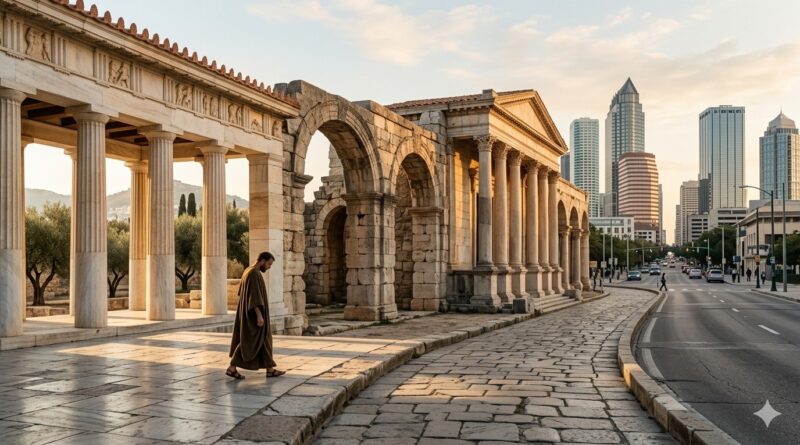
Let’s be honest: when you hear the word Stoic, maybe you picture a distant figure, an old philosopher in flowing robes, sitting far away from the noise and chaos of real life. But the real heart of Stoicism isn’t about detachment or shutting down your feelings. It’s actually a philosophy for living well in a complicated world. That neat, distant image isn’t just outdated—it completely misses the point.

The Stoics weren’t removed from life—they were in the middle of it. They argued in marketplaces, advised emperors, endured exile, and faced the same uncertainty, loss, and frustration we deal with today. And they weren’t all ancient relics either. Stoicism didn’t disappear with Rome; its ideas have carried forward across the centuries and still shape how we think about resilience, purpose, and how to live well.

This new sub-series begins by asking a simple question: Who were these people, really? We start at the beginning—with Zeno—and begin to see the Stoics not as distant figures, but as companions in a conversation that’s still unfolding.
Read more ?

Read more