
What Are We Going to Do Now?
Over the past several days, I have written about the promise of America and the progress we have made toward fulfilling it. The first essay looked back fifty years to our Bicentennial and asked what had become of the optimism so many of us felt in 1976. The second reflected on the long, difficult march toward a more expansive understanding of “We the People,” and the troubling reality that many of those hard-won gains now seem under assault.
Those essays looked backward. This one must look forward.
If I truly believe America has lost its way, then lament alone is not enough. Grief may tell us that something precious has been damaged, but it cannot repair it. Anger may awaken us to injustice, but it is a terrible place to live. Eventually, every citizen who loves this country must answer a more important question.
What are we going to do now?
History tells a different story.
The abolitionists did not know they would prevail. The suffragists did not know they would be able to vote. The marchers crossing the Edmund Pettus Bridge did not know what awaited them on the other side. They acted anyway because they believed some things were worth doing even when success was uncertain.
That is the tradition I choose to inherit.
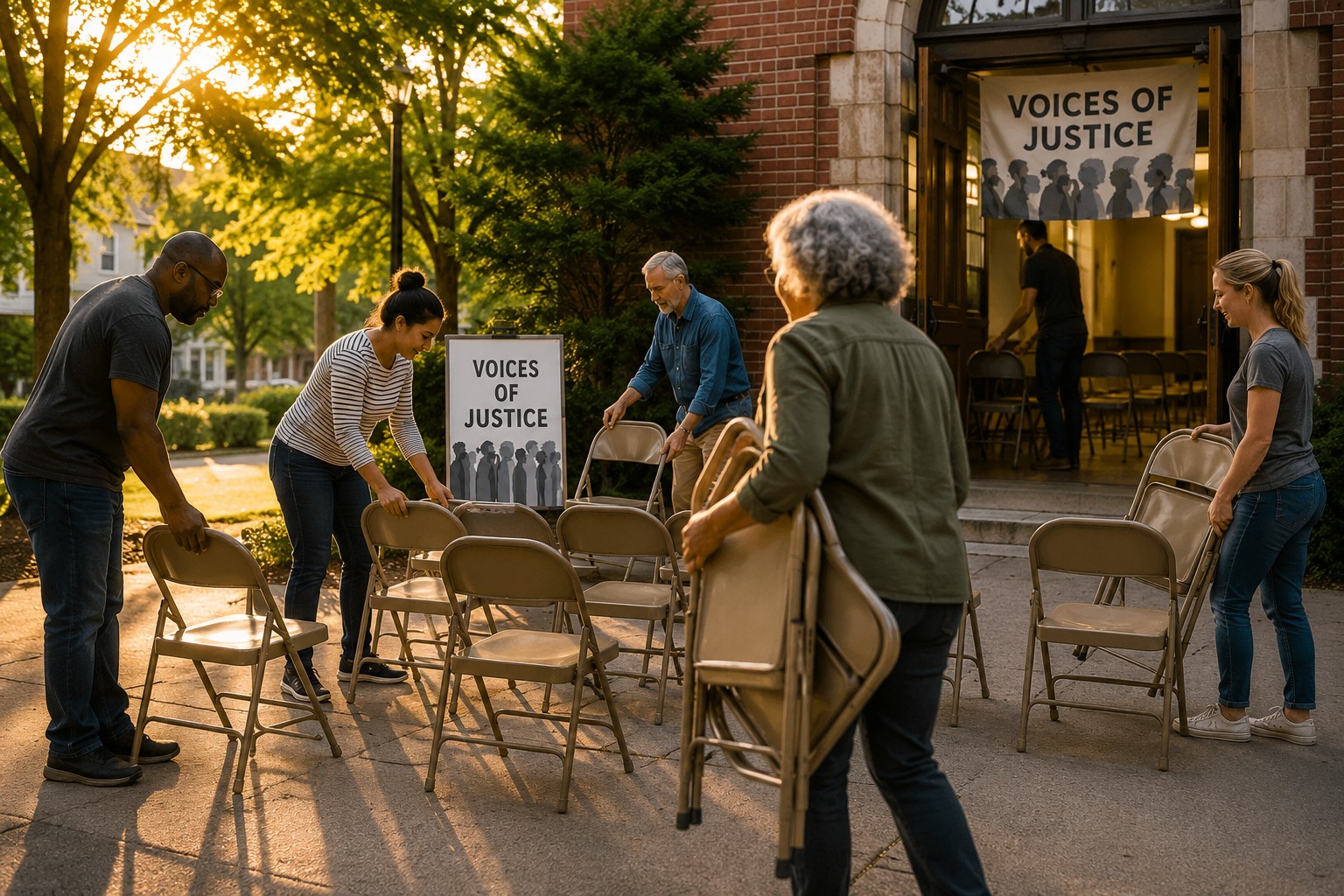 So yes, I intend to keep showing up. I will continue showing up wherever citizenship asks something of me. Sometimes that will mean writing an elected official or speaking at a public meeting. Sometimes that will mean helping build the social justice programs at my church, because faith that never leaves the sanctuary has forgotten half the Gospel.
Sometimes it will mean supporting candidates whose vision is larger than winning the next election and who seek to widen, rather than narrow, the promise of America. Sometimes it will simply mean standing beside a neighbor who has been told they matter less.
The venue matters less than the commitment.
I also intend to keep telling the truth as honestly as I know how. There are moments when calling out bigotry, hatred, corruption, double-speak, or the abuse of power is not partisan. It is an act of citizenship. Silence has never been much of a strategy for preserving democracy.
At the same time, I hope I will continue listening as carefully as I speak.
I may be wrong about some things. Time has a way of humbling all of us. I hope I remain open enough to learn, willing enough to listen, and honest enough to change my mind when the evidence requires it. But there are some convictions I no longer consider negotiable: that every person possesses inherent worth, that honest government matters, that the rule of law protects us all, and that equal justice cannot be reserved only for those with wealth, influence, or political power.
In a recent essay, I reflected on the difference between being partisan and being principled. Principle begins by asking what is true, what is fair, and what responsibility we owe one another. Party begins by asking who wins. I still believe principle is the better guide. As I wrote then, “A principle that never disturbs anyone is probably just a preference wearing nicer shoes.”
Former Congressman Barney Frank once observed that government is simply the name we give to the things we choose to do together. I still believe that. But citizenship is how we choose. Democracy is sustained by what ordinary people decide to do together every day. Every thoughtful conversation instead of another angry post. Every letter written instead of another complaint. Every school board meeting attended. Every vote cast. Every young person encouraged to believe that their voice matters.
Those acts rarely make headlines. They are, however, how democracy survives. Hope is not believing everything will somehow work out. Hope is deciding to become part of the reason it might.
I will keep showing up. I will keep listening. I will keep speaking when silence would be easier. I will keep standing beside those pushed to the margins. I will keep believing that America is still capable of becoming a more perfect Union. Not because I know it will. Because I know it won’t happen unless someone does.
As Ronald Reagan reminded us, “Freedom is never more than one generation away from extinction. We didn’t pass it to our children in the bloodstream. It must be fought for, protected, and handed on…” Whether one agrees with all of his politics or not, that warning remains profoundly true.
Years later, Barack Obama challenged Americans with a different, but complementary truth: “We are the ones we’ve been waiting for.”
I believe both were right. The promise of America is not self-executing. Progress is not inevitable. Neither is retreat.
History has always been shaped by ordinary citizens who decided that the unfinished work was still worth doing.
History will write its next chapter.
The only question is whether we will help hold the pen.
