
When Principle Gets Called Partisan
After an event I helped organize this week, a woman asked me a question that lingered in my mind.
She wondered what a similar event held by “the other side” might look like. Would they just sit around saying ugly things about “us”?
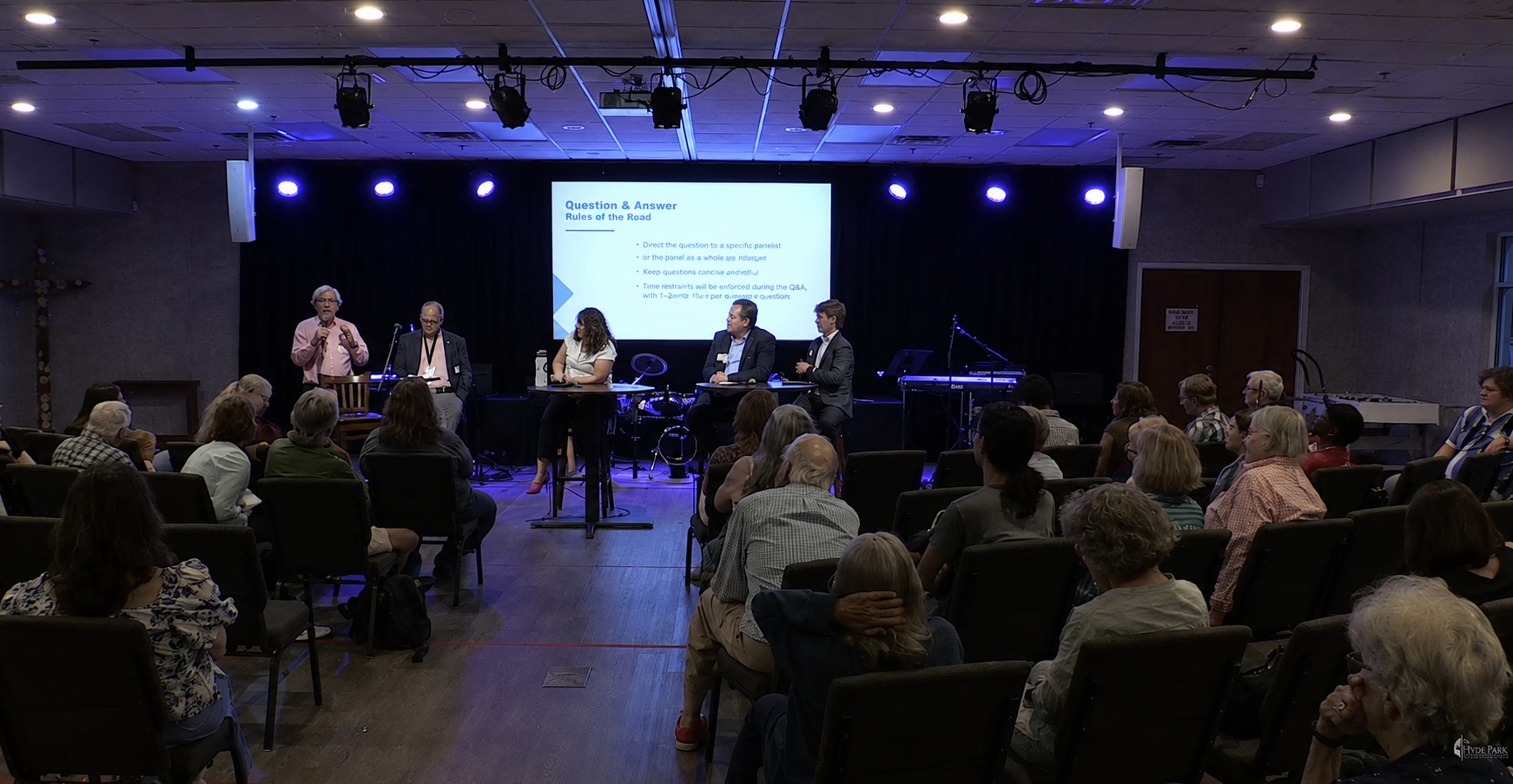 I understood the question. We live in a time when many people assume every public gathering has a hidden partisan agenda. Still, I explained that our programs are intended to be nonpartisan. For example, when planning events, we ensure we do not endorse any candidates or political parties and invite speakers with a range of perspectives. We encourage participants to ask questions and form their own opinions.
Whenever we present information, our team uses sources from across the spectrum and fact-checks them for accuracy. Even when we deal with difficult public issues, the aim is to focus on facts, civic engagement, and how people can participate responsibly. This particular evening was not about telling anyone what issue to support. It was about helping people understand how to speak with elected officials, agencies, and public leaders on whatever issue mattered to them.
She looked at me very seriously and said, “Well, I’m here to tell you this was definitely partisan.”
I have thought about that moment ever since. Not because I felt wounded by it. I did not. Not because I believe every event I touch descends from the heavens in perfect neutrality. It does not. But because her reaction seemed to reveal something larger than that one conversation.
It raised a question I think all of us need to sit with.
When do we call something partisan because it actually is partisan, and when do we call it partisan because it brushes against our own assumptions? Before reaching for the word “partisan,” it can help to pause and ask ourselves a few questions for reflection: Am I reacting to the content, or to how it challenges my own beliefs? Did I notice facts being presented fairly, or am I noticing my agreement or disagreement with what was said? Were different viewpoints given space, or am I focusing only on what felt uncomfortable? Taking a moment to consider these questions can help us check our assumptions and respond more thoughtfully.
There is a difference between being partisan and being principled.
Partisan work begins with party loyalty. It asks who benefits politically. It sorts people into teams. It measures success by whether one side gains an advantage over the other.
Principled work begins somewhere else. It asks what is true. What is fair? What harms people? What helps them? What responsibility do citizens have to one another and to the public life they share? Barney Frank once said, “Government is simply the name we give to the things we choose to do together.” That line has always struck me because it reminds us that, at its best, politics is not just party warfare. It is the shared work of deciding what kind of community we are willing to build.
Those questions can have political consequences. Of course, they can. Nearly every moral question eventually touches policy. Housing touches policy. Education touches policy. Poverty touches policy. Human dignity touches policy. Even the simple act of teaching people how to contact an elected official touches policy because democracy itself depends on public participation.
But that does not make the act partisan. If a church teaches people how to speak to power, that is not automatically partisan. If a civic group explains how legislation works, that is not automatically partisan. If people are encouraged to advocate for what they believe with clarity and respect, that is not automatically partisan. It may be uncomfortable. That is different.
Our minds are not neutral recording devices. We do not simply take in information, process it cleanly, and produce an objective judgment. That would be nice, but so would a printer that works the first time. We live in the real world.
Psychologists have long studied the ways our beliefs shape what we notice. Motivated reasoning is one name for it. We tend to give more weight to information that protects what we already believe and more suspicion to information that challenges it. Confirmation bias works in a similar way. We notice the evidence that supports our expectations and miss the evidence that complicates them.
This happens to conservatives. It happens to liberals. It happens to moderates, independents, clergy, activists, journalists, and retired guys who spend too much time thinking about public life. Nobody gets a free pass.
There is another idea called the hostile media effect. Researchers found that people on opposite sides of a controversial issue could watch the same news coverage, and both sides would see it as biased against them. Same story. Same footage. Same words. Different conclusions.
That should humble us.
It means two people can sit in the same room and experience almost entirely different events in their heads. One person hears useful civic training. Another hears progressive activism. Another hears a call to responsible citizenship. Another hears a threat. The event did not change. The filter did.
This is especially true when moral issues enter the room. Once a subject becomes connected to our sense of right and wrong, our defenses rise quickly. We stop hearing a discussion and start hearing a challenge. We stop asking, “Is this true?” and begin asking, “What does this say about my side?” That is where the word partisan becomes slippery.
Sometimes it is accurate. Some events are plainly designed to promote a party, candidate, or ideology. We should be honest about that.
But sometimes “partisan” becomes a label we use to avoid engaging with the moral weight of a subject. If an issue makes us uncomfortable, we call it partisan. If a conversation asks more from us than we expected, we call it partisan. If the facts lean against the story we prefer, we call it partisan. That move lets us dismiss the room without wrestling with what was said in it.
There is danger in that. If every moral concern is reduced to party politics, then nothing can be discussed honestly. Hunger becomes partisan. Housing becomes partisan. Public education becomes partisan. Voting rights become partisan. Kindness becomes suspect. Even basic civic participation starts looking like a plot.
That is no way to sustain a democracy. It is barely a way to survive Thanksgiving dinner.
A healthy public life requires the ability to tell the difference between party work and moral work. It requires us to ask better questions before reaching for easy labels. Was a candidate endorsed? Was one party promoted over another? Were people told what to think, or were they given tools to act on their own convictions? Were facts presented fairly? Were people invited into public responsibility rather than political obedience?
Those questions matter.
The woman who spoke to me may have honestly experienced the event as partisan. I do not doubt her sincerity. But sincerity is not the same as accuracy. All of us can be sincere and still mistaken. All of us can misread a room because we carry too much of our own story into it. That is the uncomfortable truth here.
The question is not whether she had a bias. She did. So do I. So do you. The better question is whether we are willing to notice our biases before we turn them into accusations.
I still believe the event was nonpartisan. More than that, I believe it was principled. It encouraged people to participate in public life, to speak with clarity, and to understand how decisions are made. At the same time, I recognize that perceptions of partisanship can be deeply personal and complex. Experiences like this remind me that reasonable people can see the same event differently. Rather than ending the conversation, I hope it becomes an opening for ongoing, respectful dialogue about what it looks like to engage across our differences and what true nonpartisanship requires. If that now feels partisan, then perhaps the problem is not the event.
Perhaps the problem is that we have allowed civic responsibility itself to become coded as a political threat.
Because democracy cannot function if every effort to help people use their voice is treated as suspicious. It cannot function if public engagement is only acceptable when it serves our side. It cannot function if we assume bad faith before we have done the harder work of listening.
Principle will sometimes make people uncomfortable. It should. A principle that never disturbs anyone is probably just a preference wearing nicer shoes. But discomfort is not proof of partisanship. Sometimes it is proof that something real has entered the room.
And when that happens, the better response is not to slap a label on it and walk away. Instead, pause and reflect honestly on what was said.
Then ask what we brought with us.
