Jackie Toledo’s Romance With “School Choice” – Right Temperament for County Commission?

This entry is in the series 2026 Elections

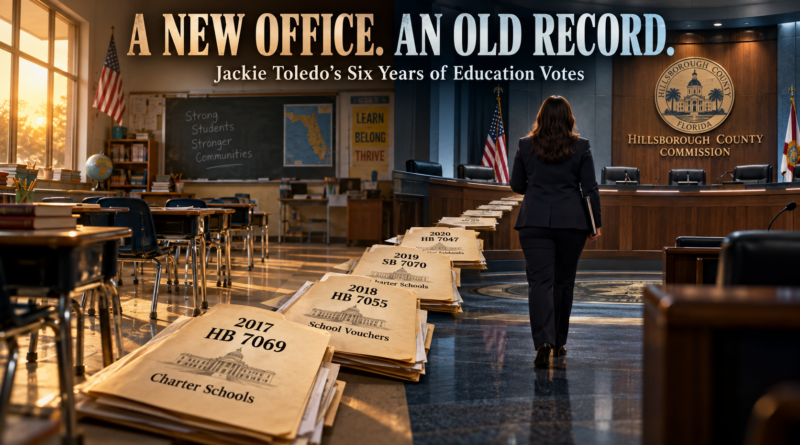
Jackie Toledo spent six years in the Florida House, where she repeatedly supported legislation expanding charter schools and private-school scholarship programs. Her voting record shows how Florida’s school-choice system grew during her time in Tallahassee.

The changes came almost every year. In 2017, Toledo supported legislation to expand charter schools and share certain local school construction funds with them. By 2021, she had also voted to create and expand the Family Empowerment Scholarship, broaden eligibility, and increase scholarship awards. Meanwhile, traditional public schools remained responsible for educating every enrolled child.

Now Toledo wants to serve on the Hillsborough County Commission. Her legislative record raises questions about her approach to public funding and local responsibility. The full article follows five years of education legislation and examines the choices she made along the way.

Read more

Let’s Run A Real Education Experiment

This entry is in the series Education

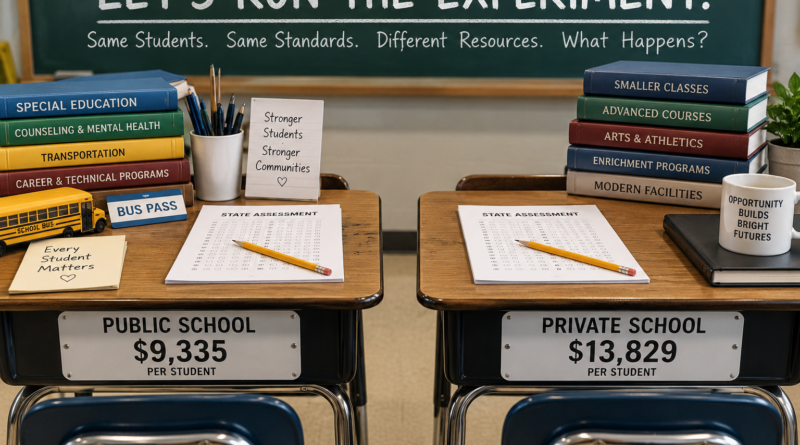
Florida spends about $9,335 per public-school student through its main funding formula. Average private-school tuition is about $13,800. So before we decide private schools produce better results, there is a question worth testing: what would happen if public schools had comparable resources?

The comparison gets more complicated because public and private schools often operate under different rules. Public schools serve students with widely different needs, provide transportation and specialized services, and operate under statewide testing and accountability requirements. Private schools receiving voucher money have different admissions, staffing, testing, and service obligations.

Research does not provide a simple answer that one system always produces better outcomes. Some private-school and voucher programs show gains, others show little difference, and some have produced worse academic results. Once researchers account for differences in family income, parental education, previous achievement, and other factors, much of the apparent private-school advantage can shrink.

So the essay proposes a thought experiment: fund public schools at something close to average private-school tuition while keeping their public obligations intact, or run the test in reverse by asking voucher schools to educate students for the voucher amount under comparable standards. Maybe the real difference is not public versus private education. Maybe it is what happens when one kind of school is simply better funded.

Read more

Some Things Should Not Be Run for Profit

This entry is in the series Education

What if the biggest mistake in Florida’s education debate is assuming schools should work like ordinary businesses?

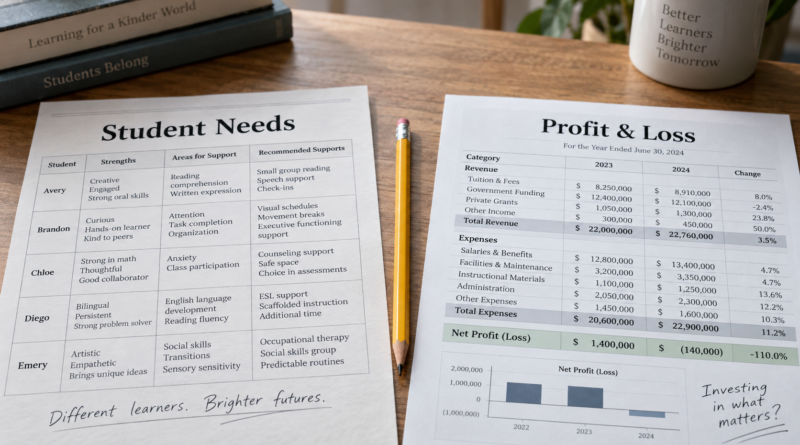
Markets reward efficiency, control costs, and give consumers choices. Public education has a different job. It has to serve every child, including the student who needs far more support, the student who needs advanced opportunities, and the student whose family could never afford to buy those services on its own.

That is why I think the debate over vouchers and school choice has to go deeper than whether competition can improve some outcomes. The real question is whether K-12 education should be organized around market incentives at all.

In this essay, I look at what happens when we confuse efficiency with public duty, and why some things may work better when the goal is not profit, but making sure everyone is served.

Read more