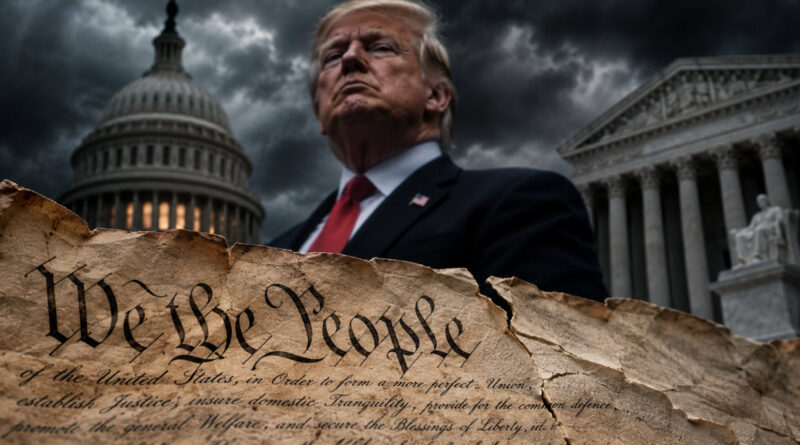
Who Gets to Decide America’s Future?

This entry is in the series Examination of Project 2025
This entry is in the series 2026 Elections

What happens when a president starts treating the Constitution’s limits as optional? Federal judges have found repeated violations of court orders. The Supreme Court has made big decisions that expand presidential power. Now, after the November elections, the Trump administration has suggested criminal investigations against Democratic lawmakers who are getting ready to use their oversight powers. It seems that looking into the government becomes suspicious when there’s something it wants to hide.

In “Who Gets to Decide America’s Future?”, the last article in our Project 2025 series, we look at how the administration has challenged the courts, increased White House control over federal agencies, and pursued changes to voting rules and immigration enforcement. We also look at how the Supreme Court has changed the limits of presidential power. These choices affect more than just politicians and judges. They decide whether regular Americans can count on the law to protect their rights when the government acts against them.

The stakes became even clearer after voters gave Democrats control of Congress in the November 2026 midterms. Before the new majority could start its investigations, White House officials warned that some congressional inquiries could lead to criminal charges. Congress is supposed to oversee the executive branch. When an administration threatens lawmakers who are trying to do that job, Americans have every reason to wonder what’s left of the checks meant to stop abuses of power.

This last article in our six-part series asks the most important question: Who really controls our government? The people behind Project 2025 have made their goals clear, and the administration has shown how far it will go. Now it’s up to Congress and the American people to decide how to use their constitutional responsibilities. Read the full article to see the evidence, understand what’s at stake, and think about what we should expect from those who protect our democracy.

Read more
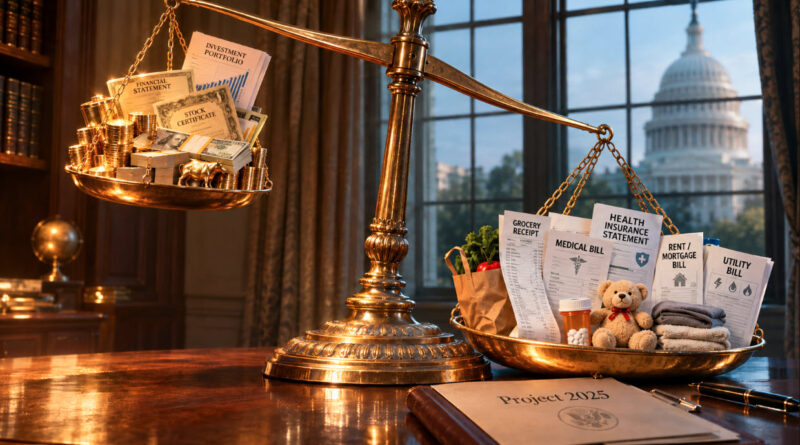
Who Pays, and Who Benefits?

This entry is in the series Examination of Project 2025

Imagine if Washington gave the wealthiest Americans tens of thousands of dollars in tax breaks, while millions of working families faced higher costs and cuts to health care and food help. That’s what’s happening under the Trump administration’s policies and the 2025 budget law passed by the Republican-led Congress. The Institute on Taxation and Economic Policy says the richest 1 percent will get an average tax cut of about $66,000 in 2026. At the same time, the Congressional Budget Office expects lower-income households to lose support as Medicaid and food assistance are reduced. It seems that making America prosperous means some people have to sacrifice much more than others.

In Part Five of our six-part Project 2025 series, Who Pays, and Who Benefits?, we look at where the money goes. We break down the tax breaks going to wealthy households and corporations, the higher costs from tariffs, and what happens when environmental protections are rolled back. We also point out the officials who helped make these policies law, including Project 2025 contributors in the Trump administration. Florida Senators Rick Scott and Ashley Moody, along with the state’s Republican House members, voted for the 2025 budget law. These financial effects matter a lot in Florida, where families already struggle with insurance, housing, groceries, and getting affordable health care.

These decisions help some people and cost others. We deserve to know exactly who benefits and who pays. The people making federal policy have shown us their priorities, and Congress’s voting record tells us who backed these choices. With a new Congress coming in, Americans can push for a closer look at the financial impact and hold leaders accountable. Read the full article to find out where the money goes, who gains, and what these policies mean for your family, your neighbors, and Florida’s future.

Read more

What Happens to the American Promise?

This entry is in the series Examination of Project 2025

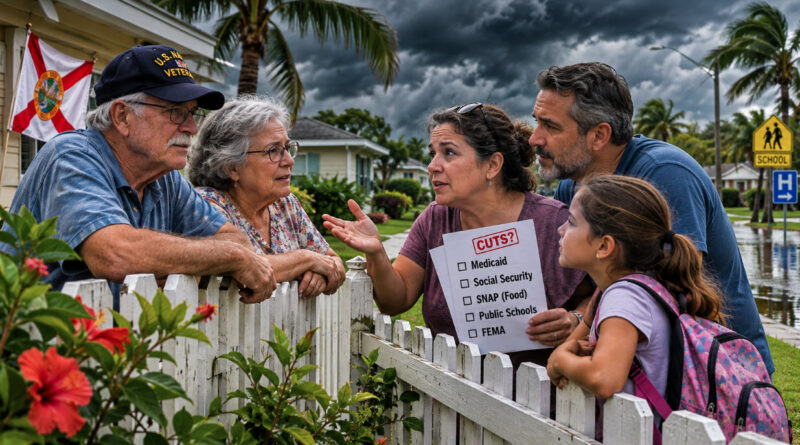
Think about spending your whole life working, paying taxes, raising a family, and helping your community, only to find out that the programs you counted on for some security are being cut, weakened, or made harder to use. Medicaid is losing hundreds of billions in federal funding. Social Security has lost thousands of employees. Getting food assistance is becoming more difficult. Public schools are seeing taxpayer money go to private education while their own budgets get tighter.

This is Part Four of our Project 2025 series, What Happens to the American Promise? The Trump administration and Republican-led Congress have already made big changes, and more are planned. In Florida, problems could come from two sides. Tallahassee has started a multibillion-dollar private school voucher system, and Washington is working to shrink the Department of Education. It seems asking public schools to do more with less wasn’t ambitious enough. Now we are seeing how little they can manage with.

These changes affect more than just government budgets. They impact children who need reading help, older Americans who rely on Medicaid for nursing home care, people waiting for disability benefits, and working families trying to afford food. These are our neighbors. When their schools get weaker, their health care goes away, or their benefits are harder to get, the whole community feels the cost. Someone always pays for these choices, even if Washington calls them savings.

The real question is how much harm Americans are willing to accept, and what we are ready to do about it. With a new Congress starting in January, voters can ask for investigations, push back against harmful policies, and make sure public money is used for the public good. Elections are important, but making leaders answer for their actions takes more than just voting. Read the full article, think about what is at stake for your family and neighbors, and ask your representatives whose future they are looking out for.

Read more

The Rights We Stand to Lose

This entry is in the series Examination of Project 2025

Who would have thought that a St. Patrick’s Day parade could become a casualty of Florida’s campaign against diversity, equity, and inclusion? After Governor Ron DeSantis signed a sweeping anti-DEI law, Delray Beach officials concluded they could no longer fund their beloved parade. DeSantis accused them of “malicious compliance.” Apparently, the governor hadn’t considered that local officials might take his own legislation seriously enough to obey it.

It’s an almost comical dispute, until you consider what happens when similar policies affect civil rights, reproductive health care, police accountability, and protections against discrimination. The Heritage Foundation’s Project 2025 calls for major changes to how the federal government protects individual rights, and the Trump administration has already put significant parts of that agenda into practice. The consequences extend far beyond arguments over parades and public celebrations.

In Part Three of our six-part Project 2025 series, The Rights We Stand to Lose, we examine what happens when the government steps back from enforcing the laws intended to protect Americans. What becomes of a worker facing discrimination, a woman struggling to obtain reproductive care, or a family seeking justice after police misconduct? The laws may still exist, but their value depends heavily on whether the government is willing to enforce them.

The warning is serious, and the consequences could reach millions of Americans. With a new Congress preparing to take office in January, the question is whether lawmakers will examine these changes and exercise their constitutional authority to protect individual rights. Read the full article to understand what’s already happened, what Project 2025 proposes next, and why the future of civil rights enforcement deserves our attention.

Read more

Who Controls the Government?

This entry is in the series Examination of Project 2025

Imagine being elected to Congress, preparing to investigate possible wrongdoing in the White House, and discovering that the administration might investigate you for doing your job. Apparently, congressional oversight is perfectly acceptable, provided Congress doesn’t get too curious about the president.

Following the November elections, Democrats will take control of both houses of Congress in January 2027. Voters expressed deep concerns about affordability and government corruption. But as Congress prepares to exercise its oversight powers, the Trump administration has raised the possibility of criminal investigations involving lawmakers who intend to scrutinize its actions. That should concern anyone who believes our government ought to answer to the people it serves.

In Part Two of our six-part series on Project 2025, we examine how the administration has expanded presidential control over federal employees, independent agencies, and public funding. Thousands of experienced government workers have departed, political appointees have gained greater influence over federal decisions, and longstanding limits on White House involvement with the Justice Department are under scrutiny. These developments closely follow proposals laid out in Project 2025, raising serious questions about the independence of government institutions and the constitutional limits of presidential power.

Who controls the government, and who holds those in power accountable? The Constitution offers a clear framework, but the events unfolding in Washington are putting it to the test. Read Who Controls the Government? to see how Project 2025’s proposals are becoming government policy, what that means for everyday Americans, and why the new Congress faces an important test of its constitutional authority.

Read more

Project 2025: They Told Us What They Planned to Do

This entry is in the series Examination of Project 2025

Picture someone giving you a 900-page document that lays out exactly how they want to reshape the federal government, who they want in charge, and how they plan to do it. Now, imagine seeing those plans actually become government policy. That’s the situation with Project 2025. What’s remarkable is that its authors told us what they planned to do.

The Heritage Foundation and its conservative partners spent years putting together Project 2025. They included detailed policy proposals, a database of possible government employees, and even a training program for new recruits. Changing the American government in a big way takes more than just winning an election—it also takes a curriculum.

Now, almost two years into the Trump administration, an independent tracker says about 55 percent of Project 2025’s agenda has been completed or is in progress, counting partial credit for unfinished work. These changes affect federal agencies, civil rights, education, health care, and the balance of power in our government. Behind these decisions are millions of Americans who rely on the services and protections these institutions provide.

This is the first article in a six-part series looking at Project 2025, what its authors proposed, what the Trump administration has done, and what it means for our country’s future. We’ll begin with the people who created the plan and their vision for government, using their own words to see what they intend. Read the first article, Project 2025: They Told Us What They Planned to Do, and see how much of that vision is already reality.

Read more

From Suppression to Sellout: The Laurel Lee Playbook

This entry is in the series 2026 Elections

A recent critique of Laurel Lee’s time as Florida Secretary of State shows her history of voter suppression, but her actions in Congress are an even bigger betrayal. She has voted against jobs and insulin price caps, and taken large corporate donations while her district faces high housing costs. Lee has shown she works for special interests, not FL-15 families.

Read more