
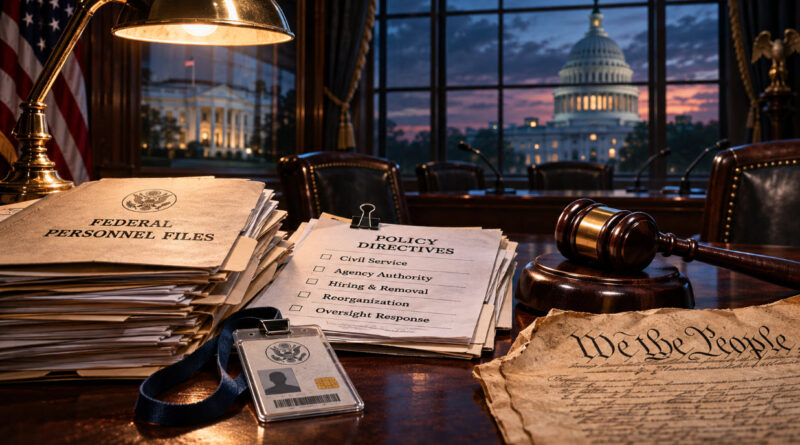
Who Controls the Government?
Imagine being elected to Congress, preparing to investigate possible wrongdoing in the White House, and discovering that the administration might investigate you for doing your job. Apparently, congressional oversight is perfectly acceptable, provided Congress doesn’t get too curious about the president.
Following the November elections, Democrats will take control of both houses of Congress in January 2027. Voters expressed deep concerns about affordability and government corruption. But as Congress prepares to exercise its oversight powers, the Trump administration has raised the possibility of criminal investigations involving lawmakers who intend to scrutinize its actions. That should concern anyone who believes our government ought to answer to the people it serves.
In Part Two of our six-part series on Project 2025, we examine how the administration has expanded presidential control over federal employees, independent agencies, and public funding. Thousands of experienced government workers have departed, political appointees have gained greater influence over federal decisions, and longstanding limits on White House involvement with the Justice Department are under scrutiny. These developments closely follow proposals laid out in Project 2025, raising serious questions about the independence of government institutions and the constitutional limits of presidential power.
Who controls the government, and who holds those in power accountable? The Constitution offers a clear framework, but the events unfolding in Washington are putting it to the test. Read Who Controls the Government? to see how Project 2025’s proposals are becoming government policy, what that means for everyday Americans, and why the new Congress faces an important test of its constitutional authority.
Read more