
I’d like to keep the Rays – I’d also like to see the whole bill

I want to keep the Rays, but I also want to know what we’re buying before the public gets stuck with a bill close to a billion dollars, and some assembly required. The City and County have promised about $876 million for construction, but borrowing costs, the full College relocation budget, and other public costs are still up in the air.

After going through agreements, financial projections, and more acronyms than I can count, I still haven’t found proof that this deal pays for itself. The possible benefits include a County-owned stadium and future tax revenue. But some important agreements are still missing or not easy to find, and the projections depend on the development actually happening. As my grandfather might have said, this feels like “hide the weeny.”

Based on what I know today, I’m a “no” on this deal. I’m open to changing my mind if officials can fill in the gaps, particularly around the full taxpayer cost and the impact of the property-tax amendment. Keeping the Rays is a good goal, but it deserves a deal the community can understand, with enough time to read the paperwork before somebody points to the signature line.

Read more
Mike Beltran’s Voting Record Deserves a Closer Look

This entry is in the series 2026 Elections

Mike Beltran wants to represent Hillsborough County in Congress. Before voters send him to Washington, they may want to look more closely at what he did during his six years in Tallahassee. From local zoning and tenant protections to public schools and nursing homes, Beltran often voted for laws that changed what local communities could decide for themselves.

He supported laws that lowered minimum nursing-home staffing requirements, expanded taxpayer-funded private-school vouchers, and required school districts to share more of their local construction funds with charter schools. He also backed limits on what teachers could teach about race and discrimination, as well as Florida’s abortion restrictions. It seems Tallahassee believed it knew what was best for almost everyone.

Meanwhile, Congresswoman Kathy Castor helped secure nearly $1.47 billion in federal grants for the Tampa Bay region, along with more funding for local infrastructure, housing, and community projects. Beltran’s record shows a different set of priorities. If he believed Tallahassee should have so much control over Hillsborough County, it raises questions about what he might do in Washington.

Read more

Gus Bilirakis: Who Benefits from His Votes?

This entry is in the series 2026 Elections

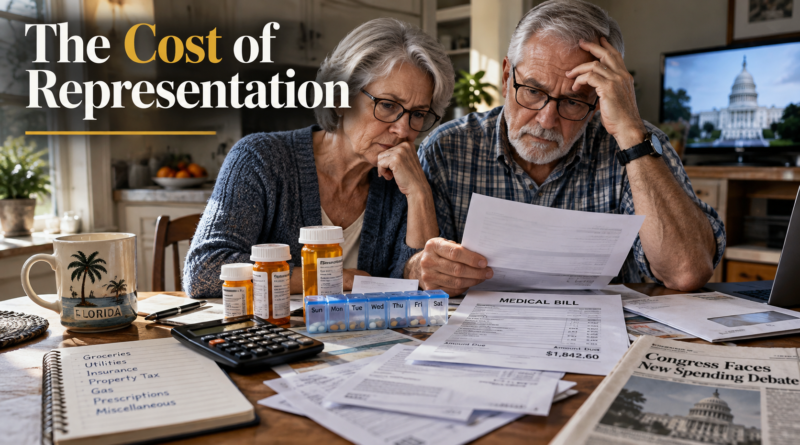
After nearly 20 years in Congress, Gus Bilirakis has had plenty of opportunities to demonstrate whose interests he represents. Now, with Florida’s newly drawn Congressional District 12 stretching across parts of Hillsborough and Pasco counties, it’s worth looking at his record. For residents worried about health care, household expenses, and the rising cost of living, some of his votes raise uncomfortable questions.

Bilirakis supported legislation that the Congressional Budget Office projects will leave millions more Americans uninsured and reduce federal food assistance. He opposed bipartisan infrastructure funding and pandemic relief that provided direct help to families and communities. Apparently, there’s plenty of room in Washington to cut taxes, but far less enthusiasm for helping people pay their medical bills.

Then there’s the campaign money. Nearly 56% of Bilirakis’s direct campaign contributions come from political committees, including PACs associated with pharmaceutical manufacturers, health insurers, utilities, and telecommunications companies. Many of those industries have business before the congressional committee on which he serves. Campaign contributions don’t prove influence, of course. But after two decades in Washington, voters have every reason to ask a simple question: Who is Gus Bilirakis working for?

Read more

When Four Times the Votes Doesn’t Mean Four Times the Support

This entry is in the series 2026 Elections
This entry is in the series Daily Douche-Bag

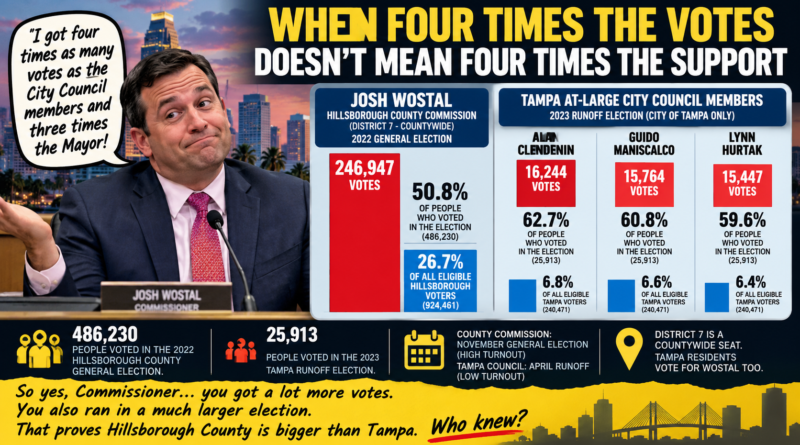
Josh Wostal has a unique way of measuring political influence. When people said Hillsborough County doesn’t treat Tampa fairly, he noted that he got far more votes than Tampa’s mayor and at-large City Council members. That sounds impressive until you consider the size of the electorate and voter turnout.

Wostal ran in a countywide November election where 486,230 people voted. Tampa’s at-large council members won their seats in an April runoff with only 25,913 voters. If you compare each candidate to the people who voted in their election, Wostal’s supposed advantage goes away. In fact, some of the votes he mentions came from Tampa residents. So, Hillsborough County is bigger than Tampa. Who would have thought?

Read more

Corporate Welfare in Overalls: The Rural Shell Game of Florida Amendment 2

This entry is in the series 2026 Elections
This entry is in the series Florida Amendments and Referenda-2026

The television commercials for Florida Amendment 2 are almost entirely self-written. All you have to do is play the acoustic guitar, show the video of a dusty tractor, and then tell the heartwarming tale of a fourth-generation family farmer who is struggling. Although the story is touching, the sentimental presentation covers up a costly performance by the corporation.

Florida businesses currently have a standard exemption of $25,000 for tangible personal property, which covers a significant portion of the equipment needed by genuine small-scale growers. The main benefit of Amendment 2, however, goes to industrial agribusiness syndicates, huge commercial packing houses, and luxury agritourism event venues that operate fleets of machinery costing six figures.

When Tallahassee eliminates equipment taxes on commercial agricultural land, those multi-ton transport trucks do not stop chewing up county roads. The bill simply shifts. County commissions are left to either gut local services or force residential homeowners to make up the difference. Read the full breakdown of how Amendment 2 puts corporate welfare in overalls and leaves local taxpayers holding the tab.

Read more

Rainy Days and Blue Tarps: Why Hoarding Billions in Tallahassee Won’t Protect Hillsborough

This entry is in the series 2026 Elections
This entry is in the series Florida Amendments and Referenda-2026

Tallahassee politicians often present Florida Amendment 1 as basic common sense. After all, who would argue with saving for a rainy day? But there’s a big difference between keeping an umbrella handy and locking away billions while your ceiling is falling in.

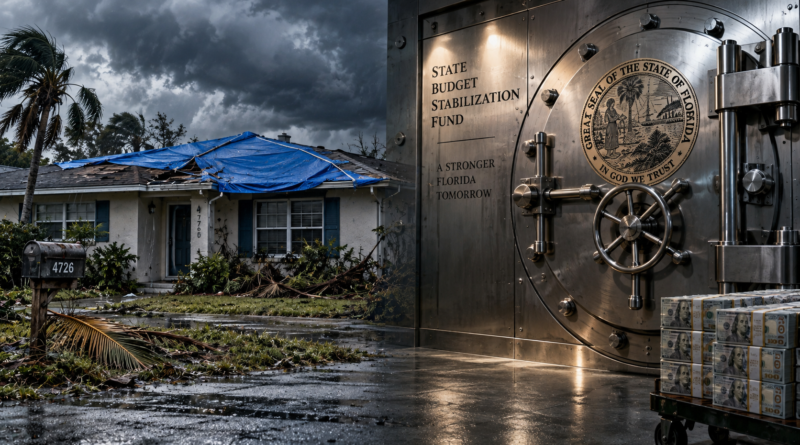
If you drive through Hillsborough County, you’ll see blue tarps still on roofs from storms years ago. Homeowners are struggling with high insurance costs, classrooms have broken air conditioners, and stormwater ditches need repairs. Yet Amendment 1 would require up to $750 million a year to be set aside in Tallahassee until the fund reaches 25 percent of general revenue.

Florida already has a fully funded emergency reserve at 10 percent. Forcing billions more into storage isn’t smart budgeting; it’s a way to cut local spending now so politicians can brag about a big balance later. Read the full essay to see why we should fix our roofs before Tallahassee builds another vault.

Read more

Whose Voice in the Committee Room? Michael Owen, Insurance Cash, and the Squeeze on District 70

This entry is in the series 2026 Elections

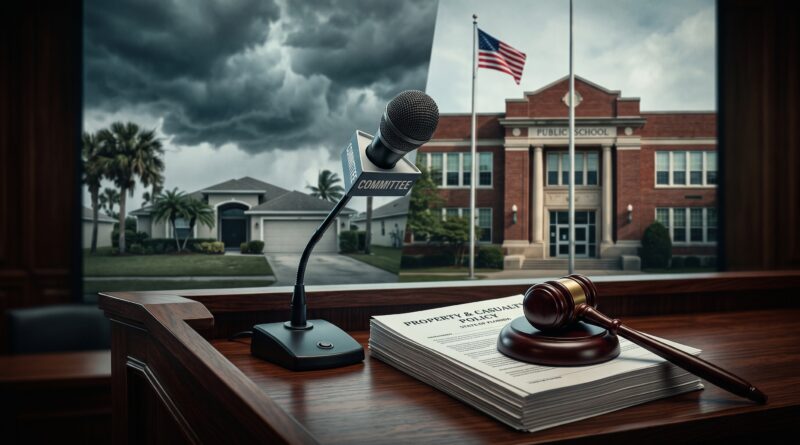
Michael Owen sits where Florida’s property insurance laws are shaped: the House Insurance & Banking Subcommittee. His campaign finance reports also show substantial support from insurance companies, insurance political committees, agents’ groups, and lobbyists. The article examines that money alongside the choices he has made in office.

Owen has shown no shortage of legislative ambition when Hillsborough County government is involved. He sponsored HB 4027, which puts an elected school superintendent before Hillsborough voters, and HB 4029, which would substantially restructure the County Commission. Both measures passed the Legislature and require local voter approval.

That leaves a harder question. With homeowners still confronting steep insurance bills, what has Owen used his seat on Insurance & Banking to do for them? The campaign money does not answer that question by itself, but it makes his legislative record worth examining closely.

This article follows the money, looks at where Owen has chosen to spend his political capital, and asks what those priorities tell District 70 voters about whose concerns are getting attention in Tallahassee.

Read more

Ambition, Attendance, and the Race for HCSB District 2

This entry is in the series 2026 Elections

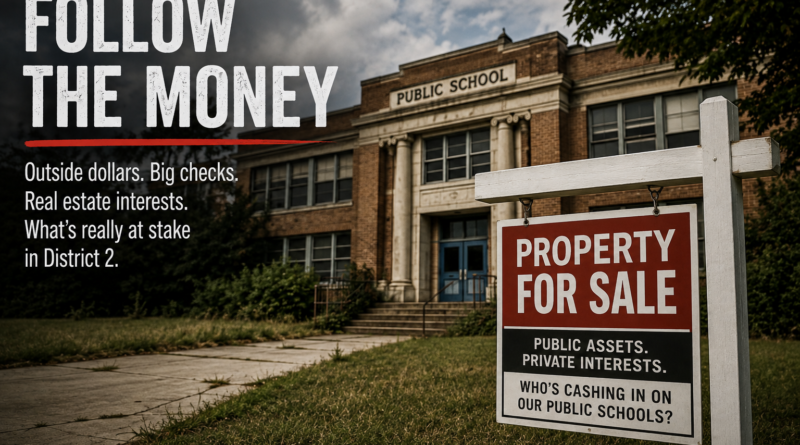
When someone wants to lead a multi-billion-dollar school district, authenticity comes first. Brittany Lyssy’s campaign for Hillsborough School Board District 2 asks voters to believe that a family of five lives in a 680-square-foot, one-bedroom condo while also keeping a homesteaded home in Manatee County. From barely attending advisory board meetings to repeating national talking points, District 2 voters deserve real community representation, not a staged political act.

Read more

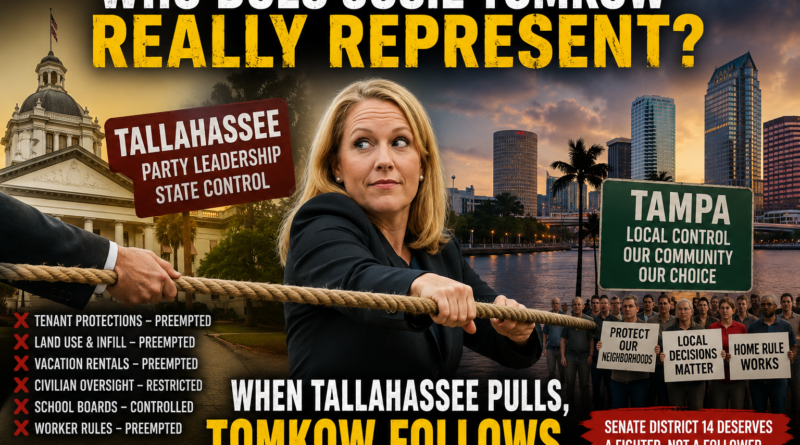
When Tallahassee Called, Josie Tomkow Answered

When Josie Tomkow had the chance to support local communities, she chose Tallahassee instead. This pattern appears throughout her House voting record: tenant protections, land use, infill development, vacation rentals, civilian oversight, worker rules, and school-board governance all go the same way.

This matters because Tomkow now wants to represent Senate District 14, which includes Tampa and Hillsborough County. But her record comes from somewhere else, and it raises an important question for voters here: when local needs clash with party leadership, whose side will she choose?

Her votes seem to answer. Even when another Hillsborough Republican voted no on a major preemption bill, Tomkow voted yes. So the question is not whether she can learn Tampa’s concerns. The question is whether she has already shown us who gets her vote when Tallahassee comes calling.

Read more

Who Governs Tampa?

This entry is in the series 2026 Elections

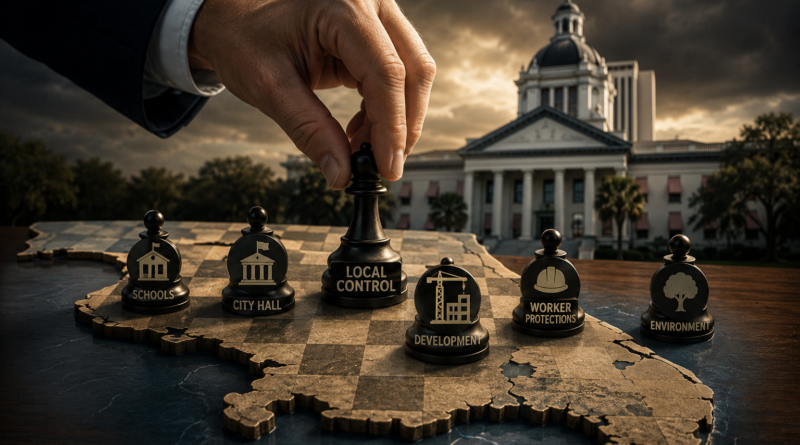
Most people assume that when they elect a City Council member, County Commissioner, or School Board member, those officials have the authority to govern. In Florida, that’s becoming less true every year. Through a growing list of preemption laws, Tallahassee has steadily taken power away from local communities, often replacing local judgment with statewide mandates.

Representative Karen Gonzalez-Pittman’s voting record shows she has consistently supported that shift. From housing and neighborhood development to public schools and worker protections, her votes raise a fundamental question for District 65: should decisions about Tampa be made by the people who live here, or by politicians in Tallahassee? This first installment examines one of the most significant, and least discussed, changes in Florida government.

Read more

The Price of Political Playacting: Michael Owen’s Assault on Hillsborough Schools

This entry is in the series 2026 Elections
This entry is in the series Education

Hillsborough County Public Schools, the seventh-largest district in the nation, is facing a top-down assault disguised as “local accountability.” State Representative Michael Owen’s House Bill 4027 calls for a referendum to eliminate our professionally appointed superintendent in favor of a partisan elected office. The schools are already governed by an elected board of education. This change is not about transparency; it is a calculated effort to force a toxic culture-war agenda into our local classrooms and strip our school system of seasoned, professional leadership.

The structural fallout of this power grab is devastatingly clear. Instead of an experienced educational administrator focused on student performance, our district risks being handed over to a political partisan. Under an elected model, policy decisions on curriculum, budgeting, and student safety will inevitably bow to the need for campaign survival, turning every fourth year into a multi-million-dollar reelection spectacle. This essay shows how Owen’s legislative overreach, paired with his habit of distorting local facts for political points, threatens the shared institutions our children rely on.

Read more