
Nothing Says “This Season of Life” Like a Cremation Luncheon Invite
Yesterday’s mail brought me a milestone.
It wasn’t a birthday card, a Medicare handbook, or even a coupon for hearing aids—though I’m sure that’s on its way. Instead, I got a glossy flyer inviting me to one of four luncheons in Tampa, hosted by the National Cremation Society.
Nothing says “welcome to this season of life” quite like a catered lunch where the main topic is what to do with you after you stop being you.
To be fair, the flyer was polite and tasteful, with pastel colors and gentle fonts. There were no skulls or hourglasses—just a cheerful invitation to “learn about your options” over what I imagine will be chicken salad or rubbery salmon. Still, the message was clear: Medicare has arrived, the actuarial tables have weighed in, and now the salespeople are circling with their clipboards.
The flyer promised “Personalized Affordable Options.”
That phrase made me pause.
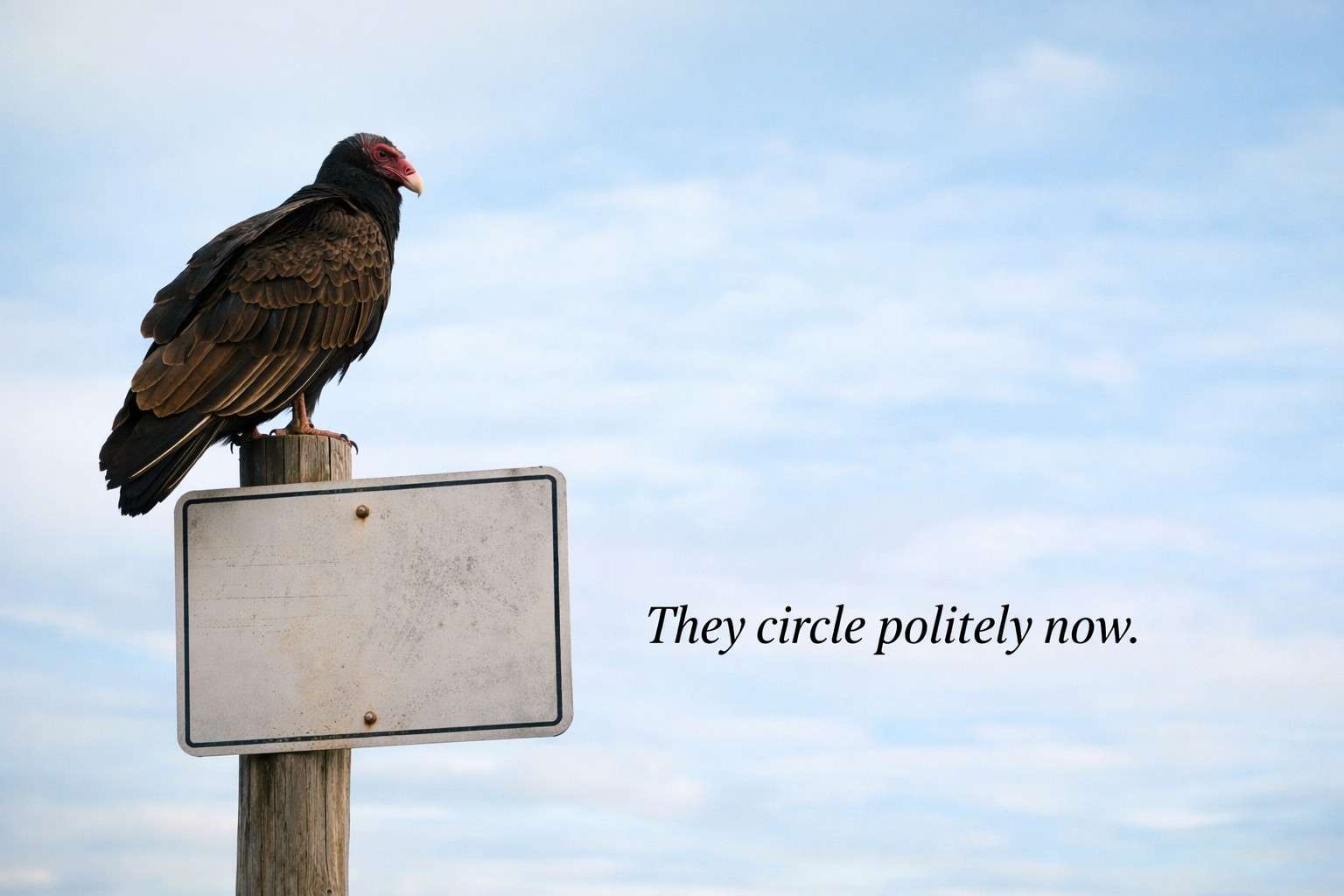 Personalized how, exactly? Are we talking bespoke flames? A curated playlist while things get underway? Or are we leaning more toward a bonfire-in-the-woods vibe, BYO marshmallows, no questions asked? “Affordable” suggests there are tiers. Bronze, Silver, Gold. Maybe Platinum if you want the deluxe urn and the good parking.
Then there was the promise of a “Professional Service Guarantee.”
That part really made me stop and think. What exactly are they guaranteeing? That the paperwork is done right? That the remains are actually mine? If the fire doesn’t start, do I get a refund, a second chance, or maybe a coupon for next time?
I have questions. And apparently, they’d like to answer them over lunch.
This flyer didn’t arrive alone, by the way. It came as part of an entire ecosystem. Since Medicare entered my life, I’ve also received phone calls. Cheerful, slightly urgent voices offering to help me “plan ahead.” End-of-life planning. Legacy planning. Final arrangements. No one ever says “death.” They talk about “peace of mind,” which is impressive, considering the subject matter.
I can’t really blame them. Everyone needs to make a living. Still, it feels strange to realize you’ve reached the point where strangers are comfortable calling you about what happens to you after you’re gone.
But here’s why I can joke about all this: I grew up in the funeral business and worked in it for years. I’ve seen what goes on behind the scenes. I know how carefully these brochures are written, and how fear, love, guilt, and good intentions all get wrapped up together with payment plans.
And I also know that humor is one of the oldest coping mechanisms we have. When you get older, you earn the right to joke about death. Not because you’re cavalier about it, but because you’ve stared at it long enough to know it’s not impressed by solemnity alone.
My mother died not long ago, and when you go through that with someone you love, everything feels different. The jokes are still there, but they become gentler. You realize that while you might be the one being planned for, you’re not the one who will be there. You notice the empty chair, and you start to wonder how those you leave behind will cope. Will they find comfort in familiar rituals, or will silence say more than words ever could?
They’re the ones who will sit in the room you picked. They’ll hear the music or the quiet. They’ll tell stories, cry in awkward moments, laugh when they don’t expect it, and try to find their place in a world that suddenly feels a little off balance.
That’s why I’ve always believed that end-of-life planning, when it’s done well, isn’t really about logistics. It’s about care. It’s about giving the people who love you a way to grieve that feels familiar, grounding, and humane. It’s about leaving them fewer decisions on the worst day, not more.
Cremation, burial, memorials, services, rituals. None of these are one-size-fits-all. And none of them are really about the body. They’re about meaning. About acknowledgment. About saying, “This life mattered, and so does your sorrow.”
So yes, I’ll keep laughing when the flyers show up, and I’ll still roll my eyes at the euphemisms. I’ll wonder if lunch comes before or after the big conversation. Humor helps keep the fear in check.
But underneath the jokes is a serious truth I’ve learned the hard way. Planning isn’t about controlling the end. It’s about tending to the living. It’s about love expressed in advance.
If I ever do attend one of those luncheons, I’ll ask for dessert. And I’ll make sure, somewhere between the brochures and the coffee, to challenge them to remember that the most important service they’re offering isn’t affordability or professionalism.
It’s helping people care for one another, even after they’re gone. Yesterday’s mail brought me this realization. By preparing now, we offer tomorrow’s mercy to those we leave behind. And that’s no joke.
