
Is the Tail (Tale?) About to Wag the Dog?
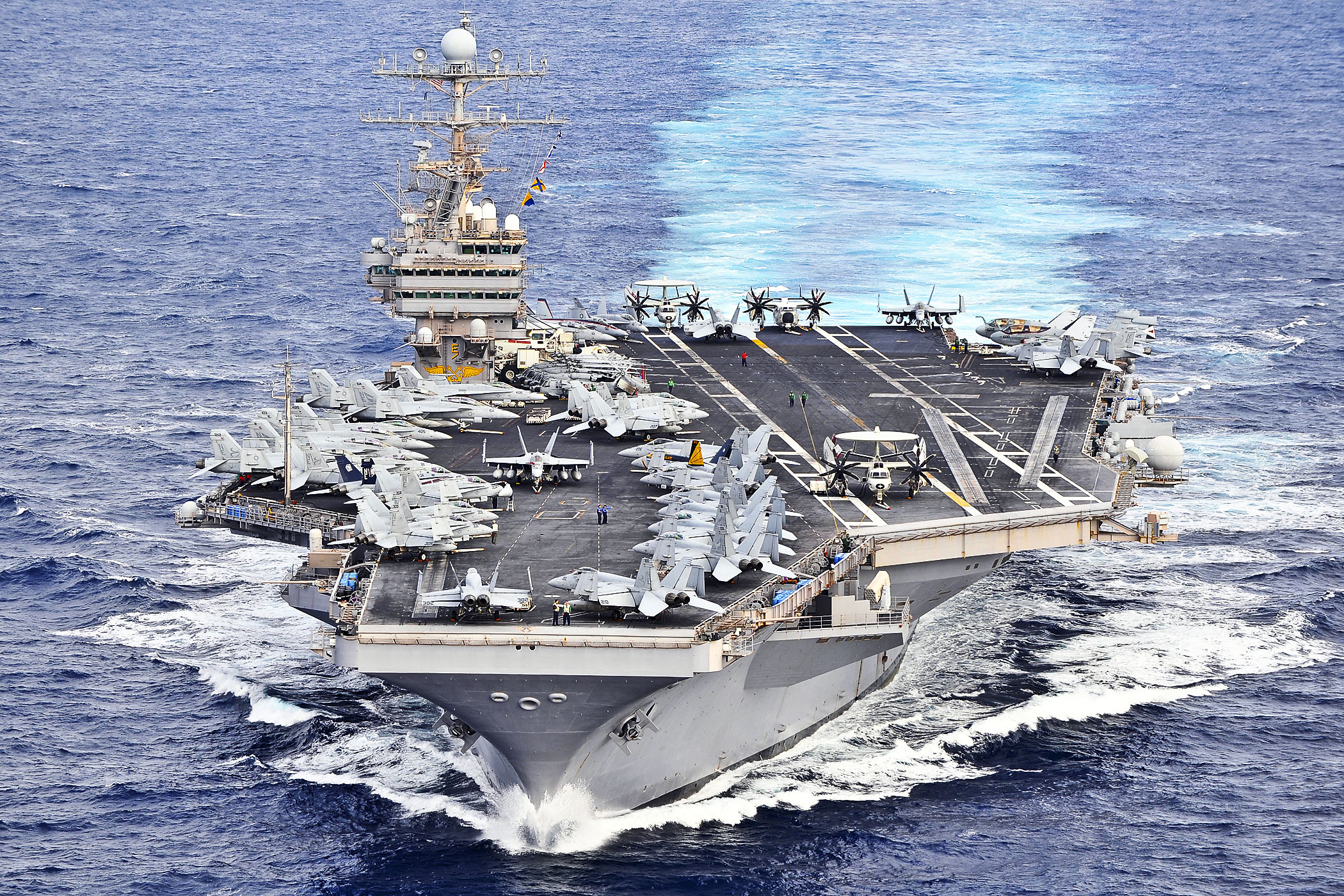 Over the past week, the administration has steadily ratcheted up the drumbeat against Venezuela. Two more alleged “drug boats” were destroyed in the Caribbean, again without publicly released evidence. Then, a sudden announcement of an embargo on ships carrying Venezuelan oil. The quiet but unmistakable presence of the largest U.S. aircraft carrier and its support fleet repositioned into the Caribbean. And now, after days of escalating rhetoric, a prime-time address to the nation.
Taken individually, each move could be explained away. Together, they form a pattern that deserves attention. This is not routine counternarcotics enforcement. This is coercive signaling, and it comes at a time when the president faces mounting pressure at home.
The stated justification is familiar. Venezuela is framed as a narco state. Oil shipments are cast as criminal lifelines. Maritime interdiction is presented as a moral and security necessity. But the administration has offered no verifiable evidence tying these recent actions to new intelligence or an imminent threat.
But then there’s the declaration of the drug fentanyl as a “weapon of mass destruction,” and vague references to land-based military actions. The language is theatrical, not technical. That matters because when facts are thin, and spectacle is thick, motives deserve scrutiny.
At the same time this foreign posture has escalated, the president’s domestic position has weakened. Economic news has been stubbornly bad. Inflation relief has not materialized in any meaningful way. Public patience is thin. Later this week, the Epstein files are expected to be released, reopening a toxic story the president has worked hard to keep buried.
A lengthy and deeply unflattering interview with his chief of staff was just published, confirming long-reported concerns about chaos, impulsiveness, and disregard for process inside the White House. Even more striking, some Republican members of Congress have begun to pull back. Trump’s recent social media post about the Rob Reiner murders has caused a break with my previously supportive members of Congress, and even the right-wing media is reporting it in a negative light. The full-throated loyalty that once defined the party is cracking at the edges.
This is the context in which the Venezuela rhetoric lands. That does not prove intent. But history teaches us to be cautious when presidents under domestic strain suddenly discover urgent foreign enemies.
The phrase “wag the dog” exists for a reason. Leaders have long understood that foreign confrontation can rally domestic support, redirect media attention, and recast weakness as resolve. Trump, in particular, has repeatedly shown an instinct to externalize pressure. When cornered, he escalates. When challenged, he dominates the news cycle. When facts fail him, he substitutes a forceful narrative.
At this stage, land-based military action against Venezuela still appears unlikely. The administration has been deliberately vague. That vagueness itself is a tool. It creates fear in Caracas, uncertainty among allies, and a sense of decisive leadership at home without committing to irreversible steps.
But Trump’s recent behavior makes even improbable scenarios harder to dismiss. He has never been constrained by traditional risk calculus, and he has shown little patience for long-term consequences.
International reaction, if this escalates further, will be swift and largely negative. U.S. allies in Europe are deeply wary of unilateral military action in Latin America. Many still carry scars from Iraq and Afghanistan, and they are unlikely to support another intervention justified by thin evidence and maximalist rhetoric. The European Union has favored negotiated pressure on Venezuela rather than a blockade or the use of force. A U.S. oil embargo enforced by naval power would be seen as destabilizing and legally questionable under international maritime norms.
In Latin America, the response would be even sharper. The region has a long memory of U.S. intervention, and Venezuela remains a potent symbol of sovereignty, even among governments that oppose Maduro. Countries like Brazil, Colombia, and Mexico would face domestic backlash if they were seen as complicit. Regional cooperation on migration, trade, and security could fracture overnight. Rather than isolating Caracas, Washington risks isolating itself.
There are also serious consequences at home. Any sustained military posture in the Caribbean would strain resources and attention. It would take attention away from inflation, housing, healthcare, and economic insecurity. Oil markets would react quickly to enforced embargoes, likely pushing prices upward at the worst possible moment for American consumers. Refugee flows could increase, adding pressure to an already strained immigration system. And once U.S. forces are visibly engaged, even at sea, the political cost of backing down rises sharply.
Perhaps most troubling is the precedent. If allegations without evidence are sufficient to justify the destruction of vessels and oil blockades today, the threshold for future action drops dangerously low. Power exercised without transparency corrodes trust, both abroad and at home. It trains the public to accept force as a substitute for proof.
So what should we watch in the next seventy-two hours?
First, the language of the address tonight. Does the president name specific threats, timelines, or legal authorities, or does he lean on grievance and menace? Second, follow the allies. Any visible distancing by European or Latin American governments will signal genuine concern. Third, watch oil markets and shipping insurers. They often react before diplomats do. Fourth, pay attention to Congress. Emergency briefings, classified sessions, or unusually blunt statements from Republicans will tell us how real this is. Finally, watch what drops off the front page. Foreign crises have a way of making inconvenient domestic stories disappear.
This may yet turn out to be bluster. But bluster backed by carriers and embargoes is not harmless. When leaders under pressure reach for external conflict, citizens owe it to themselves to ask why. Not later, but now.
