
A Speech Built on Sand. Fact-Checking the President’s Address
President Trump’s prime-time address on December 17 was billed as a progress report. What Americans received instead was a familiar blend of grievance, exaggeration, and selective storytelling, wrapped in the trappings of official authority. The speech leaned heavily on attacks against Democrats and former President Joe Biden, while making sweeping claims about economic miracles, border shutdowns, and global peace that collapse under even light scrutiny.
Start with the economy, the speech’s central pillar. Trump declared that inflation had been “stopped” and that prices were “coming down fast.” The data tell a more complicated story. Inflation has declined significantly from its 2022 peak, a trend that began well before Trump took office and accelerated throughout 2023 and 2024 under Federal Reserve policy and global supply chain normalization. As of late 2025, inflation remains above the Federal Reserve’s 2 percent target, and price levels, not prices, are what matter to household budgets. Prices do not “come down” in the way the speech implies unless the economy enters deflation, which it has not.
Trump also claimed that wages are rising faster than inflation and that affordability has been restored. While real wages have improved modestly for some workers, particularly at the lower end of the income scale, those gains were already underway before January 2025 and remain uneven across sectors. Housing, healthcare, and insurance costs continue to rise faster than overall inflation, directly contradicting the speech’s claim that affordability has broadly returned. And let’s not forget, despite his bragadocious claims about improving “affordability,” he’s alternately claimed the concept is fake. (Stable Genius…unstable crazy uncle…you decide.)
The claim is not just misleading. It has been invented.
The border narrative followed the same pattern. Trump asserted that “zero illegal aliens” are now entering the country and that the border is “fully secure.” Customs and Border Protection data show that, while encounters have fluctuated due to enforcement changes and asylum processing rules, crossings have not dropped to zero and never realistically could. Even under the most restrictive enforcement regimes, migration flows respond to seasonal, economic, and geopolitical pressures beyond U.S. control. Absolute claims make for good applause lines. They make for bad governance.
Perhaps the most extraordinary set of claims concerned foreign policy. Trump stated that he had “settled eight wars in ten months,” “ended the war in Gaza,” and “destroyed the Iranian nuclear threat.” None of these assertions withstands basic verification. The conflict in Gaza remains active, with ongoing hostilities and unresolved negotiations. Iran’s nuclear program continues to be monitored by international agencies, and no treaty, inspection regime, or verifiable disarmament agreement has been announced. As for “eight wars,” the administration has not identified them, likely because doing so would invite questions it cannot answer.
Then there was the newly announced “warrior dividend,” a $1,776 payment promised to 1.45 million service members. Beyond the obvious symbolism, the speech did not explain congressional authorization, funding source, or legal mechanism. Federal expenditures of this scale require appropriations. None have been passed. No bill has been introduced. Until that happens, the dividend exists only as a rhetorical gesture, not a fiscal reality.
Throughout the address, Trump repeatedly framed the previous administration as having “destroyed” the country and portrayed Democrats as hostile to America itself. This was less a unifying national address than a campaign rally delivered from the White House. The speech named no bipartisan achievements, acknowledged no shared challenges, and offered no evidence of outreach beyond the President’s political base. Even by modern standards, it was unusually partisan for a prime-time address to the nation.
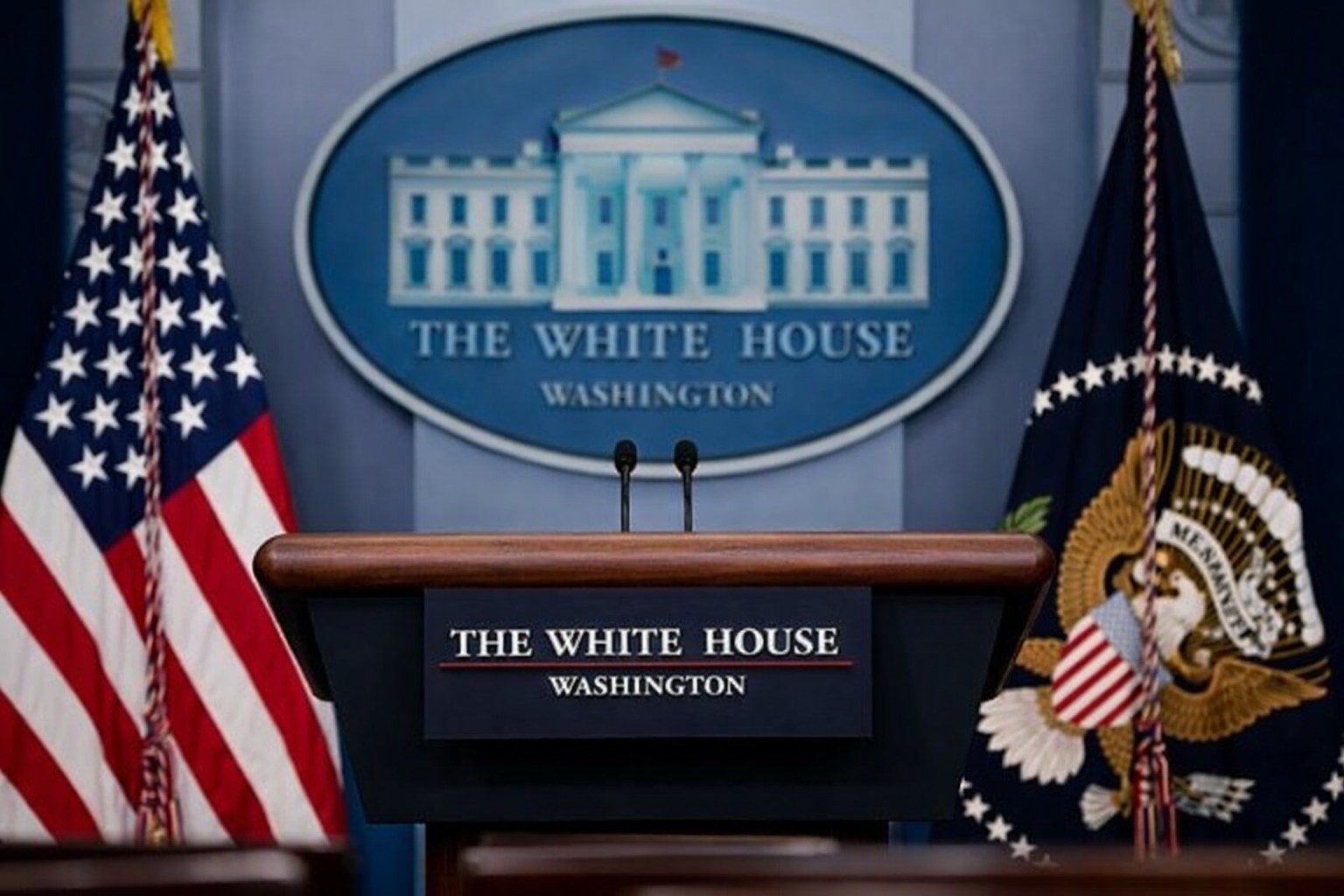 The rhetorical flourishes did much of the work. America was described as “dead” a year ago. The economy is now “the hottest anywhere in the world.” Drug prices are supposedly down “hundreds of percent,” a mathematical impossibility that somehow made it past the teleprompter. These claims are not policy arguments. They are branding slogans, untethered from measurable reality.
Presidential addresses matter because they shape public understanding of what is happening and why. Accuracy is not optional. When exaggeration becomes the organizing principle, citizens are left not with clarity but with confusion and distrust. Last night’s speech asked Americans to accept assertion in place of evidence and loyalty in place of facts.
That may work as partisan messaging. It does not work as a report to the nation.
