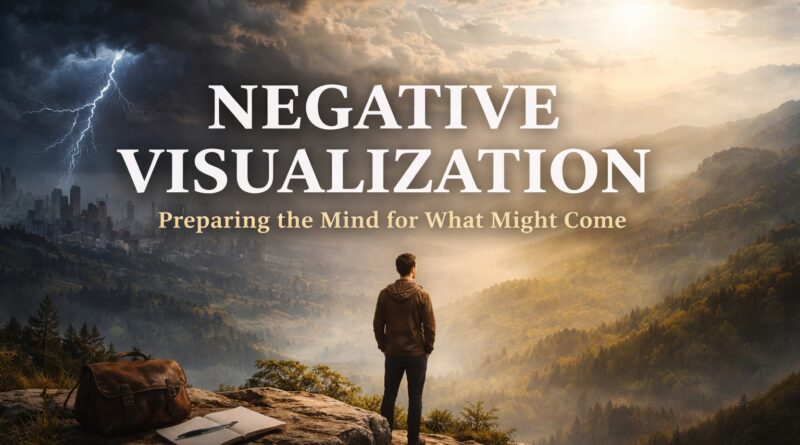
Negative Visualization

Most people deal with uncertainty in one of two ways. They either worry endlessly about everything that might go wrong… or they assume nothing will. Neither approach prepares us very well for real life.

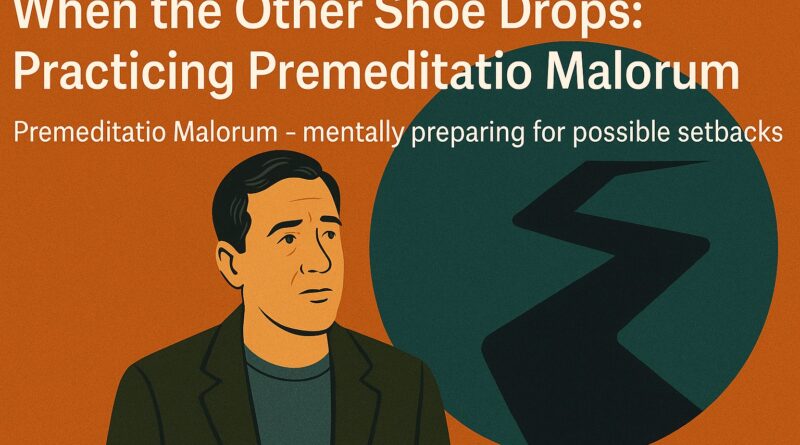
The Stoics practiced something different. They called it premeditatio malorum — the premeditation of difficulties. Instead of imagining every possible disaster, they briefly considered the challenges that might realistically arise and thought about how they would respond.

This simple mental exercise doesn’t increase anxiety. It reduces it. By removing surprise, it helps us meet life’s difficulties with steadiness rather than panic.

Read more


Stoic Practices: Negative Visualization

What if imagining loss could make life feel fuller, not darker? The Stoics called it premeditatio malorum—the quiet practice of picturing what could go wrong, not to suffer in advance, but to steady the heart for when it does.

In this new essay, I write about sitting beside my mother near the end of her life, and later facing my own health scare. Both moments taught me that rehearsing misfortune isn’t about fear. It’s about gratitude. The kind that comes from realizing how much you already have.

Read more

Expecting Trouble-Premeditatio Malorum

Trouble will come. That is not a threat. It is the world as it is. Premeditatio malorum is simple training for a steady heart. Picture what could go wrong. Picture your first response. Keep it short. Keep it concrete. You cannot script life. You can be ready to meet it. Then even hard days make room for small good things. A call from a friend. Light on the trees at dusk. Thanks for what remains.

Read more