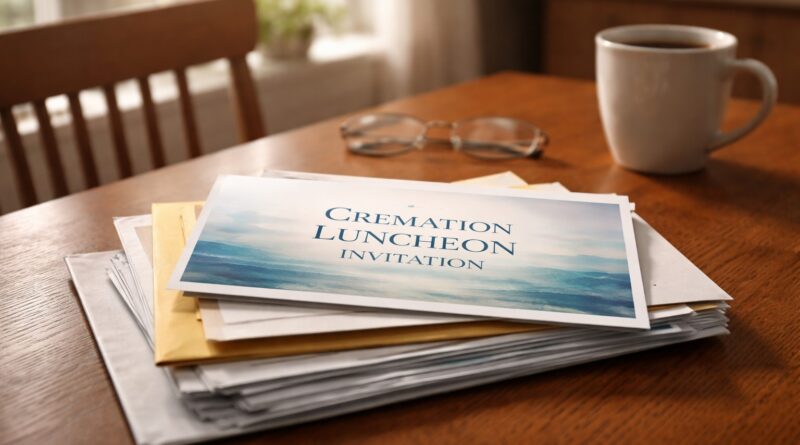

Nothing Says “This Season of Life” Like a Cremation Luncheon Invite

Yesterday’s mail brought me a milestone. Not a birthday card or a Medicare handbook, but a glossy luncheon invitation from the National Cremation Society. Apparently, once Medicare enters your life, the end-of-life marketing ecosystem wakes up and decides it’s time to talk.

The flyer promised “Personalized Affordable Options” and a “Professional Service Guarantee”—phrases that raise more questions than they answer. Since I grew up in the funeral business, I had to laugh. But underneath the humor is something real. Planning for death isn’t really about logistics; it’s about caring for the people who are left behind.

This essay starts with jokes, but it ends with what matters most: grief, love, and why the way we leave matters more to the living than to the dead.

Read more

Practicing Memento Mori: Learning to Live by Remembering Death

This entry is part 6 of 18 in the series Stoicism Practices
This entry is part 45 of 57 in the series Journey Through Stoicism

We spend much of our lives pretending we have endless time. The Stoics knew better. Memento Mori—remember that you will die—was not a grim command but a call to live awake. Modern science now confirms what they intuited: when people recognize their days are finite, they become calmer, kinder, and more grateful.

In this new essay, I explore how ancient philosophy and modern psychology meet on common ground. From Seneca to Stanford researcher Laura Carstensen, the message is the same: awareness of mortality can make life richer, not smaller. Read Memento Mori: Learning to Live by Remembering Death.

Read more