A Flicker Toward Life

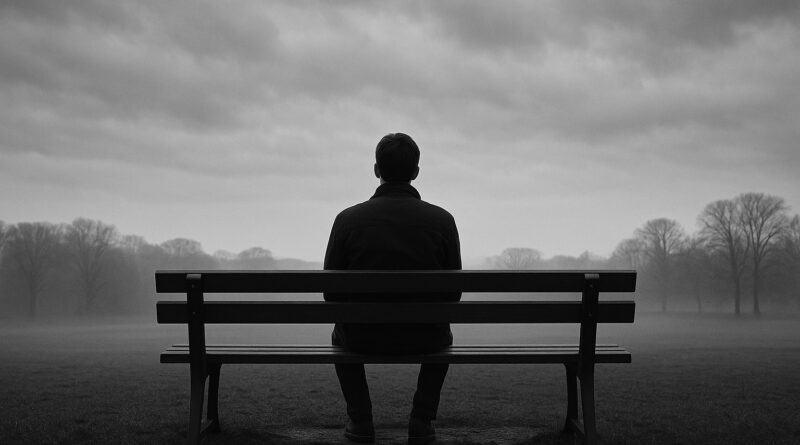
It was one of those days that left me both drained and restless. The kind of day that yanks you in every direction and leaves you replaying every moment in your head. By the time I sat down to journal, the day already felt like a blur—frustration, hard choices, and a fragile spark of hope all tangled together. Writing helped me find its shape. The Stoics would call it evening reflection. Wesleyans might call it examen or discernment. Either way, it’s how I pulled a heavy, scattered day into some kind of order.
That night, I saw a flicker of determination in my mom’s words. She had been saying for weeks, “I’m tired, I’m ready to go.” But this time she spoke of rehab, of getting better. It wasn’t conviction, but it mattered. Seneca once said, “Sometimes even when the body is weak, the mind can still rally.” I saw that rally in her, small though it was.
And along the way, there was gratitude—even humor. A friend had kept me talking for nearly ninety minutes on the road, filling the time with what he called his “landscaping philosophy.” Later, when I thanked him for knowing I needed company, he laughed. “You’re giving me too much credit. I just found someone willing to listen to me drone on about mulch and hedges.” That laughter mattered. Gratitude mattered. In days like this, even the smallest things carry weight.

Read more

Expecting Trouble-Premeditatio Malorum

Trouble will come. That is not a threat. It is the world as it is. Premeditatio malorum is simple training for a steady heart. Picture what could go wrong. Picture your first response. Keep it short. Keep it concrete. You cannot script life. You can be ready to meet it. Then even hard days make room for small good things. A call from a friend. Light on the trees at dusk. Thanks for what remains.

Read more

Embracing the Unforeseen

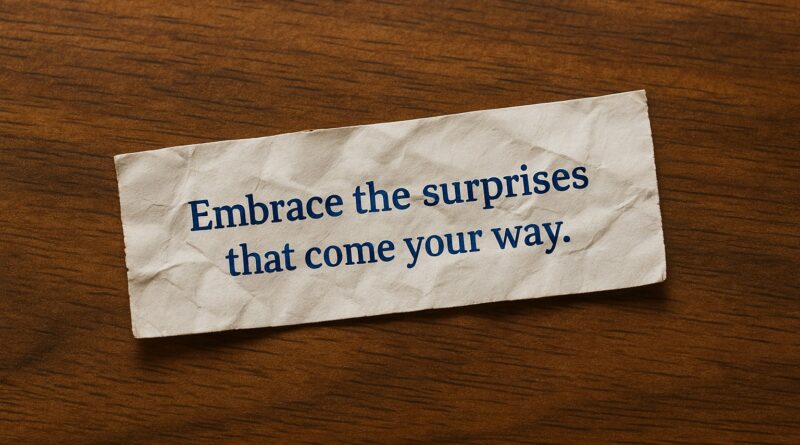
So I’ll drive north. I’ll carry with me a fortune cookie scrap of paper that turned out wiser than I expected. And I’ll try to remember that philosophy is not about lofty words on a page. It’s about how you hold yourself when the phone rings at 3 a.m., how you respond when plans dissolve, how you see both the bitter and the sweet.

Marcus and Seneca remind us: surprises are not intruders. They are part of the order of things. To embrace them is to live in step with nature itself.

And maybe that is the real fortune. Not that life will protect us from pain, but that it will give us endless chances to practice courage, patience, and love.

Read more

Memento Mori: A Practice for the Living

We don’t know how much gas is left in the tank. That truth, far from morbid, can be a guide to living with gratitude, courage, and clarity.

Memento Mori is the Stoic reminder that life is finite. For me, it has meant fewer grudges, more calls to friends, and a better sense of when to set work aside. It has reminded me that my “last great days” may already have happened, or they may still be ahead—but I will only recognize them if I am paying attention.

This is not about fearing death. It is about remembering life. When we keep the end in view, even quietly, the days we have become more precious and more alive.

Read more

The Graduation Gift

A framed silhouette of my niece, standing before the mountains at sunset, carries a message for her high school graduation: “Behind you, all your memories. Before you, all your dreams. Around you, all who love you. Within you, all you need.” It is a blessing, but also a challenge — to live with gratitude for the past, purpose in the present, and trust in the strength we already carry. In its quiet way, it’s pure Stoic wisdom.

Read more

Stoicism Journey: Evening Reflection

We’ve all had days we wish we could do over — moments of frustration, things said too quickly, or chances missed. At night, the mind often replays them with no resolution. The Stoics gave us another way. The practice of Evening Reflection invites us to examine the day with honesty, take note of our missteps and our better moments, and prepare to live more intentionally tomorrow. It’s simple, quiet, and backed by modern science. You don’t need special tools — just a few minutes and a willingness to learn from your own life.

Read more

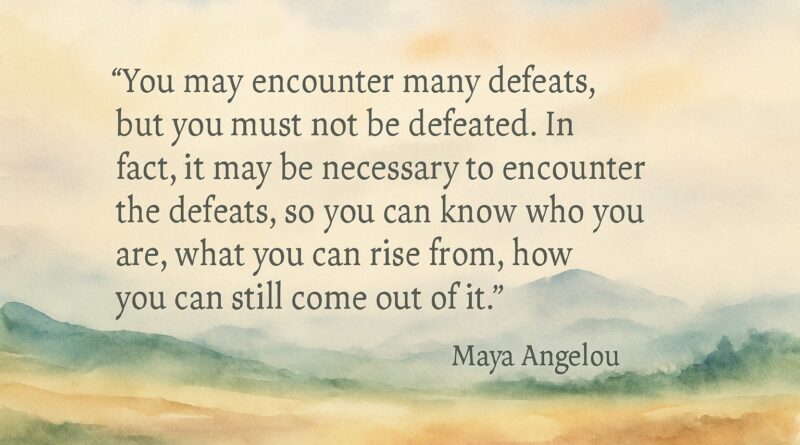
Rising from the Defeat That Wasn’t

Sometimes the worst defeats are the ones you didn’t cause but still feel responsible for. A job ends. A friendship slips away. You tell yourself it wasn’t your fault, but that doesn’t stop the questions. Maya Angelou once wrote that defeat might be necessary—not because we deserve it, but because it reveals who we really are. This essay reflects on regret and unexpected renewal through the lens of Stoic thought and lived experience. What you rise from, it turns out, may be the truest part of you.

Read more

Boone, Facebook, and Marcus Aurelius…Oh My

I came across a meme that read, “There are two places you need to go often: The place that heals you. The place that inspires you.” It struck me deeply, because for me, one of those places is Boone, North Carolina, where I went to college. But as I reflected on that idea through the lens of Stoic philosophy, I realized the Stoics might offer a very different kind of guidance: to go inward. This essay explores the contrast, and surprising harmony, between modern healing and ancient inner retreat.

Read more

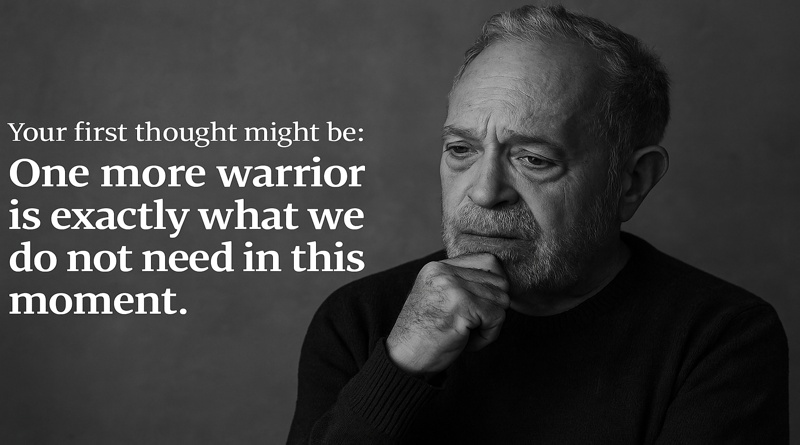
Warriors for Justice: A Stoic Response to Robert Reich

Your first thought might be: One more warrior is exactly what we do not need in this moment. The world feels overrun with conflict already. But what if the kind of warrior we need now is not one who fights for dominance or control, but one who stands calmly for conscience, who chooses clarity over chaos and courage over comfort? That is the kind of warrior Robert Reich wrote about — a woman on the front lines of immigration defense, who meets injustice not with rage, but with a quiet joy rooted in purpose. Her story holds a lesson as old as the Stoics and as current as the morning’s headlines.

This reflection is part of the ongoing “Stoicism Journey” series, which explores how ancient Stoic principles can offer clarity, strength, and moral direction in today’s world. Each piece connects Stoic thought to real-life challenges, often intersecting with faith, justice, and the pursuit of a meaningful life. In this installment, we respond to a story shared by Robert Reich, considering what it means to be a warrior for justice in dishonorable times.

Read more