
Steel-Toed Integrity

This entry is part 5 of 6 in the series 2026 Elections

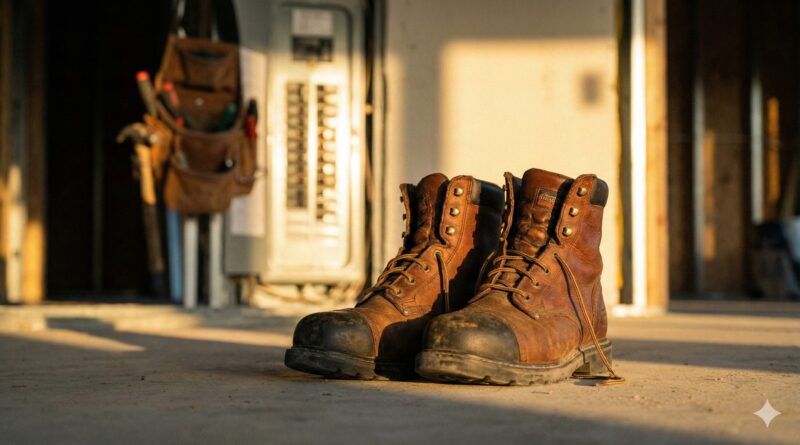
When something breaks in the real world, you don’t call a politician to give a speech; you call someone with a toolbox to fix it. That is the leadership Brian Nathan offers Senate District 14. A Navy veteran and IBEW electrician who chose Tampa as his home during the Great Recession, Brian brings a craftsman’s perspective to a political system that is deeply broken.

Read about Brian’s vision for “steel-toed integrity”—a philosophy born on the job site that prioritizes practical solutions for working families over political theater. He is running to fight for affordable housing, good-paying local jobs, and quality education.

Read more

The High Price of “Nice”: What Karen Gonzalez Pittman is Actually Costing South Tampa

This entry is part 3 of 6 in the series 2026 Elections

Is your State Rep costing you money?

On paper, Representative Karen Gonzalez Pittman fits South Tampa perfectly. She’s polished, presentable, and active in the community. If you met her at a Palma Ceia mixer, you’d think, “Now, there’s a reasonable person.” But for the wealthy and aspirational residents of District 65, voting for Pittman has become an expensive illusion. You think you’re voting for stability, but you’re actually paying a premium for a representative who consistently prioritizes Tallahassee’s culture war performance art over your bank account.

The most glaring receipt is your property insurance bill. For years, the Republican supermajority, of which Pittman is a loyal member, has promised that if we protected insurance companies from lawsuits, rates would trickle down. Pittman voted for every one of those protections. Yet, while your premiums have doubled, she and her colleagues have spent the legislative session banning books and policing bathrooms rather than fixing the financial crisis that is actually threatening our property values.

There’s a high cost to the “anti-woke” agenda, and South Tampa homeowners are paying it. This is a clear example of Patrimonialism: the state is run for insiders, while regular people get worse service and pay more. It’s time to see what her “nice” image is really costing you.

Read more

Stoic Practices: Negative Visualization

This entry is part 2 of 18 in the series Stoicism Practices
This entry is part 48 of 56 in the series Journey Through Stoicism

What if imagining loss could make life feel fuller, not darker? The Stoics called it premeditatio malorum—the quiet practice of picturing what could go wrong, not to suffer in advance, but to steady the heart for when it does.

In this new essay, I write about sitting beside my mother near the end of her life, and later facing my own health scare. Both moments taught me that rehearsing misfortune isn’t about fear. It’s about gratitude. The kind that comes from realizing how much you already have.

Read more

Stoic Practices: Contemplation of Nature

This entry is part 44 of 56 in the series Journey Through Stoicism
This entry is part 7 of 18 in the series Stoicism Practices

Stoicism teaches that nature is both teacher and law. In a time of rising seas and stronger storms, the lesson feels urgent: to live according to nature now means to remember that we are not outside it.

Read more

Rehearsing Virtue in Small Daily Acts

This entry is part 8 of 18 in the series Stoicism Practices
This entry is part 43 of 56 in the series Journey Through Stoicism

At The Portico café in downtown Tampa, I paused my work to sit with a man who had just been released from prison. He was unsure what to do next. I offered coffee, listened, and waited until the manager returned to connect him with help. It wasn’t a big deal, but later, I realized how much peace there can be in simply giving someone attention for a few minutes.

In the past, I invited my widowed neighbor to join my husband and me for our usual Taco Tuesday after she told me her daughter had been declared cancer-free. She later said how much the evening meant to her. Those simple moments, one with a stranger, one with a friend, reminded me that compassion is a practice. The Stoics taught that virtue is built not in theory but in repetition, through the small choices that make us steady and kind.

Read more

Living the Last Best Moment

This entry is part 38 of 56 in the series Journey Through Stoicism

Greta Gerwig once said, “You don’t know when the last time of something happening is. You don’t know what the last great day you’ll spend with your best friend is. You’ll just know when you’ve never had that day again.” That line has echoed in me ever since I first heard it. It captures both the sweetness and fragility of the present moment.
The Stoics knew this well. Marcus Aurelius warned against drifting into tomorrow, reminding himself that life is lived only in the day at hand. Seneca told us that we waste time as if it were endless. For them, attention to the present was not a poetic thought. It was survival. It was also the way to live a life worth remembering.
I think of an afternoon long ago with my friend Jim, shooting pool at his parents’ house. Or a fall day on a golf course with my friend Mike, pausing to look over Moss Lake together. Neither seemed extraordinary at the time. Yet they have stayed with me as “last great days.” The lesson is clear: if I want to live fully, I must live here, in this moment, as if it could be the last best one.

Read more

The View from Above

This entry is part 14 of 18 in the series Stoicism Practices
This entry is part 31 of 56 in the series Journey Through Stoicism

I walked the hospital garden and followed the path of grace. At the end a bronze plaque carried lines from Psalms nine and ten. Refuge for the oppressed. God hears the afflicted. The metal was warm under my hand. Nothing was fixed. Yet something in me settled enough to breathe.

The Stoics call it the View from Above. Rise in your mind. See the room, the floor, the building, the town, the small blue world. The pain stays real, but it finds its size. From there the next right act appears. Ask a clear question. Hold a hand. Eat. Pray. Sleep if you can. The practice pairs with the dichotomy of control and with evening reflection. It opens the frame, then helps you learn from the day.

Tomorrow I head to Boone while my sister and a caregiver sit with Mom. Those mountains have taught me to climb, look, and return. The Wesleyan way names that rhythm as grace. Action without contemplation is unrooted. Contemplation without action is inconsequential. In a brittle season for our republic, this practice steadies my voice and keeps my heart useful.

Read more

A Flicker Toward Life

This entry is part 28 of 56 in the series Journey Through Stoicism

It was one of those days that left me both drained and restless. The kind of day that yanks you in every direction and leaves you replaying every moment in your head. By the time I sat down to journal, the day already felt like a blur—frustration, hard choices, and a fragile spark of hope all tangled together. Writing helped me find its shape. The Stoics would call it evening reflection. Wesleyans might call it examen or discernment. Either way, it’s how I pulled a heavy, scattered day into some kind of order.
That night, I saw a flicker of determination in my mom’s words. She had been saying for weeks, “I’m tired, I’m ready to go.” But this time she spoke of rehab, of getting better. It wasn’t conviction, but it mattered. Seneca once said, “Sometimes even when the body is weak, the mind can still rally.” I saw that rally in her, small though it was.
And along the way, there was gratitude—even humor. A friend had kept me talking for nearly ninety minutes on the road, filling the time with what he called his “landscaping philosophy.” Later, when I thanked him for knowing I needed company, he laughed. “You’re giving me too much credit. I just found someone willing to listen to me drone on about mulch and hedges.” That laughter mattered. Gratitude mattered. In days like this, even the smallest things carry weight.

Read more

Embracing the Unforeseen

This entry is part 26 of 56 in the series Journey Through Stoicism

So I’ll drive north. I’ll carry with me a fortune cookie scrap of paper that turned out wiser than I expected. And I’ll try to remember that philosophy is not about lofty words on a page. It’s about how you hold yourself when the phone rings at 3 a.m., how you respond when plans dissolve, how you see both the bitter and the sweet.

Marcus and Seneca remind us: surprises are not intruders. They are part of the order of things. To embrace them is to live in step with nature itself.

And maybe that is the real fortune. Not that life will protect us from pain, but that it will give us endless chances to practice courage, patience, and love.

Read more

The Graduation Gift

This entry is part 23 of 56 in the series Journey Through Stoicism

A framed silhouette of my niece, standing before the mountains at sunset, carries a message for her high school graduation: “Behind you, all your memories. Before you, all your dreams. Around you, all who love you. Within you, all you need.” It is a blessing, but also a challenge — to live with gratitude for the past, purpose in the present, and trust in the strength we already carry. In its quiet way, it’s pure Stoic wisdom.

Read more

Boone, Facebook, and Marcus Aurelius…Oh My

This entry is part 18 of 56 in the series Journey Through Stoicism

I came across a meme that read, “There are two places you need to go often: The place that heals you. The place that inspires you.” It struck me deeply, because for me, one of those places is Boone, North Carolina, where I went to college. But as I reflected on that idea through the lens of Stoic philosophy, I realized the Stoics might offer a very different kind of guidance: to go inward. This essay explores the contrast, and surprising harmony, between modern healing and ancient inner retreat.

Read more