
Who Really Wants Government Making More of Your Decisions?

This entry is in the series 2026 Elections

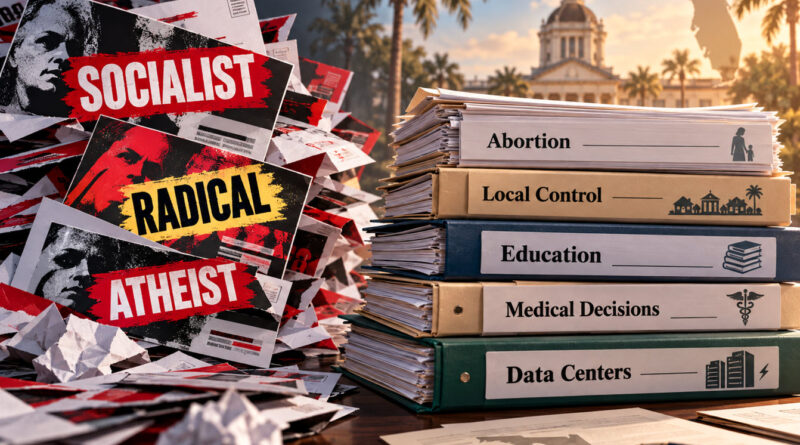
Josie Tomkow’s political allies would apparently like voters to know that Brian Nathan once registered with something called the National Atheist Party. They also want you frightened by the word “socialist.” Before anyone begins checking the neighborhood for Marxists hiding behind the recycling bins, perhaps we should look at what the two candidates have actually done.

Nathan supports a woman’s right to make decisions about her own pregnancy. Tomkow voted for Florida’s 15-week abortion restriction and later for the six-week restriction. She also supported laws that moved authority from local communities to Tallahassee and backed state restrictions on medical care, classrooms, books, pronouns, and public facilities. If government control is the issue, there is a lot in the voting record to consider.

Campaign labels are wonderfully convenient. “Socialist.” “Radical.” “Atheist.” They fit easily on mailers and take much less effort than reading voting records. This time, we read the records.

Read more
The Work That Begins After Election Day

This entry is in the series 2026 Elections

Election Day is when we choose our leaders. What happens the next morning may matter even more.

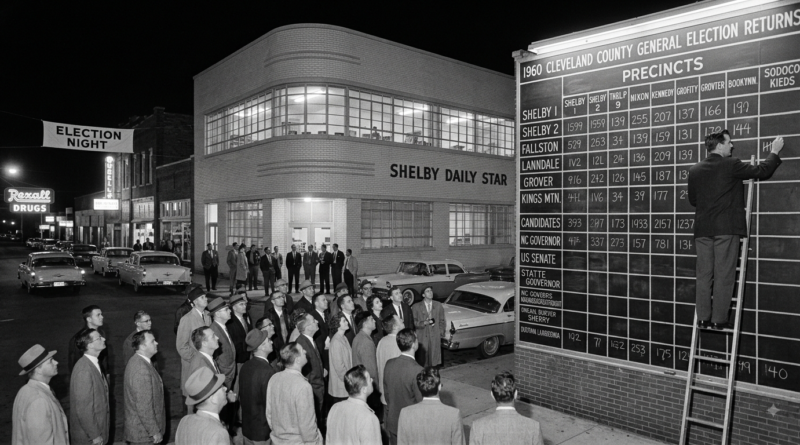
As a boy growing up in North Carolina, I remember standing with my father beneath a huge chalkboard outside the local newspaper office, watching election returns arrive precinct by precinct. Neighbors gathered, candidates waited, and everyone shared in the outcome. Those memories still remind me of something almost sacred about democracy. But I’ve come to realize that the responsibilities of citizenship go well beyond the moment we cast our ballots.

American history offers some uncomfortable lessons about what happens when a nation tries to return to normal without confronting abuses of power. From the betrayal of Reconstruction to the aftermath of Watergate, we’ve seen how easily the desire to move on can leave deeper problems unresolved. Today, those lessons deserve our attention, particularly as wealth and political influence threaten to diminish the voices of ordinary citizens.

In The Work That Begins After Election Day, I consider the difference between restoring familiar institutions and making them worthy of our trust. Thomas Paine believed we had the power to begin the world over again. That promise still belongs to us, along with the obligation to act upon it. Voting gives us a voice in who governs. What we do afterward helps determine what kind of country we become.

Read more

Chalkboard Democracy

This entry is in the series 2026 Elections

Today is Election Day, and I found myself thinking about election nights as a kid. In the 1960s and 70s, election night in Cleveland County, North Carolina, meant going downtown to Shelby.

The Shelby Daily Star had a huge chalkboard on the side of its building. Across the top were the precincts. Down the side were the candidates, grouped by office. A couple of men stood on ladders with chalk in their hands, waiting for numbers. No instant returns scrolled across a television screen. No website refreshing every few seconds. No phone buzzing with alerts.

There was something valuable about standing in a crowd with your neighbors and watching democracy happen one precinct at a time. Something worth remembering about seeing the people who disagreed with you standing only a few feet away, waiting for the same piece of chalk to move across the same board.

Maybe the chalkboard was primitive, but the gathering was citizenship.

Read more