
The Courage to Be Amazed
 Lately, I’ve noticed that wisdom can show up in unexpected places. Sometimes a fortune cookie makes us pause and reflect. Other times, it’s a quote we read or a friend’s comment. Wisdom doesn’t always come with the seriousness we expect. Sometimes, it just comes with Chinese takeout.
Not long ago, I read something from Rabbi Abraham Joshua Heschel: “Our goal should be to live life in radical amazement.” He urged us to start each day by noticing the world and not taking anything for granted. Heschel saw wonder as a key part of our spiritual lives, reminding us that even ordinary things deserve our attention and gratitude. “Our goal should be to live life in radical amazement.”
That idea stuck with me, maybe because it brought back a memory from over fifty years ago. When I was in high school, I played in a concert band that often earned top ratings at state competitions. We knew we were good and felt proud, though I think our band director sometimes wished we were a bit more humble. In my junior year, we played Mussorgsky’s “The Great Gate of Kyiv” as one of our competition pieces.
It’s a magnificent piece of music, powerful and demanding, with a grandeur that seems to grow as it approaches its conclusion. It demands a great deal from the musicians, especially a group of teenagers still learning what it means to play together.
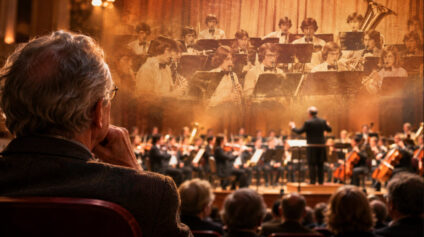 Something remarkable happened that afternoon. As we played, I heard the band differently than ever before. I could hear myself in the music, each instrument fitting in, every note landing just right. It felt like we were all sharing the same experience, completely in sync. Afterward, some of us talked about it and realized others had felt it too.
I haven’t played since high school, but I’ve listened to many great performances. In the past few years, I’ve heard the Florida Orchestra play “The Great Gate of Kyiv” twice. Both times, I found myself tearing up. Some of it is the beauty and power of the music, but it’s also the memory of that afternoon, those young musicians, and an experience I still can’t quite put into words.
Maybe it seems sentimental for a man in his sixties to get misty-eyed over a high school memory, but I’m fine with that. There are worse things to hold onto than a memory that still brings joy. Maybe that’s what Heschel meant by radical amazement.
I’ve spent a lot of time studying and writing about Stoicism. It’s a philosophy that teaches us to look at our judgments, manage our reactions, and accept what we can’t control. Some people think this means we should stay emotionally distant from what happens around us. I get why they think that. The Stoics did warn about letting emotions take over our lives.
But Marcus Aurelius also saw beauty in everyday things. In Meditations 3.2, he talks about the cracks in a loaf of bread, fruit ripening, and the beauty that comes with aging. He knew that noticing the world could help us appreciate it more.
Epictetus also spoke with wonder about nature and our ability to think about it. In Discourses 1.16, he says that just noticing and appreciating nature is a reason to feel grateful. These men valued reason and discipline, but they still saw something extraordinary in the world around them.
Sometimes I think we make Stoicism harder than it has to be. We try so hard to accept things, control our judgments, and keep our cool that we might forget to enjoy what’s beautiful. We can get so focused on managing our feelings that we hold back from letting ourselves be moved.
The Stoics saw joy as a healthy emotion that comes with a well-ordered mind. They knew our experiences don’t last forever, and our peace shouldn’t depend on them staying the same. We can enjoy a beautiful moment while it’s here and remember it fondly after it’s gone.
Heschel found wonder through his faith, seeing the world as a source of spiritual amazement. The Stoics saw nature through their belief in a rational universe. Their traditions are different, and those differences are important. Still, both encourage us to pay more attention to the life happening around us.
I remember that afternoon with the band and all the practice and discipline it took to get ready. We spent months learning to play those notes right. Then, during the performance, something happened that none of us expected. All that work gave us a chance to experience something remarkable.
Other moments like that happen in life. A sunrise might stop us during a morning walk. A familiar place can bring back old memories. Sometimes a performance is so beautiful that we wipe our eyes before the last notes fade.
As I’ve gotten older, I notice more how much things change, often without us realizing it until later. People who were part of important moments are now spread out over the years. Places we remember have changed too. Some experiences are only in our memories now. Yet a piece of music can still make me feel seventeen again, surrounded by friends, playing something beautiful together.
I’m not sure what exactly happened that afternoon. Maybe it was about focus, shared attention, and what musicians can do when they really listen to each other. I’m sure those explanations make sense. But I also know that explaining an experience doesn’t take away from the wonder of living it.
I think Heschel would have understood that feeling. And I imagine Marcus Aurelius, who saw beauty in the cracks of a loaf of bread, might have appreciated what a group of teenagers did with Mussorgsky. I’m just grateful I was there, that I remember it, and that the music still moves me after all these years.
There are moments when life deserves our full attention, when beauty catches us unexpectedly, and we feel something too large to explain. I hope I never become so practiced at keeping my composure that I lose the willingness to be amazed.
And if a fortune cookie or an amazing orchestra reminds me of that now and then, I’ll gladly take wisdom wherever it shows up.
